Key takeaways
- Hotel housekeeping maintains room cleanliness, manages public spaces and coordinates with maintenance to ensure operational readiness.
- Standardized checklists reduce inconsistency, speed up training and maintain quality control across all rooms.
- Digital tools, real-time updates and clear SOPs transform housekeeping from reactive scrambling to proactive efficiency.
Clean rooms are the baseline – guests expect them. What separates good properties from exceptional ones is how hotel housekeeping operations run behind the scenes. When systems work smoothly, rooms turn faster, guests notice the difference and staff can focus on quality over rushed tasks.
A well-run housekeeping department affects every part of hotel daily operations. It shapes first impressions, drives reviews and determines whether guests return. The challenge is balancing speed with thoroughness while managing costs and keeping teams efficient.
This guide covers the core duties, practical checklists and proven strategies that make hotel housekeeping operations work better.
What is hotel housekeeping?
Hotel housekeeping is the department responsible for maintaining cleanliness, safety, hygiene and overall presentation across all guest rooms and public areas within a property. It ensures that physical spaces consistently meet the standards required for guest comfort, regulatory compliance and brand positioning.
At its core, hotel housekeeping covers:
- Guest room preparation and upkeep
- Sanitation and hygiene standards
- Linen and laundry management
- Inventory control for in-room supplies and amenities
- Maintenance reporting and issue identification
- Cleanliness of public and back-of-house areas
Beyond cleaning, the department helps preserve asset value, protect health standards and create the environment guests expect from a professionally managed property.
Housekeeping is one of the most operationally intensive and visible functions within any hotel.
Why is hotel housekeeping essential for your business?
When managed well, housekeeping strengthens both the guest experience and the hotel’s bottom line.
Here’s why it matters:
- Protects guest satisfaction and reviews: Cleanliness is one of the top factors influencing guest ratings and repeat bookings. Even minor lapses can significantly impact perception.
- Safeguards brand reputation: Consistently maintained rooms and public areas reinforce brand standards and build trust with travelers.
- Reduces operational risk: Proper sanitation and upkeep help prevent health issues, safety incidents and compliance violations.
- Preserves property value: Routine care and maintenance reporting prevent long-term wear and costly repairs.
- Supports revenue performance: Efficient room turnover ensures inventory is available for sale without delays, directly influencing occupancy and RevPAR.
- Strengthens cross-department coordination: Seamless collaboration with front office and maintenance teams keeps operations running smoothly.
In short, housekeeping underpins the entire guest journey, making it one of the most strategically important departments in any hotel.
Core hotel housekeeping tasks and responsibilities
Hotel housekeeping responsibilities fall into three primary categories, each requiring different approaches and timing.
1. Preparing guest rooms for check-ins
Pre-arrival cleaning sets the stage for the guest experience. Rooms must be thoroughly cleaned, inspected and verified ready before assignment. This includes fresh linens, stocked amenities, functioning equipment and spotless surfaces.
Housekeeping staff check every detail:
- Light bulbs work
- Toiletries are fully stocked
- Towels are fresh
- Furniture is dust-free
Any maintenance issues get flagged immediately so repairs happen before guests arrive.
2. Cleaning occupied rooms
Hotel room housekeeping for occupied spaces requires a lighter touch. Staff refresh towels, tidy spaces and restock supplies while respecting guest privacy and belongings.
Timing matters. Most properties service occupied rooms during set windows when guests are likely out. Clear communication prevents awkward encounters and ensures guests feel comfortable.
3. Maintaining common areas
Housekeeping at hotels extends beyond guest rooms. Lobbies, hallways, elevators and public restrooms require attention throughout the day since common areas create first impressions and set expectations for the entire property.
Staff monitor these spaces continuously, addressing spills and maintaining cleanliness in real time.
Essential hotel housekeeping checklists
Standardized housekeeping checklists ensure consistency and prevent overlooked tasks. And when digitized, they allow real-time tracking and faster communication with hotel front desk operations.
Hotel bedroom cleaning checklist
Bedroom areas require systematic attention to multiple surfaces and items:
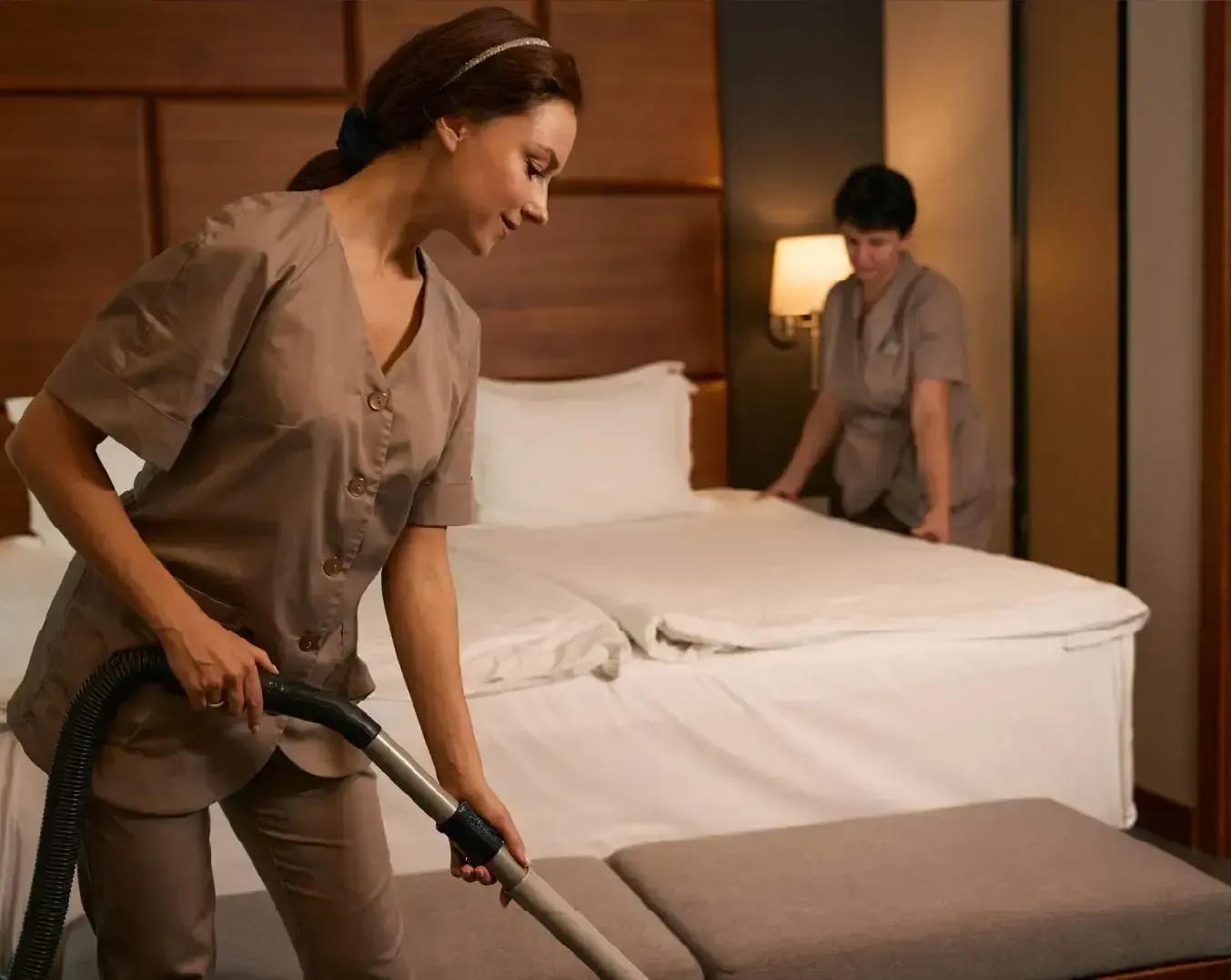
- Strip and remake bed with fresh linens, ensuring crisp corners
- Vacuum or mop floors, including under furniture
- Dust all surfaces: nightstands, desks, windowsills, picture frames
- Clean mirrors and glass surfaces until streak-free
- Check and replace burned-out bulbs
- Empty trash bins and replace liners
- Straighten furniture and decorative items
- Inspect walls and furniture for damage
- Verify climate controls function properly
- Restock guest amenities and informational materials
Hotel bathroom cleaning checklist
Bathroom cleaning demands thorough sanitization and attention to detail:
- Scrub and disinfect the toilet, sink and shower or tub
- Clean mirrors until spotless
- Mop floors with disinfectant
- Replace towels and bath mats
- Restock toiletries, toilet paper and tissues
- Check water pressure and drainage
- Polish fixtures until they shine
- Remove hair from all surfaces
- Empty trash and replace the liner
- Inspect grout and caulking for mold or damage
Why is following a hotel housekeeping checklist a must?
Checklists transform housekeeping from guesswork into a repeatable system. The benefits extend beyond just cleaner rooms.
Ensures consistency across all rooms
Every guest deserves the same quality experience regardless of which room they book or which staff member cleans it. Checklists eliminate variation by standardizing the process.
New team members can follow the checklist to achieve the same results as experienced staff. This consistency protects your brand reputation across all guest interactions.
Maintains quality control standards
Checklists create accountability. Managers can verify completion of tasks and identify training gaps when standards slip.
Digital systems provide time stamps showing when tasks are finished. This documentation becomes valuable during quality audits or when investigating guest complaints. You can trace exactly what happened in specific rooms on specific dates.
Improves operational efficiency
Staff work faster when following a clear sequence. They know exactly what to do next without stopping to think or ask questions.
Checklists also prevent backtracking. When items are organized by room section, staff complete all tasks in one area before moving on. This reduces wasted motion and speeds up room turnover.
Top 9 hotel housekeeping tips
These practical hotel room housekeeping tips optimize operations, enhance guest satisfaction and maintain service standards across your property.
1. Catch the details and make the difference
The smallest details set properties apart. An extra press of bed linens, a subtle touch of non-chemical room spray or a perfectly folded toilet paper roll contribute to exceptional guest experiences. These thoughtful additions build loyalty over time and reinforce your commitment to quality.
Guests may not check under beds or behind furniture, but these areas still matter. Regular upkeep prevents dirt and dust from accumulating, making maintenance quicker and easier. Keeping these spaces clean helps your team avoid intensive deep cleaning later.
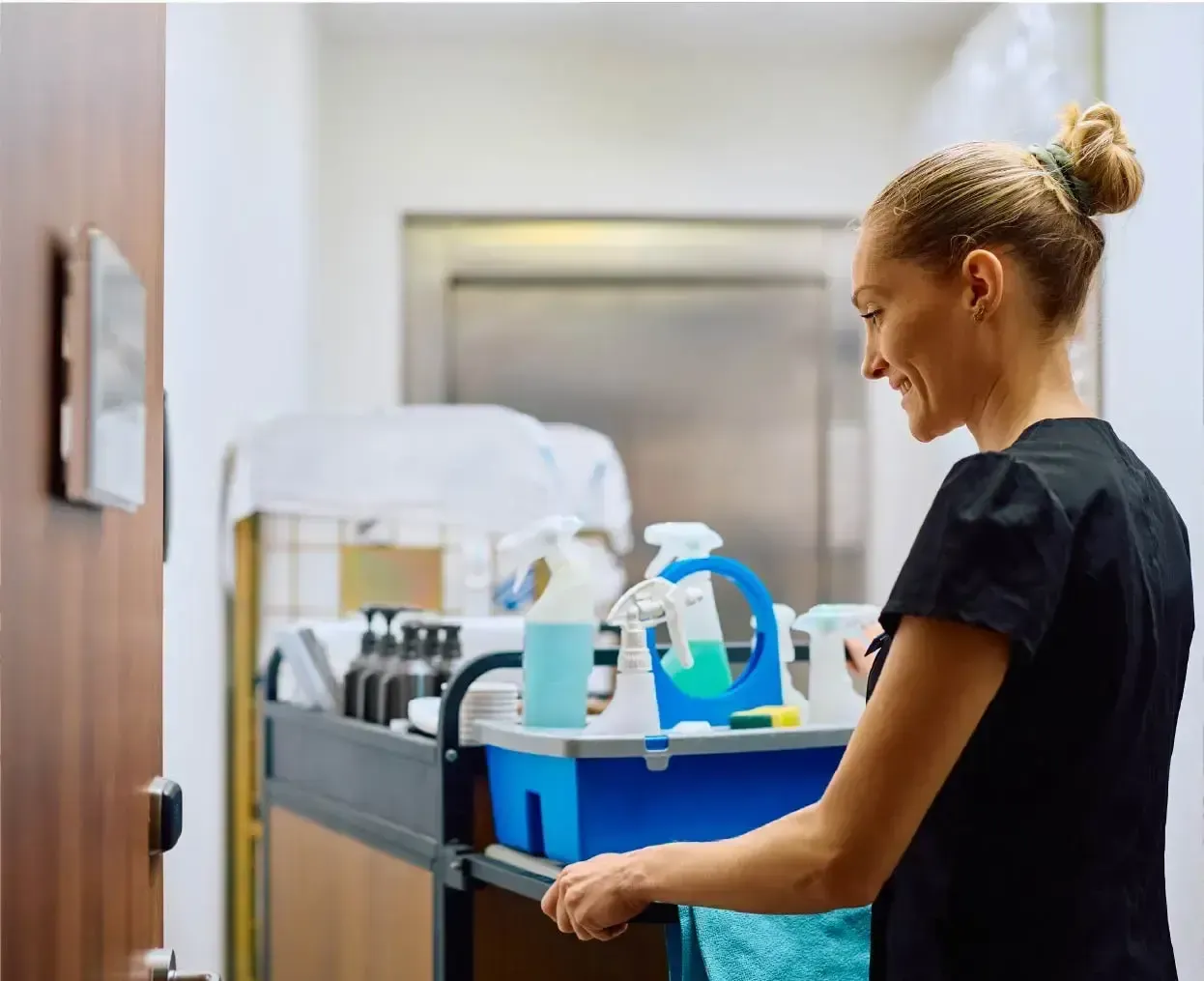
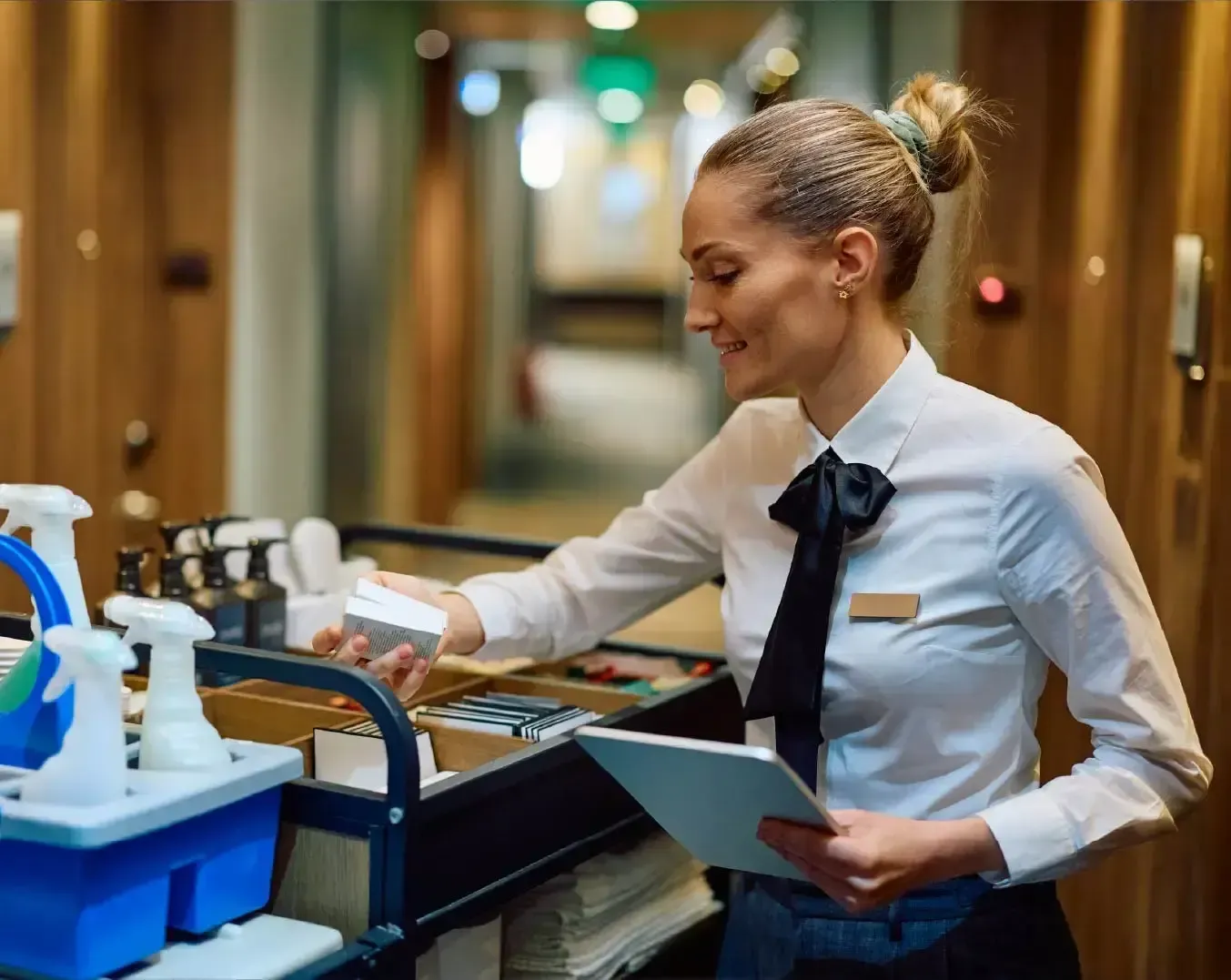
2. Keep a well-stocked housekeeping cart
An organized housekeeping cart increases efficiency and reduces unnecessary trips to storage areas. When staff have all the essentials on hand, they can clean more effectively and ensure rooms are fully stocked. This not only boosts productivity but also helps prevent staff exhaustion in what is already a physically demanding role.
3. Don't neglect the corners
Crisply folded bed sheets with perfectly tucked corners make a noticeable difference. A well-made bed enhances the guest experience and sets the tone for a comfortable stay. Plus, neatly tucked sheets make it easier for housekeeping to refresh the bed during multi-night stays.
4. Have a system in place to alert maintenance
Housekeeping staff are often the first to notice maintenance issues, so having a structured reporting system is essential. A checklist covering key room elements like plumbing, electrical outlets and fixtures ensures that any issues are flagged to maintenance before guests encounter them.
5. Check regularly for proper functioning
Beyond general maintenance, staff should routinely test room features, including power outlets, water pressure, toilets, light switches and televisions. Proactive checks help prevent guest complaints and ensure a seamless stay.
6. Respond to service requests quickly
Timely responses to guest requests – whether for extra towels, pillows or toiletries – play a crucial role in guest satisfaction. Optimizing internal communication and request-tracking systems can help staff fulfill these needs efficiently, leaving a positive impression on guests.
7. Follow a standardized room-cleaning checklist
Implementing a standardized housekeeping checklist transforms cleaning from memory-dependent work into a documented process. Staff complete tasks in the same order every time, reducing errors and ensuring nothing gets missed.
Digital checklists integrate with your property management system (PMS), updating room status automatically as staff mark tasks complete. This real-time visibility helps front desk staff assign rooms faster and improves the guest check-in experience.
8. Use color-coded cleaning supplies
Color-coded cleaning systems prevent cross-contamination between areas. Use red cloths for bathrooms, blue for glass surfaces and green for general cleaning. This simple visual system reduces health risks, makes training new staff easier and speeds up work.
9. Train staff on time management and room sequencing
Teaching staff how to sequence their work saves time. Start with tasks that require dwell time, like bathroom cleaning products that need a few minutes to work. While the products sit, move on to making beds. This overlapping approach reduces total cleaning time per room.
How to optimize your housekeeping operations
There are several avenues to optimize your housekeeping operations, and much of it starts with going digital.
Invest in hotel housekeeping software
Gone are the days of managing hotel housekeeping with Excel sheets and manual room checks. Optimizing operations requires implementing dedicated housekeeping software. The right software helps staff work more efficiently, reduces costs and enhances the guest experience.
Housekeeping software improves task management, streamlines communication, provides real-time updates for faster room turnover and offers a clear workload overview so everyone knows what needs to be done. The more cleaning and maintenance tasks are managed digitally, the smoother operations will be.
Use digital checklists
Building on the importance of housekeeping software, digital checklists are another simple way to improve efficiency. Instead of paper lists that can be misplaced, digital checklists allow staff to check off tasks as they go, keeping the front desk informed in real time. This not only helps staff stay organized but also provides a sense of accomplishment as they track their progress.
Rely on real-time updates
When hotel PMS systems have built-in housekeeping management, real-time updates replace the need for manual notifications. This means guests get to their rooms faster, and quicker room turnover creates opportunities for additional revenue.
Train your staff
Well-trained staff are essential for smooth housekeeping operations. When employees have a clear understanding of their responsibilities and the most efficient ways to complete tasks, overall performance improves. A well-trained team creates a positive environment that guests will notice and appreciate.
If you're introducing new technology, training should focus on demonstrating how it simplifies daily tasks. This helps prevent staff from feeling overwhelmed and instead shows them how digital tools make their work easier and more efficient.
Have clear SOPs
Standard operating procedures (SOPs) should be as clear as possible, outlining exactly how to clean each area of the hotel. Well-defined SOPs allow staff to complete tasks faster and more effectively, ensuring consistency in service quality.
Enhance your hotel housekeeping operations with Mews
The Mews hospitality operating system provides a cloud-based PMS with integrated housekeeping management that connects departments and removes manual communication gaps that slow down operations.
Here’s how it supports day-to-day housekeeping performance:
- Real-time room status updates: When a room is marked clean, it updates instantly in the system, making it immediately available for assignment. This speeds up check-ins and reduces guest wait times.
- Mobile-friendly digital checklists: Staff can access tasks from any device, with updates reflected in real time. Managers gain live visibility into cleaning progress across the property.
- Better workload distribution: Instant oversight helps balance assignments and identify bottlenecks before they disrupt operations.
- Revenue-aligned prioritization: Integration with revenue management tools allows teams to prioritize high-value arrivals or premium bookings when room demand is tight.
- Automated maintenance reporting: When issues are flagged, tickets are generated automatically with photos and details, and maintenance teams are notified immediately, preventing minor problems from escalating.
By centralizing communication and visibility, Mews helps housekeeping teams operate faster, coordinate better and support stronger overall performance – get a demo today.
Download our guide '10 Tips to Improve Your Housekeeping Operation'
FAQs: Hotel housekeeping
What is the main role of a room attendant?
Room attendants handle the physical cleaning and preparation of guest rooms. They strip and remake beds, clean bathrooms, vacuum floors, dust surfaces and restock amenities. Attendants also inspect rooms for damage or maintenance needs and report issues to supervisors.
How often should public areas be cleaned?
High-traffic public areas require continuous monitoring throughout the day. Lobbies typically need attention every two to four hours. Restrooms in public spaces should be checked and serviced at least every hour during peak times. Elevators, hallways and stairwells usually get serviced two to four times daily.
What safety protocols must housekeeping staff follow?
Housekeeping staff must wear appropriate PPE when handling chemicals and ensure proper ventilation. Cleaning products should remain in labeled containers, stored safely with safety data sheets accessible. Staff must follow spill procedures, use proper lifting techniques, place wet floor signs and follow injury-prevention protocols.
Written by

Eva Lacalle
Eva has over a decade of international experience in marketing, communication, events and digital marketing. When she's not at work, she's probably surfing, dancing, or exploring the world.