
Key takeaways
- Travel agents and online travel agencies (OTAs) help hotels reach a broader traveler audience, fill rooms during slower periods and enter new markets without starting from scratch.
- Working with OTAs comes with trade-offs, including significant commissions, limited access to guest data, less control over pricing and potential brand dilution.
- A balanced strategy that combines OTA listings with direct bookings helps hotels protect revenue and build stronger guest relationships.
Is your hotel visible on the platforms where most travelers book their stays? For hoteliers and hotel managers, reaching the right travelers year-round is not always straightforward.
Travel agents and OTAs for hotels give your property access to large traveler audiences, help fill rooms during slow periods and connect with markets that are hard to reach through direct channels alone. However, not every platform is the right fit for your property and overextending across too many channels can end up costing more than it generates.
In this article, we'll look at six top travel agents, how they work, their trade-offs and which ones to include in your distribution mix.
What are travel agents?
Travel agents are travel professionals who help individuals and groups plan, book and manage travel arrangements. They also help suppliers distribute inventory to a wider market.
Travel agents act as intermediaries between travelers and suppliers, including hotels. They may be self-employed or work for a travel agency, whether offline or, more commonly today, online. They typically sell travel-related products and services such as flights, hotel stays, tours, insurance and car rentals.

Why are travel agents important for hotels?
Travel agents can add value to hotels by consolidating bookings and actively promoting your property to potential guests who may not already know your brand. They help distribute inventory, expand your reach through their networks and generate incremental bookings your hotel might not otherwise receive.
How do OTAs work in the hotel industry?
OTAs display live room inventory alongside other properties in the same destination, giving travelers a side-by-side view before they decide.
For hoteliers, the process works like this:
- Your hotel loads room rates, availability, photos, amenities and booking rules into the system.
- An OTA channel manager, often connected to your property management system (PMS), distributes this information across connected platforms.
- Travelers browse and compare your property against other hotels in the destination.
- When a guest books, the reservation details are sent back to your hotel automatically.
- The OTA charges a commission or an agreed fee for the booking.
This removes the need to update each platform manually. Keeping your rates, availability and listing content accurate across all channels ensures travelers see the right information when they are ready to book.
Difference between OTAs and metasearch engines
OTAs and metasearch engines help travelers find hotels, but they serve different purposes at different stages of the booking journey.
The table below breaks down the key differences:
Category
OTAs
Metasearch engines
Primary role
Allow travelers to search, compare and book hotel rooms on one platform
Aggregate hotel prices from multiple booking sites in one place
Booking flow
Guests complete the booking on the OTA platform
Guests click through to an OTA or hotel website to book
Hotel cost
Hotels pay a commission for each booking
Hotels pay per click, per booking or through a bidding model
Guest relationship
The OTA typically controls the first guest interaction and most booking data
Depends on where the guest completes the booking
Best use case
Hotels reach travelers who are ready to book
Hotels compete on price and drive high-intent traffic to their website
For hotels, OTAs are booking channels, while metasearch engines are comparison channels.
6 best travel agents for hotels
With dozens of OTAs available, knowing which ones are worth listing on isn't always straightforward. Here are six travel agents that hotels across different markets use to reach more travelers and fill more rooms:
1. Expedia
Expedia is the flagship brand within Expedia Group, which also includes Hotels.com and Vrbo. Expedia Group processed $110.9 billion in gross bookings in 2024, a record high according to the company's full-year earnings report, with booked room nights growing 9% year-over-year.
A single listing on Expedia gives your property visibility across all three platforms, reaching travelers at different points in their search.
2. Booking.com
Booking.com is one of the world’s best-known online travel agents. It helps users book around 1.5 million room stays every day thanks to its user-friendly platform, strong marketing and valuable data and analytics tools.
3. Agoda
Agoda is particularly important for properties in Asia and is also growing in popularity in Europe, the U.S. and India. As part of the Booking Holdings family, it offers discounted stays across 5.6 million hotels, ranging from budget to five-star luxury.
4. Hotwire
Hotwire offers last-minute deals on unsold hotel rooms, helping your property sell inventory that might otherwise remain empty. The hotel brand is only revealed after the guest has completed payment.
5. Trip.com
Trip.com is particularly popular in China and across Asia, with additional service centers in Tokyo and Seoul. It also owns Skyscanner, Qunar and Ctrip, giving it a broad reach across the region.
6. Hotelbeds
Hotelbeds connects hotels with B2B buyers, including tour operators, travel agents, airlines and loyalty programs. For properties looking to grow corporate and trade bookings, it offers access to a buyer network that most consumer-facing OTAs don't reach.

Benefits of travel agents for hotel booking
For hoteliers, the benefits of working with travel agents go beyond filling empty rooms. Used alongside your direct channels, they can ease marketing pressure, support occupancy across seasons and help your property reach traveler segments that are harder to access on your own.
Boost direct bookings
Travel agents can help boost direct bookings in an indirect way. Many travelers first discover a hotel on an OTA or metasearch site, then visit the hotel website to compare rates, room details and booking items.
This is why a seamless hotel booking engine matters. It helps turn high-intent website visitors into direct bookings, giving your hotel more control over the guest relationship.
Take advantage of their marketing budgets
Travel agents typically have larger marketing budgets, which means your hotel can benefit from their extensive reach. This can increase your visibility across search, paid media and partner websites. It may also support brand discovery, although the SEO impact will vary and should not be treated as guaranteed link-building value. The result? Improved visibility and potentially higher rankings in Google search results.
Increase bookings
Partnering with travel agents can help fill rooms during off-peak seasons, reducing vacancy rates by connecting your hotel with a broader audience of travelers. It also opens the door to new markets and attracts a more international clientele.
Drive corporate bookings
Business travel agents help hotels attract corporate guests, meetings and event bookings. Many companies rely on a single agency to manage travel, negotiate rates and coordinate stays, providing hotels with a steady stream of repeat corporate business.
These bookings are particularly valuable, as business travelers often return to the same property when the location, rate and experience meet their expectations.
Gain access to advanced analytics
Many online travel agents give hotels access to performance data, market trends and guest behavior insights. These reports can help you understand which markets drive demand, which room types convert best and how your property compares with similar hotels in your destination.
This data can be used to adjust pricing, improve listing content and identify gaps in your distribution strategy.
Cut marketing costs for smaller properties
For smaller hotels, building brand awareness through paid ads, search visibility and global campaigns can be expensive. Travel agents have already made that investment, giving your property access to a wider traveler audience without carrying the full marketing cost yourself. This can help smaller properties reach new guests faster while they continue building their direct booking channels.
Disadvantages of travel agents for hotel booking
Travel agents can expand your reach, but they also add costs and reduce control over parts of the booking journey.
Here are the main trade-offs to consider before relying too heavily on them:
Commissions
Working with travel agents comes at a cost. They typically charge commissions or service fees, which can reduce the revenue from each booking and lower overall profit margins.
Commissions can range from 10% to 30%. Some travel agencies may also charge marketing costs or additional fees to list your property, further cutting into your profits. This is why many hotels look for ways to reduce OTA commissions costs without losing valuable third-party demand.
Lack of pricing control
Travel agents, especially larger agencies or OTAs, may also enforce rate parity agreements, which prevent your hotel from offering lower rates on your own website. They may also pressure you to constantly improve your pricing, which can ultimately make it difficult to control revenue streams.
Brand dilution
When guests book with a travel agent, their first point of contact is the travel agent's brand, rather than your own hotel. This can impact your hotel's ability to make a strong first impression and limit your control over marketing messages. Together, these factors can lead to brand dilution and reduce the consistency of your unique selling proposition.
Customer data ownership
When guests book through an OTA, the platform often controls the first guest interaction and part of the booking data. This can limit how much you know about the guest before arrival, making it harder to personalize communication, build loyalty and encourage future direct bookings.
Dependency and market saturation
Relying too heavily on OTAs can make your hotel dependent on third-party demand, especially if commission rates increase, ranking rules change or competitors use aggressive discounts.
In crowded markets, your property also appears beside many similar hotels, where small differences in price, photos, reviews and cancellation terms can influence bookings.
OTA best practices for hotels
OTAs can deliver strong results for your hotel, but only if you actively manage each channel rather than set it up and step back.
Here are the key practices that make a real difference:
- Optimize your OTA property listings: Accurate photos, detailed room descriptions, amenities and cancellation policies give travelers the information they need to book your property with confidence.
- Maintain rate parity across channels: Keeping prices consistent across your website, OTAs and metasearch platforms builds guest trust and avoids confusion when travelers compare the same room on different sites.
- Leverage OTA promotional tools strategically: Discounts and visibility boosters can help fill rooms during slow periods, but they work best when tied to a specific goal rather than used by default.
- Monitor and respond to guest reviews: Responding to both positive and negative reviews shows future travelers that your property takes feedback seriously and can improve your OTA ranking over time.
Balance direct and OTA bookings with Mews
OTAs help hotels reach more travelers, but relying on them too heavily eats into your margins. The goal is to use OTAs for awareness while capturing as many bookings as possible through your own website.
Mews Hotel Booking Engine, part of the Mews hospitality operating system, turns your website into a direct booking channel.
Here's what it does:
- Lets guests to book in their native language and currency
- Embeds secure payments directly into the booking flow
- Adds upsells into the booking journey to grow revenue per guest
- Integrates fully with your PMS, with no extra software to manage
Book a demo to see how Mews can help you reduce OTA commission costs, protect your margins and build stronger guest relationships.
Looking for the right integrations to complement your distribution strategy?
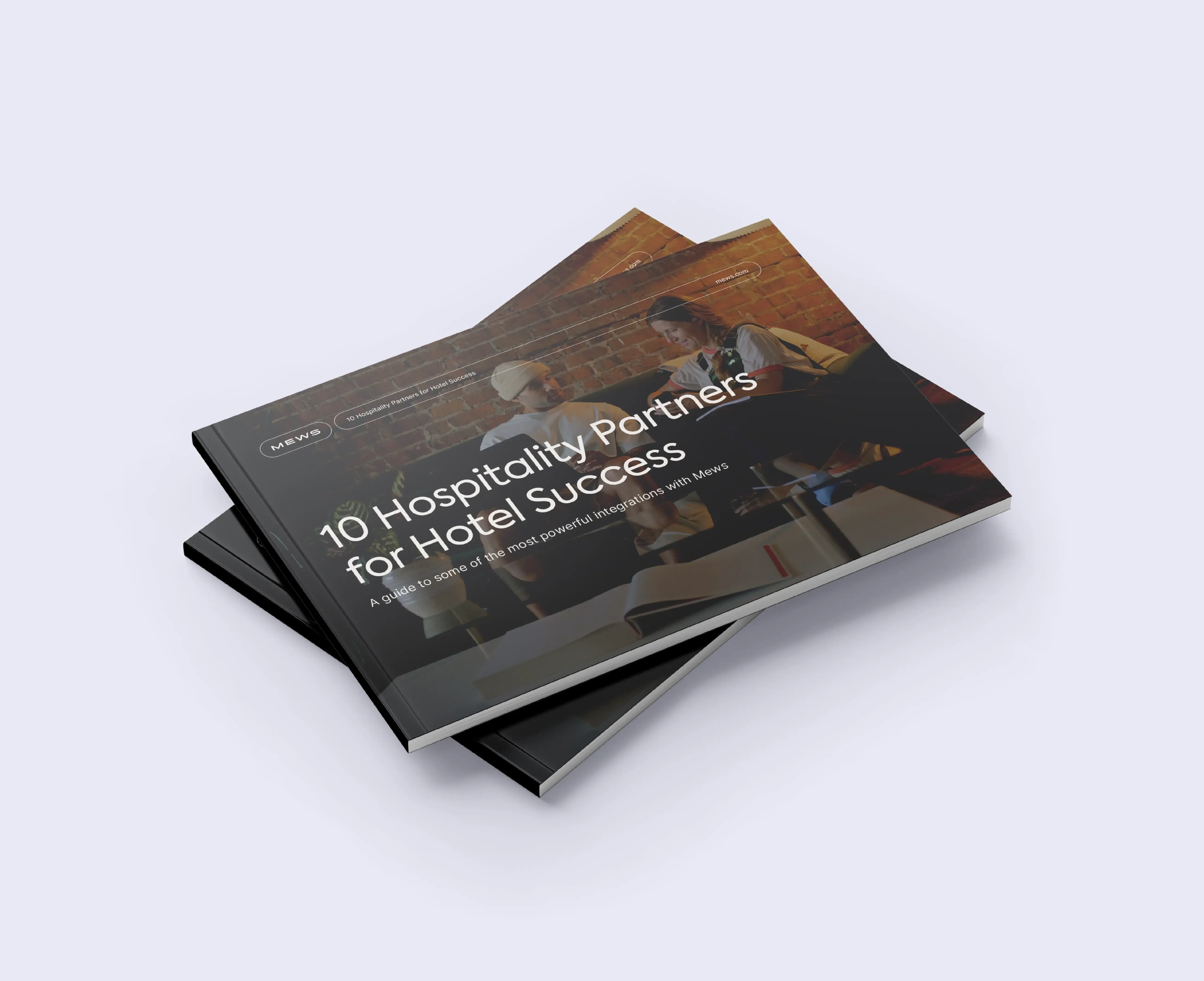
Download our guide "10 Hospitality Partners for Hotel Success"
What does OTA mean in the hotel industry?
What does OTA mean in the hotel industry?
In the hotel industry, OTA stands for online travel agent, which is a platform that sells hotel rooms and other travel services directly to consumers. OTAs help hotels reach a wider audience but usually charge commissions or fees for each booking.
Which OTA is best for independent hotels?
Which OTA is best for independent hotels?
The best OTA for independent hotels often depends on the property’s location and target market, but Expedia, Booking.com and Agoda are popular choices due to their wide reach and strong brand recognition. Independent hotels may also benefit from niche or regional OTAs that specialize in boutique or local properties to attract specific traveler segments.
How do OTA commissions work?
How do OTA commissions work?
OTA commissions are fees that hotels pay to OTAs for each booking made through their platform. The commission is usually a percentage of the room rate and it is deducted from the payment the hotel receives, reducing the net revenue from that booking.
Can hotels negotiate better terms with OTAs?
Can hotels negotiate better terms with OTAs?
Yes, hotels can often negotiate better terms with OTAs, especially if they have high occupancy, unique offerings or a strong track record of bookings. Negotiations can include lower commission rates, promotional support or preferred placement on the OTA’s platform.
Are OTAs losing relevance with direct booking trends?
Are OTAs losing relevance with direct booking trends?
While direct bookings are growing as hotels encourage guests to book through their own websites, OTAs remain relevant for reaching new audiences and last-minute travelers. Many hotels use a mix of direct and OTA channels to maximize visibility and revenue.
Written by

Jessica Freedman
Jessica is a trained journalist with over a decade of international experience in content and digital marketing in the tourism sector. Outside of work she enjoys pursuing her passions: food, travel, nature and yoga.