Running a hotel today is a balancing act. Revenue needs to grow. Costs need to stay under control. Guest expectations keep rising. That’s why more hospitality leaders are rethinking the foundation of their tech stack.
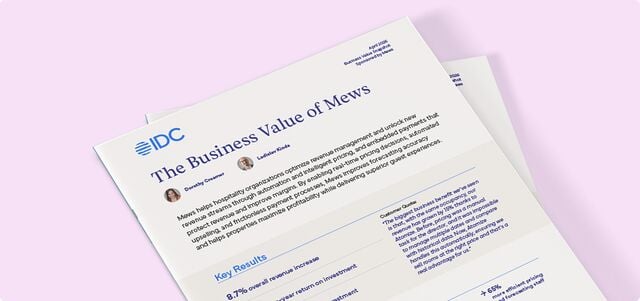
The latest IDC Business Value study White Paper explores what happens when hotels move to a true hospitality operating system – one that connects pricing, bookings, payments, guest data and operations in a single platform. And the results are compelling.
Based on interviews with hospitality organizations across multiple countries and property types, the research looks at how the Mews platform – including its integrated revenue management capabilities through Atomize, a Mews company – helps hotels drive profitable growth.
If you’re a hotel owner, general manager, revenue leader or business operator thinking about your next technology move, the findings are worth paying attention to.
Why hospitality is moving toward operating systems
For years, hotel technology has been built around separate tools. One system for the PMS. Another for revenue management. Another for payments. And many more in between.
The problem is that these systems rarely work as one. Data becomes fragmented. Teams spend time switching between platforms. And opportunities to optimize pricing, personalize offers or streamline operations get lost in the gaps.
That’s why the concept of a hospitality operating system matters – a platform where PMS, RMS, payments and operations work together by design.
As the IDC report study explains: “Technology investments are no longer evaluated solely by their ability to increase revenue, but by how effectively they support profitable growth, operational resilience, and service consistency.”
That shift is changing how hotels evaluate technology decisions.
What happens when PMS and RMS truly work together
One of the most important findings from the report is that the biggest benefits appear when pricing, booking and operational data are connected.
Instead of treating revenue management as a separate function, hotels using Mews and Atomize can make pricing decisions with real-time visibility across demand, bookings and guest behavior.
This coordination is driving measurable outcomes. Hotels interviewed in the study reported 8.7% revenue growth, supported by improvements in pricing strategy, booking conversion and upselling across the guest journey.
The impact is also visible at the property level. On average, hotels saw a $9.3 RevPAR increase, showing how better pricing decisions translate into real performance gains.
Automation plays a major role here. With Atomize integrated into the Mews platform, rate updates are no longer manual or reactive. Instead, they respond continuously to demand signals and market changes.
In fact, hotels updated their room rates 5.2 more frequently on average, helping them capture opportunities that would otherwise be missed.
Better data leads to better decisions
Forecasting is another area where the benefits of a connected platform stand out. Revenue teams often rely on multiple reports, spreadsheets and disconnected systems to understand demand trends. That process takes time and leaves room for error.
With integrated revenue management and live data flows, forecasting becomes part of daily operations rather than a separate exercise.
According to the research, hotels achieved 35% more accurate revenue forecasting after adopting Mews.
That level of visibility helps teams identify soft periods earlier, avoid unnecessary discounting and plan more confidently.
As one hotel described in the study report: “Using Atomize has been extremely impactful for revenue management. It gives us clear visibility into business trends and forecasting, helping us spot soft periods and adjust rates automatically.”
Efficiency that gives teams time back
While revenue growth is critical, many hotels in the study emphasized something equally valuable: time.
Manual pricing adjustments, forecasting work and system coordination can consume hours every week. When those processes are automated and integrated, teams gain time to focus on strategy and guest experience.
The study report found that hotels achieved 65% increased efficiency for pricing and forecasting staff, dramatically reducing the time spent on routine tasks.
This shift is particularly important for hotels operating with lean teams. Automation allows properties to scale operations without increasing headcount.
Payments that protect revenue and improve cash flow
Payments are often overlooked in discussions about hotel technology, but the research shows they play a key role in profitability.
When payments are disconnected from the PMS and booking workflows, hotels face higher risk of failed payments, disputes and revenue leakage. With Mews, payments are embedded directly into the platform. That means prepayments, automated charging and virtual card processing happen seamlessly.
The result is clear in the findings: embedded payments strengthen revenue protection and cash flow through automated charging and fewer disputes.
For many hotels, this alone represents a meaningful operational improvement.
The financial impact for hotels
When all these improvements come together – pricing, forecasting, payments and operational efficiency – the financial results compound. Across the organizations interviewed in the IDC study, hotels achieved $1.3M in benefits annually on average.
Over the longer term, the impact becomes even clearer. The report found a 476% three-year ROI, with hotels typically reaching payback in around four months.
These outcomes weren’t driven by cutting service or reducing guest experience. Instead, hotels described how better systems helped them operate more effectively while delivering stronger hospitality.
Why this matters now
Hospitality is entering a new phase where agility matters more than ever. Demand changes quickly. Guest expectations evolve constantly. And competition is only getting stronger.
Hotels that can see their data clearly, price dynamically and operate efficiently will have a major advantage. That’s exactly what a modern hospitality operating system is designed to enable.
Download the full IDC study
The full IDC Business Value of Mews study goes deeper into the findings, including how hotels improved direct bookings, streamlined operations and increased guest satisfaction after adopting Mews.
If you want to see how modern hotel platforms are helping operators grow revenue while protecting margins, it’s an essential read.
IDC Business Value White Paper Sponsored by Mews, The Business Value of Mews, # #EUR154294226-BVWP, March 2026