Key takeaways
- Automating front desk tasks frees up staff time, allowing for more guest engagement and personalized experiences.
- Small hotels can overcome staffing shortages and rising costs by automating repetitive tasks and streamlining operations.
- Using a small hotel PMS with integrated systems helps ensure accuracy, improve efficiency and enhance the guest experience.
As a small hotel, one of your biggest assets is the ability to create a highly personal guest experience. You want each guest to feel like they are family from the moment they walk through your door.
But creating a seamless guest experience is challenging when your front desk staff is bogged down with numerous tasks across multiple apps or spreadsheets. Using a property management system (PMS) for front desk automation, small hotels can free up staff time to focus on guest engagement and enhancing the overall stay.
This guide walks you through the best practices for automating front desk tasks in small hotels that deliver measurable efficiency gains while preserving the personal service guests expect from boutique properties.
Why is automation essential for small hotel front desks today?
Automation is essential for small hotel front desks today as it streamlines operations, minimizes errors and allows staff to focus on delivering a personalizedguest experience.
While it’s easy to assume that hotel automation primarily benefits chains and larger properties, the reality is that small hotels gain even more from it. Let's find out how:
Addressing staffing shortages and rising labor costs
Small hotels operate with lean teams, so even a single absence can disrupt operations. Rising labor costs add to the pressure: in the U.S., labor cost per available room increased 11.2% in 2024.
With margins this tight, time spent on manual front desk tasks becomes a direct cost.
Automation helps small hotels:
- Reduce reliance on constant front desk coverage
- Maintain service quality without increasing headcount
- Speed up onboarding with standardized, guided workflows
Meeting guest demand for seamless digital experiences
Guest expectations have shifted. Nearly 80% of travelers say they would stay at a hotel with a fully automated front desk, reflecting growing comfort with self-service. Guests already use mobile apps to board flights, order food and unlock their homes and expect the same convenience from their hotel stay.
Automation enables small hotels to:
- Offer contactless check-in and digital room keys
- Support 24/7 guest communication without extra staffing
- Let guests choose between self-service and personal assistance
Eliminating manual errors and ensuring data accuracy
Manual processes create opportunities for error at every touchpoint, from booking mistakes and room assignment mix-ups to payment issues. As automation becomes standard, errors stand out more at hotels that still use manual systems, often leading to negative reviews.
Automation improves accuracy by:
- Syncing room status across front desk and housekeeping
- Preventing double bookings and incorrect assignments
- Ensuring guests only access rooms that are ready
What are the key areas to automate for maximum impact on operations?
Not all automation delivers the same value. Some workflows take up significant staff time but are also easier to automate, making them ideal starting points.
The table below outlines the key automation opportunities at each stage of the guest journey and shows how they improve operations while enhancing the guest experience:
5 strategic best practices for automating front desk tasks in small hotels
A strategic approach to automation helps your hotel maximize benefits for both guests and employees.
Here are five best practices for automating front desk tasks in small hotels:
1. Prioritize integration
Small hotels typically rely on multiple apps and systems to manage front desk operations. When these tools can't share data, personalization suffers and automation opportunities are lost.
Choosing integrated systems that work together seamlessly reduces staff frustration and maximizes your technology investment.
2. Embrace self-service
Self-service features such as mobile keys and digital passport screening eliminate wait times and allow staff to focus on higher-value tasks.
Guests appreciate the convenience of completing these steps on their own schedule, often faster than a traditional front desk interaction. Small hotels should still offer personal assistance for guests who prefer face-to-face service.
3. Automate upselling and ancillary revenue generation
Front desk staff may hesitate to suggest upsells or miss opportunities during busy moments, and presenting multiple offers at once can overwhelm guests.
Messaging automation integrated with your hotel RMS solves both problems by delivering personalized upsells at natural intervals throughout the stay.
For instance, offer a room upgrade during check-in, then send a happy-hour invitation that afternoon. If a guest inquires about the spa, follow up the next day with a massage discount code.
4. Standardize and document digital SOPs
Digital workflows replace scattered PDFs with step-by-step online guidance, reducing both training time and errors.
For procedures that require manual reference, like housekeeping room standards, digital SOPs create a single source of truth accessible from one location. These can be organized by role so employees see only the procedures relevant to their position.
5. Reallocate staff to experience-driven roles
The first step in improving guest experience and employee satisfaction is implementing automation for repetitive tasks such as ID verification and room assignments.
Once staff time is freed up, small hotels can gain a competitive advantage by repositioning front desk employees as hospitality hosts who build genuine guest relationships, something larger properties struggle to replicate at scale.
Role of a modern cloud PMS in seamless automation
A modern cloud hotel PMS serves as the foundation for effective automation, connecting guests, staff and systems across your property.
It enables small hotels to:
- Consolidate data from multiple sources into a single, real-time platform
- Access accurate information on room inventory, guest profiles and housekeeping status
- Power event-based automation, such as:
- Instantly activating a mobile key at check-in
- Updating housekeeping schedules for late checkout requests
With a unified PMS, automation becomes reliable and integrated across every part of the guest journey.
How to maintain a personal touch with automation
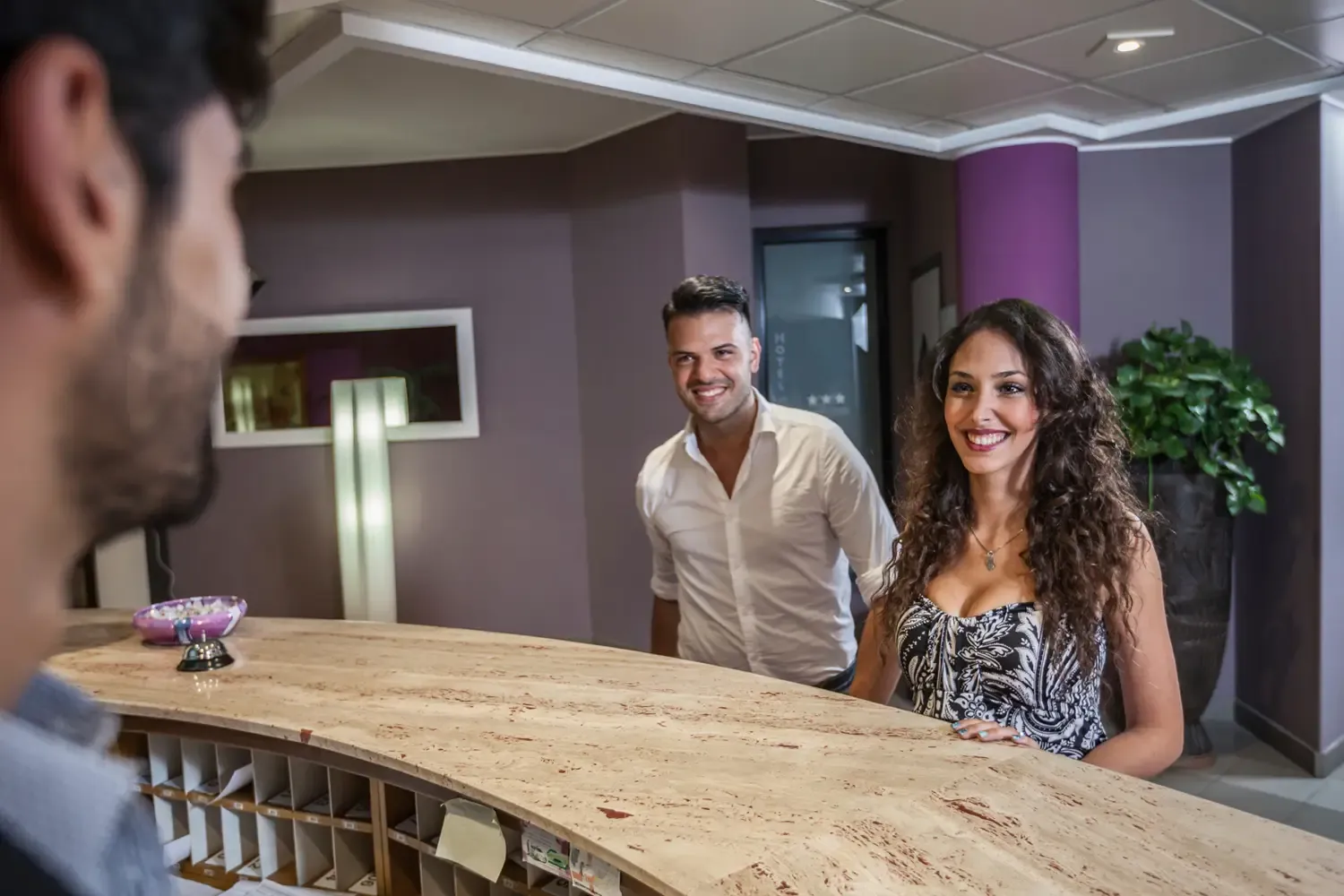
While automation improves efficiency, small hotels should actively weave personal touches throughout the guest journey. Here's how to balance automation with personalization:
Customize automated messages
Replace generic communications with personalized ones:
"Hi Debbie, we hope you and your kids enjoyed your week at the beach and can't wait to see you again next year. Use this link to check out" feels warmer than "Follow this link to check out."
Leverage saved time for meaningful gestures
Properties that reduced hours per occupied room by 7-15% reallocated that time rather than cutting positions.
Use the hours freed up by automation for personal touches like handwritten notes to returning guests or follow-up questions about restaurant recommendations.
Blend digital with human connection
Combine automated efficiency with face-to-face interactions to maximize small hotels' greatest competitive advantage: more time to build genuine relationships with guests.
Case study: Real-world operational gains from automation
Small hotels often face the dual challenge of delivering personalized guest experiences while managing repetitive front desk tasks with limited staff. The Annex, a boutique property in Toronto, turned to automation to streamline operations and free its team to focus on hospitality.
Challenge
Staff spent excessive time on manual tasks such as reservations, check-ins and coordinating housekeeping. This left little room for personalized guest engagement.
Solution
The Annex implemented Mews, a cloud‑based PMS that automated key workflows:
- Digital check-in and mobile room keys for guests
- Real-time updates for staff on reservations, room status and housekeeping
- Automated upsells and booking adjustments
Results
- 100% digital check-ins, improving convenience and efficiency
- Staff freed to focus on guest interactions
- 20% upsell conversion rate through automated offers
“Like The annex, Mews is a very forward-thinking platform. It saves us time and gets out of the way so that we can fully focus on the guest experience.”
— Ryan Killeen, Co-Founder & CEO, The Annex
Transform your hotel operations with the Mews intelligent automation platform
Hotels ready to streamline operations and enhance guest experiences need a platform built for modern hospitality.
The Mews hospitality operating system provides a cloud PMS designed to help properties automate front desk tasks without requiring dedicated IT staff or technical expertise.
With Mews, hotels can:
- Implement digital check-in and mobile keys
- Automate guest messaging and communications
- Integrate payment processing through a single platform
- Connect existing tools while maintaining real-time visibility across operations, from housekeeping to guest preferences
Benefits reported by hotels using Mews include:
- Faster check-ins and smoother guest arrivals
- Fewer operational errors and manual tasks
- More staff time for personalized guest interactions
- Minimal training required, as teams can start using automation within days
Discover how Mews can help your hotel deliver exceptional guest experiences while maximizing efficiency. Schedule a demo today to see the platform in action.
Which front desk tasks should a small hotel automate first?
Which front desk tasks should a small hotel automate first?
Start with check-in, payments and pre-arrival registration. These remove queues, reduce manual errors and immediately ease staff workload. From there, hotels can expand into automated messaging and upselling.
What is the typical ROI of front desk automation for small hotels?
What is the typical ROI of front desk automation for small hotels?
Most small properties recover implementation costs within 6-12 months through reduced labor hours and increased ancillary revenue. Calculate your specific ROI using your labor cost per occupied room and estimating 5-15% reductions in front desk hours after automation.
How does automation affect the personal guest experience?
How does automation affect the personal guest experience?
Automation removes friction, not human interaction. By eliminating repetitive tasks, staff have more time to focus on personalized service. This often leads to higher guest satisfaction and better reviews.
Is full automation possible for small independent hotels?
Is full automation possible for small independent hotels?
Yes, with a modern cloud PMS. Small hotels typically succeed by automating in phases, starting with check-in and expanding as teams adapt. This approach delivers steady improvements without overwhelming staff.