Key takeaways
- Hotel turndown service has evolved from a default nightly ritual into a selective brand-positioning tool that works best when matched to guest segment and rate tier.
- Modern guests expect service to align with what they paid, so turndown adds the most measurable value at luxury and upper-upscale properties where evening touchpoints reinforce premium positioning.
- Technology that connects housekeeping scheduling directly to reservation data helps hotels deliver turndown consistently while keeping labor costs in check.
Is hotel turndown service a timeless hallmark of hospitality or a fading ritual that modern guests no longer expect? For decades, it defined the luxury hotel experience: freshly folded sheets, dimmed lights and a chocolate on the pillow.
But shifting guest preferences, sustainability pressures and tighter labor budgets have compelled hoteliers to rethink where turndown fits. Some properties have quietly dropped it. Others are doubling down with creative hotel turndown ideas that feel personal rather than procedural.
In this article, we'll cover what hotel turndown service involves, whether it still makes business sense in 2026, the costs and ROI, and modern alternatives worth considering.
What is hotel turndown service?
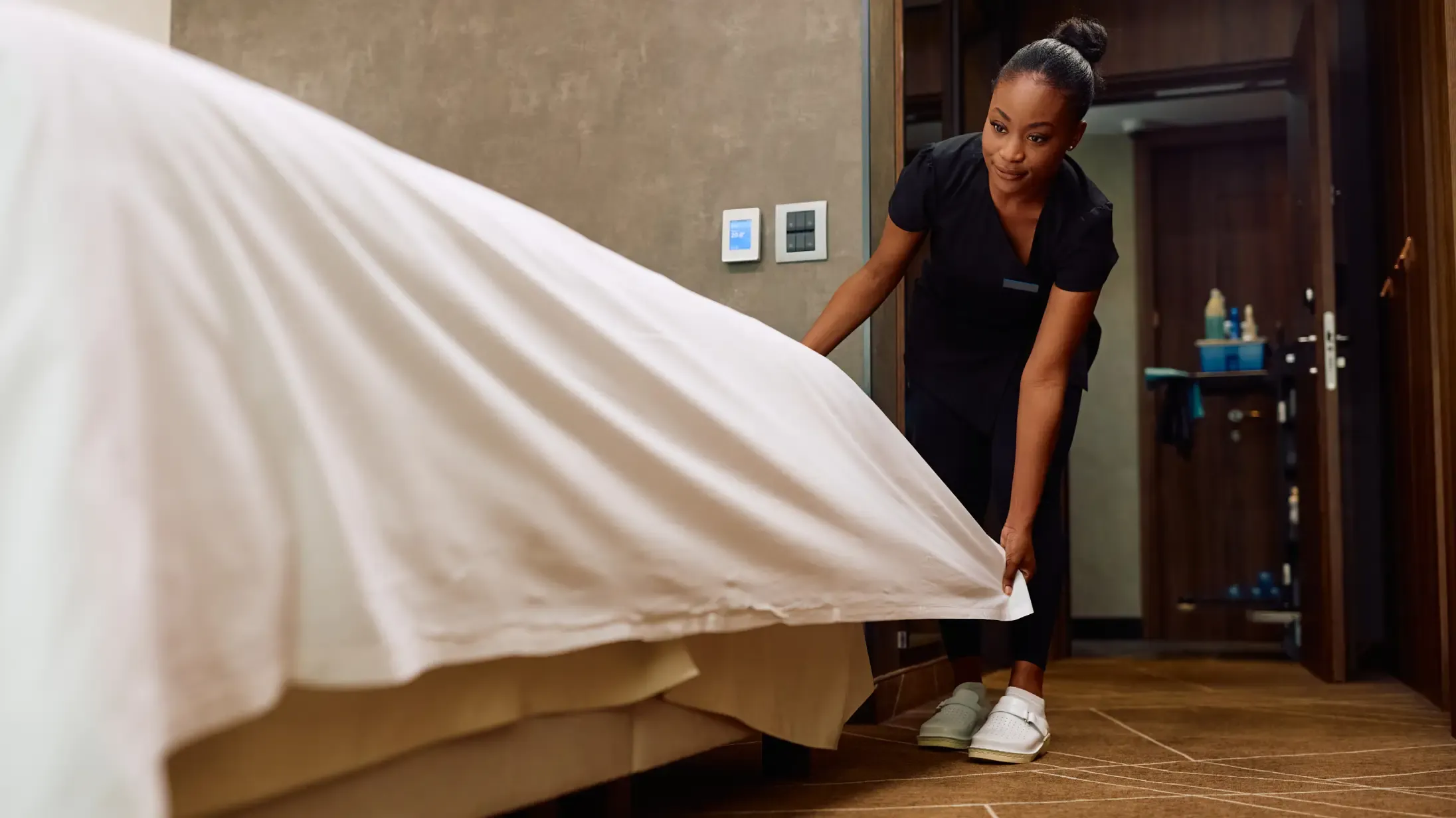
Hotel turndown service is an evening housekeeping ritual where staff prepare a guest's room for sleep, typically by folding back the bedding, dimming the lights and leaving a small amenity on the pillow.
Although originating in the luxury hospitality segment, this practice has increasingly been adopted by mid-scale hotels to enhance guest satisfaction and the overall experience.
Origins and early history of turndown service
The practice of turndown service traces back to 19th-century European grand hotels, where personal attendants would ready a guest's chambers each evening as part of standard domestic service. It was less a hospitality feature and more a reflection of how wealthy travelers expected to be looked after.
How turndown service became a luxury signature
As luxury hotel brands expanded through the 20th century, 5-star hotel turndown service in housekeeping evolved into a formal standard.
Properties began adding personalized touches, such as handwritten notes, premium chocolates and curated amenities, to distinguish their offerings. Over time, it became one of the clearest signals of a premium guest experience.
What does five-star hotel turndown service in housekeeping include?
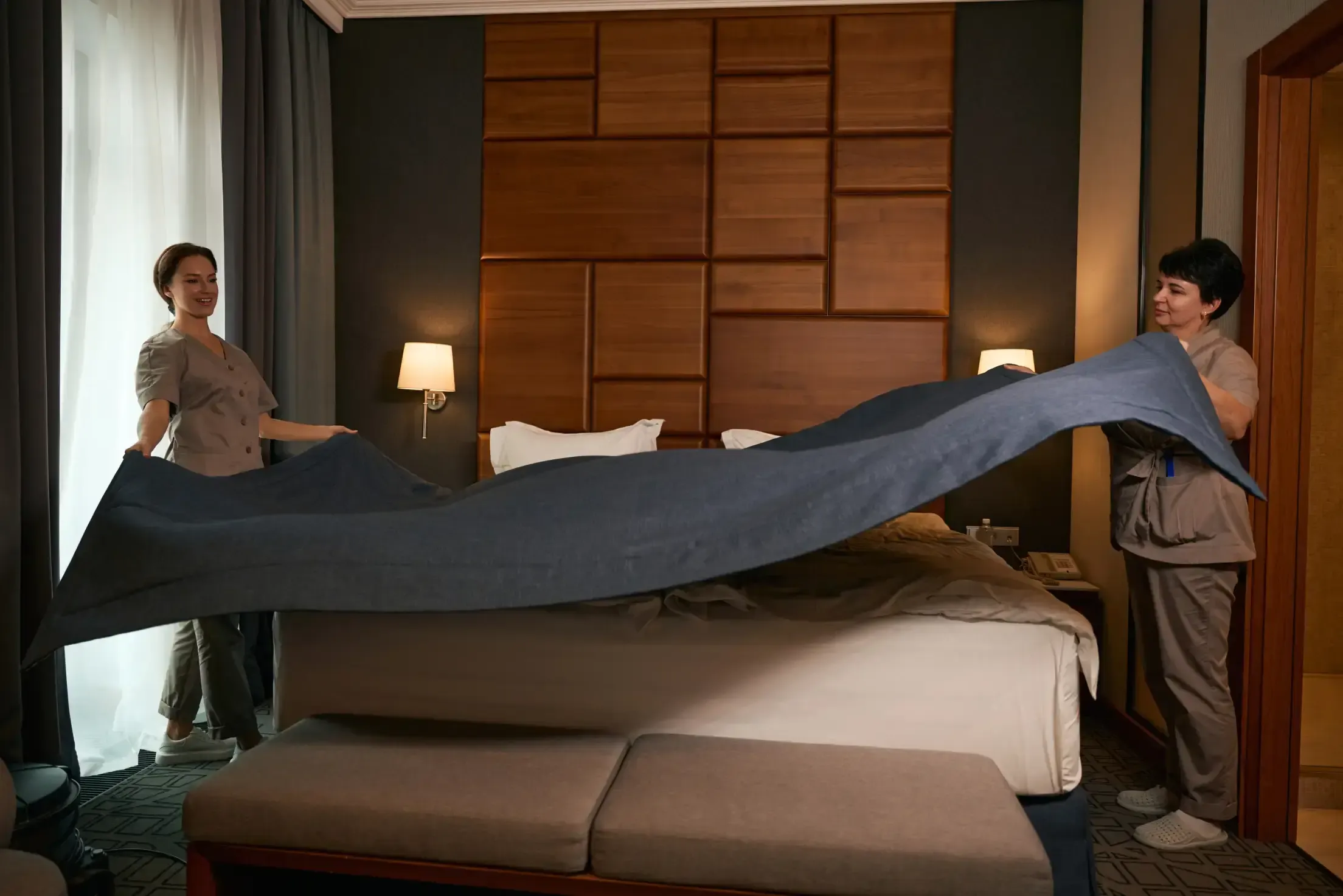
Five-star turndown service goes well beyond folding back a duvet. While a standard housekeeping turndown service checklist covers the essentials, luxury properties layer in elevated bed preparation and premium personalized touches that set the experience apart.
Standard housekeeping turndown service checklist
A thorough turndown service checklist includes:
- Turning down the bed and arranging pillows neatly
- Replacing used towels and restocking bathroom amenities
- Emptying waste bins and clearing any room service items
- Drawing curtains or blinds and adjusting the room temperature
- Turning on bedside lamps to create a warm, restful ambiance
Luxury bed preparation essentials
At five-star properties, bed preparation goes a step further and includes:
- Pressing or smoothing bed linens for a crisp, polished finish
- Placing a folded throw or additional blanket at the foot of the bed
- Arranging decorative pillows in a deliberate, aesthetically considered layout
Premium and personalized touches
To elevate the experience further, premium properties:
- Leave a handwritten welcome note or personalized card on the pillow
- Place a signature chocolate, sweet treat or local snack by the bedside
- Set out a sleep amenity such as an eye mask, earplugs or pillow mist
- Adjust in-room technology, including lighting scenes or sleep-focused music, based on guest preferences
The details matter more than many operators realize. A 2024 Medallia study of 1,749 hotel guests found that just23%reported experiencing high levels of personalization during a recent hotel stay, even though personalized touches are among the strongest drivers of satisfaction.
The role of the turndown attendant
The turndown attendant is the person responsible for preparing a guest's room for sleep each evening, and the quality of their work directly shapes the guest's final impression of the property. While the role sits within housekeeping, it requires a distinct set of skills and close coordination across departments.
Key responsibilities of a turndown attendant
A turndown attendant prepares the bed, refreshes towels and restocks bathroom essentials during each visit. They place amenities, notes or special touches according to the property's standards and tidy the room without disturbing the guest's personal belongings.
Skills and training required
The role calls for strong attention to detail, a consistent approach to presentation standards and discretion in respecting guest privacy at all times. Attendants also need familiarity with the property's amenity offerings and any guest-specific preferences on file.
Coordination with housekeeping and front office
Before beginning rounds, attendants receive updated room status and guest notes from the front office. They promptly report room issues and special requests to housekeeping supervisors and coordinate with the front office to schedule service activities at times that avoid disturbing guests still in their rooms.
Is turndown service still worth offering in 2026?
Turndown service has never been a one-size-fits-all offering, and in 2026, that is truer than ever. Whether it makes sense for a property depends on its guest profile, brand positioning and operational capacity.
What modern guests actually want
Today's guests prioritize personalization and choice over standardized rituals, and their preferences point to a clear direction:
- Guests want services that feel relevant to them, not performed out of routine obligation
- Opt-in models that let guests request turndown on their terms are gaining traction across property types
- A solid upselling strategy can help properties position turndown as a paid, value-added service rather than a default one
Sustainability and the "do not disturb" culture
Environmental awareness is reshaping how guests feel about in-room service, and properties need to account for:
- Guests who value a minimal footprint and see unsolicited room entry as an intrusion rather than a benefit
- The growing expectation that housekeeping turndown service is offered rather than assumed
- The reputational advantage of framing opt-out options as a genuine sustainability commitment
Brand positioning cases where turndown drives value
For the right property, turndown remains a genuine differentiator and is worth retaining when:
- The brand promise centers on luxury, white-glove service or high-touch hospitality
- Turndown amenities are locally sourced, personalized or tied to a signature guest experience
- The property serves frequent business travelers or long-stay guests who value a consistent evening routine
Cost vs ROI: the business case for turndown service in hotels
Turndown service carries real costs, but the return it generates across reviews, loyalty and revenue can justify the investment when managed well. The table below breaks down the key considerations across three areas.
Category
Key considerations
1. Labor and amenity costs
Staff time per room typically runs 10 to 15 minutes, with amenity costs varying from basic chocolates to premium locally sourced products.
2. Reviews and repeat business
Personalized turndown touches consistently appear in positive guest reviews and contribute to stronger repeat booking rates and long-term loyalty.
3. Tiered and opt-in models
Offering turndown as a paid add-on or tiered perk fits naturally within a broader hotel revenue strategy that looks beyond room rates to maximize total guest value.
The properties that get the most out of turndown service are those that treat it as a strategic decision rather than an operational default.
Modern alternatives and personalization options
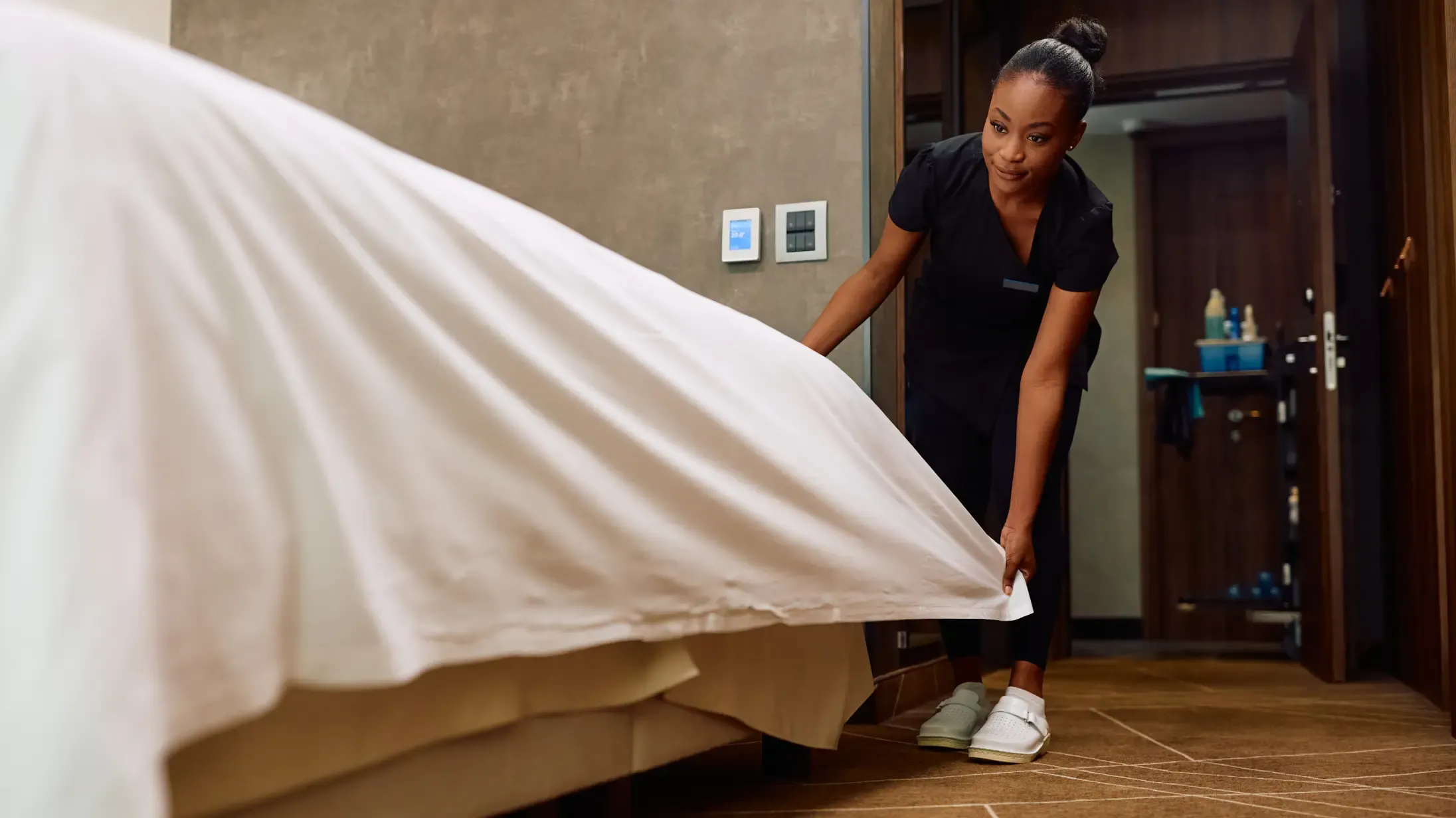
Turndown service does not have to follow a fixed schedule or a standard checklist to be effective. The most forward-thinking properties are shifting toward flexible, data-informed models that put the guest in control, and the options include:
On-demand turndown via guest app
- Allowing guests to request turndown at a time that suits them through an in-app prompt or messaging tool
- Giving guests the ability to specify preferences such as amenity type, lighting setting or do-not-disturb windows
- Reducing wasted labor by dispatching attendants only when a request is confirmed, rather than on a fixed round
Using guest profile data to tailor turndown
- Drawing on past stay history to pre-select amenities that align with a guest's documented preferences
- Flagging special occasions, dietary needs or loyalty tier in the housekeeping system before the attendant enters the room
- Using centralized guest profile data to make personalization consistent and scalable across every stay
How technology supports housekeeping operations
The right technology removes the guesswork from housekeeping and gives teams the real-time visibility they need to deliver consistent service. From mobile tools that track room status to systems that support paid turndown add-ons, the operational benefits are tangible.
Mobile housekeeping tools and real-time room status
Mobile housekeeping tools allow attendants to update room status live from anywhere on the property, keeping the front office informed without calls or manual check-ins. Supervisors gain a live view of progress across every floor, allowing them to redistribute workload, flag priority rooms and respond to late checkouts without relying on radio calls or paper boards.
For larger properties, this visibility directly reduces the lag between a room being cleaned and it becoming available to assign, a gap that quietly damages guest satisfaction when it goes unmanaged.
The shift to mobile operations has delivered measurable results for properties already using these tools, as The Dylan Amsterdam demonstrates.
The Dylan Amsterdam moved its housekeeping team fully onto the Mews mobile app, eliminating paper-based tracking and enabling live room status updates from every floor.
The results were felt immediately across the team: "Our new staff are like: wow, this works wonderfully! Everybody's really happy, because it gives them a little more confidence to do their work." – Carol Domacassé, Reservations Manager.
Upselling turndown as a paid add-on
With guest preferences and booking data centralized in one system, properties can trigger targeted turndown offers at the right moment in the guest journey, converting a standard service into measurable ancillary revenue.
Elevate the guest experience with Mews
Delivering a consistent, well-coordinated housekeeping turndown service requires more than well-trained staff. It requires a system that connects guest preferences, room status and service delivery in real time. That's exactly what Mews is built to do.
As the hospitality operating system for modern hotels, Mews connects every part of operations into a modern cloud-native property management system (PMS).With Flexkeeping, a Mews company, you can automate scheduling, track room status and coordinate service delivery with less manual work. Its key features include:
- Auto-assigning tasks based on booking data, stay length, room rate or guest preferences.
- Tracking room status and team progress in real time.
- Automating up to 70% of admin tasks so staff can focus more on guests.
Book a demo to see how Mews can empower your team to deliver exceptional guest experiences that inspire repeat visits.
Can guests opt out of turndown service?
Can guests opt out of turndown service?
Yes, guests can opt out of turndown service if they prefer not to have their room serviced in the evening. Hotels typically accommodate such requests and may allow guests to specify their preferences during check-in or at any time during their stay.
How can hotels protect guest privacy during turndown?
How can hotels protect guest privacy during turndown?
Hotels can protect guest privacy during turndown by ensuring that staff only enter rooms when authorized and avoid touching personal items unnecessarily. They can also train housekeeping to follow strict protocols, such as knocking, waiting for a response and respecting “Do Not Disturb” signs.
What time does turndown service usually happen?
What time does turndown service usually happen?
Turndown service is typically performed in the early evening, usually between 5:00 p.m. and 9:00 p.m., depending on the hotel's policies and guest preferences. The timing is often coordinated to ensure guests return to a refreshed room while minimizing disruption to their stay.
Should guests tip a turndown attendant?
Should guests tip a turndown attendant?
Tipping a turndown attendant is optional and varies by region and hotel type. In luxury hotels, a small tip (e.g., $1–5 per night) is appreciated for attentive service, but it is not required.
Can mid-scale hotels offer turndown service profitably?
Can mid-scale hotels offer turndown service profitably?
Yes, mid-scale hotels can offer turndown service profitably by tailoring it to their operational capacity and guest expectations. Many properties provide a simplified version of the service, such as refreshing the room, replenishing amenities or leaving a small welcome item, to enhance the guest experience without significantly increasing labor costs.
How is turndown service different from regular housekeeping?
How is turndown service different from regular housekeeping?
Turndown service differs from regular housekeeping in timing and purpose. While regular housekeeping focuses on cleaning and restocking rooms during the day, turndown service is an evening ritual that prepares the room for a comfortable night, often including tasks such as turning down the bed, dimming lights and leaving small touches for the guest.