




Key takeaways
- Hotel managers coordinate operations across departments while managing budgets, staff and guest experience under fluctuating demand conditions.
- Building a management career requires hands-on department experience with formal training in revenue management and financial oversight.
- Industry certifications validate your expertise at each career stage and demonstrate commitment to professional development beyond daily operational duties.
Your career trajectory depends less on chance and more on deliberate skill development across departments. The U.S. hotel industry employed approximately 2.2 million people in 2024 in direct hotel operations roles, yet the path from front desk to general manager remains unclear for many aspiring leaders.
The progression from entry-level to leadership requires specific experience, credentials and competencies that hotels consistently look for when filling management positions. In this article, you will learn about the job of a hotel manager and how you can take control of your career to move into leadership.
What are the primary responsibilities of a hotel manager?
General managers oversee every aspect of property performance, from revenue outcomes to staff development. The role demands constant balancing between immediate operational needs and long-term strategic goals.
Here's what fills your daily schedule as a hotel manager:
- Front desk operations: Managing check-in/check-out processes, guest service recovery and reservation systems that affect first impressions
- Housekeeping coordination: Scheduling room turnovers, maintaining cleanliness standards and managing inventory to meet occupancy demands
- Revenue oversight: Monitoring occupancy percentages, average daily rates and revenue per available room against market benchmarks
- Staff management: Hiring, training, scheduling and retaining team members across all departments during labor shortages
- Guest experience: Responding to complaints, ensuring service consistency and tracking satisfaction scores that influence repeat business
- Financial management: Controlling departmental budgets, managing payroll as a percentage of revenue and protecting profit margins
These responsibilities compound during high-occupancy periods when staffing constraints and guest volume create competing priorities. Your ability to delegate effectively while maintaining oversight determines whether operations run smoothly or spiral into crisis mode.
But execution requires more than understanding the scope. It demands specific competencies that distinguish effective managers from overwhelmed ones.

Core skills required for modern hotel management
Management competencies extend beyond operational knowledge into interpersonal dynamics and financial acumen.
The gap between understanding what needs to happen and making it happen consistently lies in these skill areas that you'll apply across every shift:
- Communicating with teams and resolving conflicts: Clear communication prevents service failures. You translate ownership goals into departmental targets, mediate disputes between staff members and deliver feedback that improves performance without creating turnover.
- Managing budgets and finances: Revenue targets mean nothing without cost control, so you analyze labor percentages and expense categories to protect profitability.
- Delegating tasks and managing your time: Front desk emergencies compete with revenue calls and maintenance issues throughout your day, making prioritization essential. Effective delegation keeps routine operations moving while you address strategic decisions.
- Solving operational problems on the fly: System outages, staffing call-outs and guest emergencies require immediate responses that minimize revenue loss and protect brand reputation. Your decision speed under pressure determines outcome quality.
Building these skills requires structured progression through hotel operations rather than jumping directly into management roles.
How to become a hotel manager in 5 steps
The timeline varies based on your starting point, but most successful managers follow this progression through increasingly complex roles.
1. Earn a hospitality or business management degree
Four-year hospitality programs teach revenue management, accounting and operations fundamentals that front-line experience alone doesn't cover. Business degrees work if paired with hospitality industry segments internships.
2. Gain hands-on hospitality experience
Work front desk, housekeeping or food and beverage roles to understand daily workflows before managing them. Cross-department exposure during this phase accelerates your learning curve.
3. Complete management training or apprenticeships
Many hotel brands run 9-12 month manager-in-training rotations that move you through departments while building P&L literacy. These programs fast-track capable employees into assistant manager roles.
4. Build leadership skills
Supervise shifts, train new hires and coordinate between departments to demonstrate you can guide teams without micromanaging. Leadership opportunities often emerge when you volunteer for challenging projects.
5. Obtain professional certifications
Industry credentials signal your commitment to the profession beyond just collecting paychecks. Certifications also fill knowledge gaps that on-the-job learning might miss.
Experience builds your operational foundation, but credentials validate that you understand the strategic frameworks behind daily decisions. Hiring managers look for both when filling leadership positions because technical competence alone doesn't guarantee management success.

Which certifications help advance a hotel management career?
Industry certifications demonstrate mastery of specific competencies at each career stage. The right credential at the right time can tip hiring decisions in your favor when competing against candidates with similar experience levels.
Entry-level: Certified Hospitality Supervisor
This certification from the American Hotel & Lodging Educational Institute covers supervisory fundamentals, including:
- Staff scheduling and labor cost management
- Quality assurance and service recovery protocols
- Training techniques for front-line teams
- Basic financial reporting and KPI tracking
New supervisors benefit most from this credential because it standardizes their approach to team leadership across brands and property types.
Mid-career: Certified Hospitality Department Trainer
Department trainers focus on developing talent within specific operational areas. The certification validates your ability to:
- Design training programs that improve service consistency
- Assess employee performance objectively
- Document standard operating procedures
- Reduce onboarding time for new hires
This credential matters when stepping into roles that oversee multiple supervisors or entire departments where training quality impacts hotel staff turnover.
Senior roles: Certified Hotel Administrator
The CHA designation represents comprehensive hotel management knowledge spanning revenue optimization, asset management, marketing and human resources.
Senior managers pursuing general manager positions use this credential to demonstrate:
- Revenue management strategy across channels
- Financial analysis beyond basic P&L review
- Strategic planning and brand standard compliance
- Multi-property operations coordination
Properties seeking experienced managers often list CHA as preferred or required because it signals readiness for full property accountability.
Credentials open doors to interviews, but the role itself demands stamina and flexibility that go beyond what any certification can fully prepare you for. Understanding the daily reality of the position helps you decide whether the career path aligns with your lifestyle expectations.
Typical work environment and schedule for managers
Hotel managers work on the property in fast-paced environments where guest needs and operational issues arise constantly. Your schedule adapts to property demands rather than following standard business hours.
Here's what that reality looks like:
- Long hours: You typically work 50+ hours weekly, including evenings, weekends and holidays when occupancy peaks.
- Physical presence: The role requires standing for extended periods, walking the property and responding to situations throughout the building.
- High-pressure situations: Guest complaints, staff call-outs and maintenance emergencies demand immediate decisions that affect satisfaction scores.
- Varied daily tasks: Your focus shifts between reviewing financial reports, conducting staff meetings, inspecting rooms and greeting VIP arrivals.
- Technology integration: You work across multiple systems, including property management platforms, revenue management tools and guest communication apps.
That workload and environment come with compensation that reflects the role's complexity.
How much does a hotel manager earn on average?
Manager compensation varies significantly based on property size, location, brand affiliation and your experience level. The total package typically includes base salary plus performance bonuses tied to revenue targets and guest satisfaction scores.
Properties also provide benefits like hotel employee incentive programs that include complimentary rooms and F&B discounts.
Hotels in major markets and luxury segments pay at the higher end of these ranges, while rural properties and budget chains anchor the lower end.
Salary reflects the complexity and accountability of the general manager role, but compensation alone doesn't determine long-term career success. Staying valuable in a competitive labor market requires continuous learning that keeps pace with evolving hotel trends and operational technology.
Why is continuous professional development vital for hotel leaders?
If you want to become a hotel manager and stay competitive once you get there, learning can’t stop at promotion.
Guest expectations, revenue strategies and hotel technology evolve faster than experience alone can keep up. The skills that helped you move from front desk to supervisor won’t necessarily prepare you to lead a full property or multi-unit portfolio.
Continuous development ensures you:
- Stay competitive for GM and multi-property roles
- Strengthen financial and revenue management expertise
- Adapt to new operational technology
- Demonstrate long-term leadership readiness to ownership
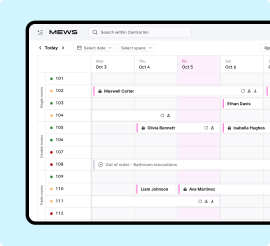
Technology adoption is a clear example. Modern hospitality operating systems like Mews streamline bookings, payments and guest communication in one connected platform. Managers who understand these systems lead more efficient teams and deliver stronger guest experiences.
Revenue management is another differentiator. Dynamic pricing and distribution strategies require ongoing education. Properties using Atomize RMS report up to 35% higher revenue per available room (RevPAR) through automated pricing that responds to demand in real time.
The path to hotel leadership evolves with the industry. Continuous professional development is what keeps you promotable, profitable and prepared for greater responsibility.
Ready to support your growth with smarter tools? Mews connects operations from reservations through checkout, giving you real-time visibility into property performance - book a demo today.
Can you become a hotel manager without a formal degree?
Can you become a hotel manager without a formal degree?
Yes, though the path takes longer. Start in front-line roles and pursue industry certifications while demonstrating consistent leadership in operational settings. Many successful GMs began as front desk agents and invested years building cross-department expertise that compensates for lacking formal hospitality education.
How long does it take to reach a general manager position?
How long does it take to reach a general manager position?
Most managers spend 7-10 years progressing from entry roles through department supervision before landing GM positions. Accelerated management training programs can compress this timeline to 5-6 years for candidates who demonstrate strong financial acumen and leadership capabilities early in their careers.
What are the most common entry-level roles for aspiring managers?
What are the most common entry-level roles for aspiring managers?
Front desk agent, night auditor, housekeeping supervisor and restaurant server positions provide the operational foundation managers need. These roles teach guest interaction, problem-solving under pressure and cross-functional coordination that prepare you for broader management responsibilities once you understand how each department impacts overall property performance.
Written by

Jessica Freedman
Jessica is a trained journalist with over a decade of international experience in content and digital marketing in the tourism sector. Outside of work she enjoys pursuing her passions: food, travel, nature and yoga.