
Key takeaways
- Automated hotel check-in eliminates arrival friction by reducing wait times, streamlining operations and giving guests control over their arrival experience.
- Check-in automation drives measurable revenue impact by turning arrival into a profit opportunity through integrated upsells, add-ons and smarter use of guest data.
- Modern, cloud-based check-in technology prepares hotels for the future, supporting staff efficiency, data security and scalable adoption of emerging automation trends.
The front desk used to be the center of hotel operations. Today, it's often the biggest source of friction.
Long queues, peak-time pressure and manual processes create bottlenecks for both guests and staff. Automated hotel check-in eliminates wait times and manual tasks, delivering a smoother first impression while freeing staff to focus on service rather than administration.
Beyond improving guest satisfaction, check-in automation creates a measurable business impact. From increased ancillary revenue to more efficient operations, automation turns arrival into a profitability driver.
This article explores how automated hotel check-in works, the benefits it delivers and how hotels can implement it successfully.
What is hotel check-in automation?
Hotel check-in automation is a digital system that allows guests to complete the arrival process independently through self-service kiosks, mobile apps or web platforms, bypassing the traditional front desk.
It reduces front desk wait times and expedites the arrival process, increasing guest satisfaction. Whether guests use a kiosk, mobile app or a digital key, the goal of check-in automation is agility.
What are the benefits of hotel check-in automation?
Hotel check-in automation improves guest experience, staff efficiency and revenue performance. Beyond convenience, it drives measurable gains in day-to-day operations and overall business results.
Here’s how automated check-in creates impact across the business:
Increased guest satisfaction
After a long trip, there is nothing worse than having to wait in a long line at the front desk. Automation cuts back on wait time and makes it so check-in can be available 24/7. With a check-in kiosk, guests can simply check themselves in from the kiosk, even cut their own keys and get right to their room.
Improved operations
When you rely on hotel automation, you don't have to depend on your staff to handle repetitive tasks like check-ins. Instead, they can focus on ensuring streamlined operations, removing friction from manual processes and improving the overall guest experience.
Boost in revenue
Putting the check-in process in guests’ hands also helps drive revenue by creating natural upsell opportunities. Automated check-in surfaces relevant upgrades at the right moment within the arrival flow, increasing ancillary revenue without feeling pushy.
Reduced staffing pressure and costs
Automated check-in lowers dependence on manual front desk coverage during busy periods, helping you control labor costs and avoid peak-time bottlenecks. At the same time, it allows staff to focus on higher-value guest interactions rather than routine administrative tasks.
Increased productivity and reduced human error
Automated check-ins can increase productivity by streamlining communication between staff and guests. When a guest arrives, the system automatically updates so that the staff can track remaining check-ins and efficiently distribute guests to ready rooms if housekeeping is behind schedule.
Since everything syncs automatically, extra charges, upgrades and room service are uploaded directly to guest profiles, eliminating time-consuming bill settlements at checkout and disputes over arrival status.
Enhanced security
Self-service kiosks integrate with security systems to verify guest identity, preventing fraud and enhancing safety. Since guests input their own data, the risk of data breaches decreases and staff no longer need access to credit cards and IDs.
How can hotels reimagine the check-in experience through automation?
Hotels can reimagine the check-in experience by offering automated options that let guests complete arrival steps on their own terms, with or without visiting the front desk.
Implementation takes several formats, each designed to fit different operational models and guest preferences.
Mobile links
Mobile check-in links allow guests to complete check-in before arrival using a link sent via email or SMS. Guests can confirm details, verify identity and authorize payment in advance, reducing front desk queues and accelerating arrivals. This approach supports contactless hospitality by minimizing physical touchpoints and maintaining a seamless arrival experience.
Tablet registration
Tablet registration digitizes check-in while maintaining staff presence. Guests complete the process on a tablet at the front desk with staff assistance, eliminating paperwork and ensuring a faster, more consistent experience.
AI-powered guest messaging
AI-powered guest messaging automates arrival-related communication. It can confirm check-in details, answer common questions and notify guests when rooms are ready, improving response times and reducing staff workload.
Self-service kiosks
Self-service kiosks allow guests to check in independently, create or collect room keys and go directly to their room. They help manage peak arrival times while freeing staff to focus on guest service.
How can hotels get staff buy-in for automated check-in?
Hotels can get staff buy-in by positioning automated check-in as a tool that removes repetitive tasks rather than replacing roles.
Staff are more likely to embrace automation when they see that it handles admin work and frees them for personalized service. Clear communication about how automation enhances their role rather than eliminating it builds trust and reduces resistance.
Involving staff early in the implementation process, gathering their feedback and providing thorough training further strengthen adoption. By reducing manual check-ins, staff can focus on higher-value guest interactions, improving both adoption and morale.
What are the common barriers to check-in automation and how can hotels solve them?
The most common barriers to check-in automation include system integration and data privacy concerns.
The table below outlines these key challenges and how hotels can address them with the right technology approach.
How Mews check-in automation boosts hotel profitability
The Mews check-in automation gives your hotel a chance to be more profitable by driving ancillary revenue. You can integrate upselling into the check-in process by offering upgrades and extra services through your branded kiosk from the moment guests arrive.
For example, you can offer:
- Room upgrades if their original room isn't ready
- Late check-out options
- Other add-ons that guests are more likely to purchase during check-in
The system presents these options at the optimal moment, when guests are engaged and decision-ready, increasing conversion rates without requiring staff intervention.
Mews also provides detailed analytics on upsell performance, allowing you to refine offers based on guest behavior and booking patterns. This data-driven approach helps hotels identify which upgrades and services generate the highest returns, enabling smarter revenue optimization over time.
What does the future of automated hotel check-in look like?
The future of automated hotel check-in is flexible, personalized and increasingly seamless. Check-in will evolve from a single interaction into a continuous process that begins before arrival and adapts in real time based on guest preferences, arrival time and room readiness.
Expect deeper integration of mobile-first experiences, smarter self-service tools and AI-driven personalization that anticipates guest needs. As automation matures, check-in will become less of a task and more of a natural transition into the guest experience.
Are hotels ready to adopt emerging check-in automation trends?
Yes, most hotels are already partway there. Guest expectations around speed, convenience and self-service continue to rise, and many properties are actively modernizing their technology infrastructure to meet these demands.
Readiness depends less on property size and more on strategic technology choices. Hotels that invest in a flexible, cloud hotel PMS position themselves to adopt new automation trends without major disruption.
Key readiness factors include:
- Integration capability: Technology that connects easily with existing systems and third-party tools
- Scalability: Solutions that grow with the property without requiring complete overhauls
- Dual focus: Systems designed to support both staff efficiency and guest experience
Hotels with modern, adaptable technology foundations can implement emerging trends incrementally, which will make adoption both practical and sustainable.
Want to learn more about kiosk technology?
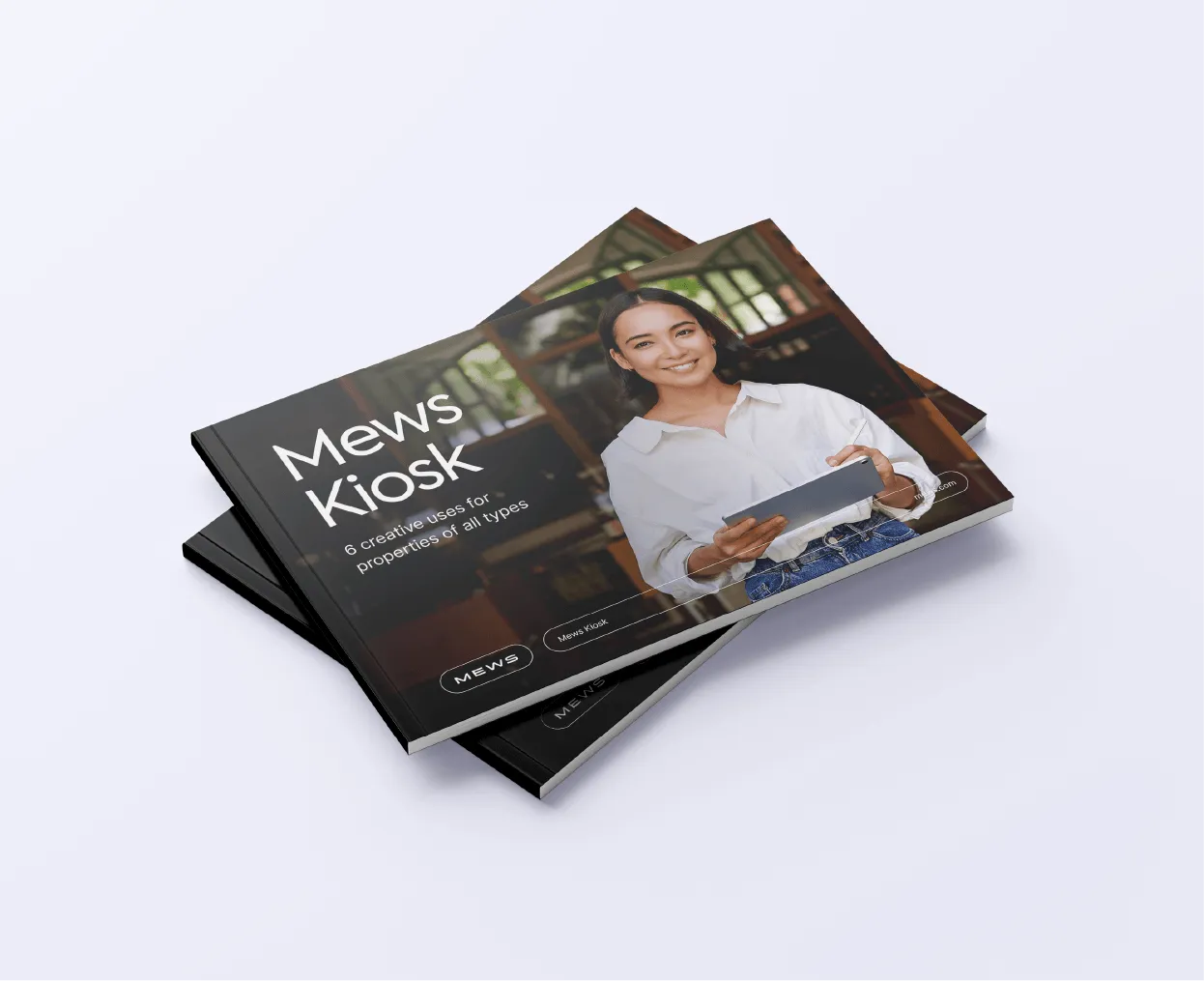
Download our guide "Mews Kiosk: 6 creative uses for properties of all types"
Does automation replace the human touch in hospitality?
Does automation replace the human touch in hospitality?
No. Automated check-in removes repetitive, administrative tasks but does not replace meaningful human interaction. By reducing time spent on manual check-ins, staff can focus on personalized service, guest support and relationship-building.
How does automated check-in impact upsell conversion rates?
How does automated check-in impact upsell conversion rates?
Automated check-in typically improves upsell conversion rates by presenting relevant offers at the right moment. Integrated, data-driven upsells at check-in feel more natural and convenient, leading to higher acceptance than traditional front-desk selling.
What is the average ROI for implementing check-in kiosks?
What is the average ROI for implementing check-in kiosks?
ROI varies by property size and guest volume, but many hotels experience returns through reduced staffing pressure, faster check-ins and increased ancillary revenue. When kiosks are combined with upselling and integrated payments, the return often extends beyond cost savings to sustained revenue growth.
Written by

Eva Lacalle
Eva has over a decade of international experience in marketing, communication, events and digital marketing. When she's not at work, she's probably surfing, dancing, or exploring the world.