Key takeaways
- Day use rooms unlock new revenue opportunities by turning vacant daytime hours into bookable inventory.
- Day use bookings attract new guest segments including business travelers, remote workers and guests with short stays or layovers.
- Ancillary services boost total revenue as day guests are more likely to spend on food, wellness and other amenities.
- Flexible pricing and packaging improve profitability by allowing hotels to optimize rates, upsells and short-stay offers.
There are two ways of looking at the world: binary thinking and spectrum thinking. The binary on/off, yes/no mindset is comforting because it’s easy to understand and act within. A light is on, or it’s off. A room is booked for the night, or it isn’t. But that’s not how the world really works, and hoteliers are beginning to understand that a shift in perspective is critical for success in the 21st century.
Let’s begin with some simple maths. A hotel has 100 rooms. On the night of the 23rd February, every room is booked. The GM rejoices because he has 100% occupancy. Well, no, he doesn’t.
Using ‘nights’ as a unit of time is an analogue measure in a digital world. Many of the guests checked in after 10 pm and had to catch an early flight, leaving their rooms at 7 am. Even once housekeeping has been and gone, some rooms will be completely unoccupied for 12 hours – half a full day – despite the fact that they have “100% occupancy”.
It’s wasted space, and it’s missed revenue. That’s where day use hotel rooms come in.
What is hotel day use?
Even those among you who aren’t rocket scientists will have already worked out that day use is, on the surface, as simple as it sounds: letting out otherwise empty hotel rooms to guests during the day.
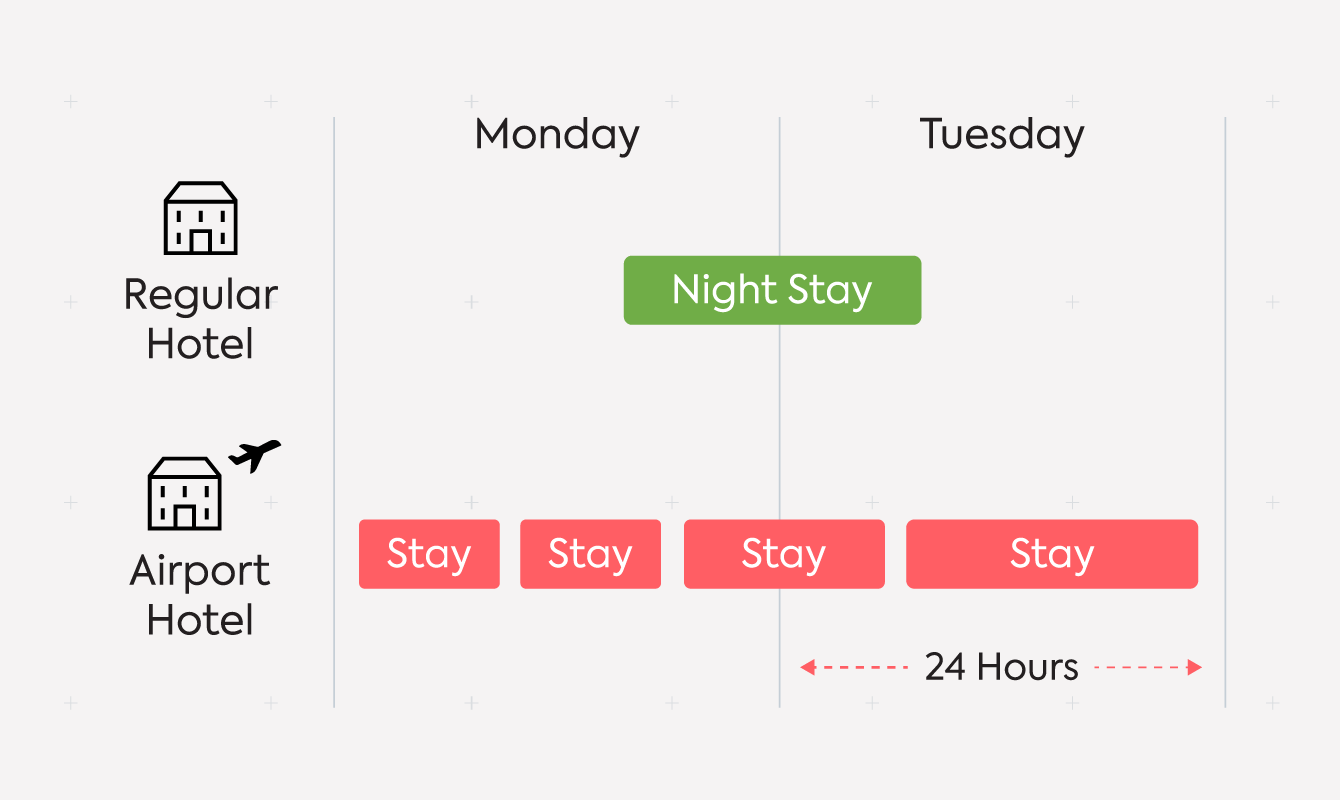
As we explored above, day use hotel rooms don’t have to be an either/or alternative to night bookings. Yes, if the room is unoccupied during the night, it makes it easier to offer for day use because there’s less pressure on housekeeping turnover. But there’s no reason that many of your spaces can’t double up (or more) during a 24-hour period.
What are the benefits of day use bookings?
Day-use hotel rooms give hotels a simple way to unlock additional revenue while making better use of existing space. By offering rooms for short daytime stays, hotels can attract new types of guests and increase the value of their available inventory.
Some of the key benefits include:
- Generates additional revenue. Day-use rooms allow hotels to monetize hours when rooms would otherwise sit empty between overnight stays.
- Maximizes room utilization. Instead of leaving rooms vacant for half the day after early check-outs, hotels can fill that time with short daytime bookings.
- Increases ancillary revenue. Day guests are more likely to use other amenities such as restaurants, bars, spas, gyms or meeting spaces, boosting overall revenue.
- Attracts new guest segments. Lower daytime rates can appeal to travelers who may not book an overnight stay but still want access to a comfortable workspace, rest stop or hotel amenities.
- Creates more opportunities for on-property spending. Increased foot traffic means more potential customers for your hotel’s services and experiences.
By offering day-use rooms, hotels can turn unused hours into valuable revenue opportunities while introducing new guests to their property.
Who wants day use hotel rooms?
1. Airport layovers
One of the most longstanding day use examples is at airport hotels. The transient nature of the location means that guests often have a few hours to kill between flights, and after hours stuffed into a cramped seat, a short sleep in a soft hotel bed is hard to resist. Airport hotel guests arrive at all hours of the day, and so it doesn’t make sense for these hotels to operate with traditional ‘night only’ reservations.
Yotel even has a special housekeeping ‘cabin crew’ who turn around rooms “like a Formula 1 pit crew”. This helps them sell a single room to two different customers (sometimes even three) within a 24-hour period, ensuring the property makes the most of their bookable space.
2. Daycations
‘Daycations’ are growing in popularity. Particularly when travel is more difficult, daycations are an excellent way to treat yourself in your local area. A trip to the spa is even more relaxing if you have a room for the day as well, which you can use as a base between trips to the pool and the gym, with a bit of room service in between.
3. Business
WFH doesn’t only mean working from home – it can mean working from a hotel, too. A hotel room is a more attractive proposition for a day of work than a desk in a shared office. It means you have access to a private, quiet space that’s also good for meetings, and when you need to take a break, all the hotel’s facilities are at your fingertips.
Opera Hotel Zurich offers its rooms for day use, from 10 am to 5 pm. Their business centre “The Lobby” with co-working spaces makes it a popular workspace and alternative to working from home, with a terrace and bar for more informal meetings or relaxation. Michael Böhler, GM, says: “One of the benefits of day use rooms is that it gives the hotel an extra sense of activity and turnover – it can feel like a real hub for meetings and important conversations. It also comes at very little extra cost, because we would have the same number of staff on-site anyway.”
4. Romance
A night in a hotel remains one of the classic romantic getaways, but who said it has to be the night and not the day? Whether it’s an anniversary gift, a Valentine’s treat, or a surprise just because, there’s a market for romantic day stays. Of course, romance takes many shapes and forms, so think carefully about how you choose to market your day use rooms and what clientele you want to attract.
How to make your rooms available for day use
Mews enables hotels to offer rooms for day use directly within the platform. As part of Our broader approach to flexible bookings and services, properties can create daytime room offerings that allow guests to book rooms for shorter stays during the day. You'll find step by step instructions on how to do that here.
In terms of external solutions, there are a number of distribution platforms that specialize in selling your rooms for day use. They essentially work like any other OTA, but they can’t offer rooms for overnight bookings. These are some of the best options we’ve found:
Turn unused hours into revenue
Travel habits are changing. Guests increasingly want flexible ways to use hotel spaces, whether that’s for a few hours of rest, remote work or a short stop between flights. Day-use rooms give hotels an opportunity to meet that demand while unlocking revenue from hours that would otherwise go unused.
With a modern hospitality operating system like Mews, offering day-use hotel rooms becomes much easier. Hotels can create flexible bookable services, manage room availability more dynamically and connect daytime bookings with other on-property experiences like dining, spa or workspace access.
In a competitive hospitality market, every opportunity to maximize space and revenue matters. If you’re looking for smarter ways to monetize your inventory and create more flexible guest experiences, get a demo today.
What are day-use hotel rooms?
What are day-use hotel rooms?
Day-use hotel rooms are rooms that guests can book for a few hours during the day rather than overnight. They provide flexible access to hotel spaces for work, rest or short stays.
Why do hotels offer day-use rooms?
Why do hotels offer day-use rooms?
Hotels offer day-use rooms to generate additional revenue from hours when rooms would otherwise sit empty between overnight stays. It also helps attract new types of guests.
Who typically books day-use hotel rooms?
Who typically books day-use hotel rooms?
Day-use rooms are popular with business travelers, remote workers, travelers with long layovers and locals looking to use hotel amenities like spas or workspaces during the day.
How do day-use hotel rooms benefit hotels?
How do day-use hotel rooms benefit hotels?
Day-use rooms help hotels maximize room utilization, generate additional revenue and increase spending on amenities such as restaurants, bars, spas and other services.
Written by
Tom Brown
When Tom isn't creating outstanding marketing content for Mews as Principal Copywriter, he writes fiction for himself. Either way, he only uses the best words.