Transcript
[00:00:00] Maria Mänty: We built 20 snow saunas in the snow hotel, and that is an amazing experience. It's made totally from snow and ice. When you throw the water in the stove, it turns into steam.
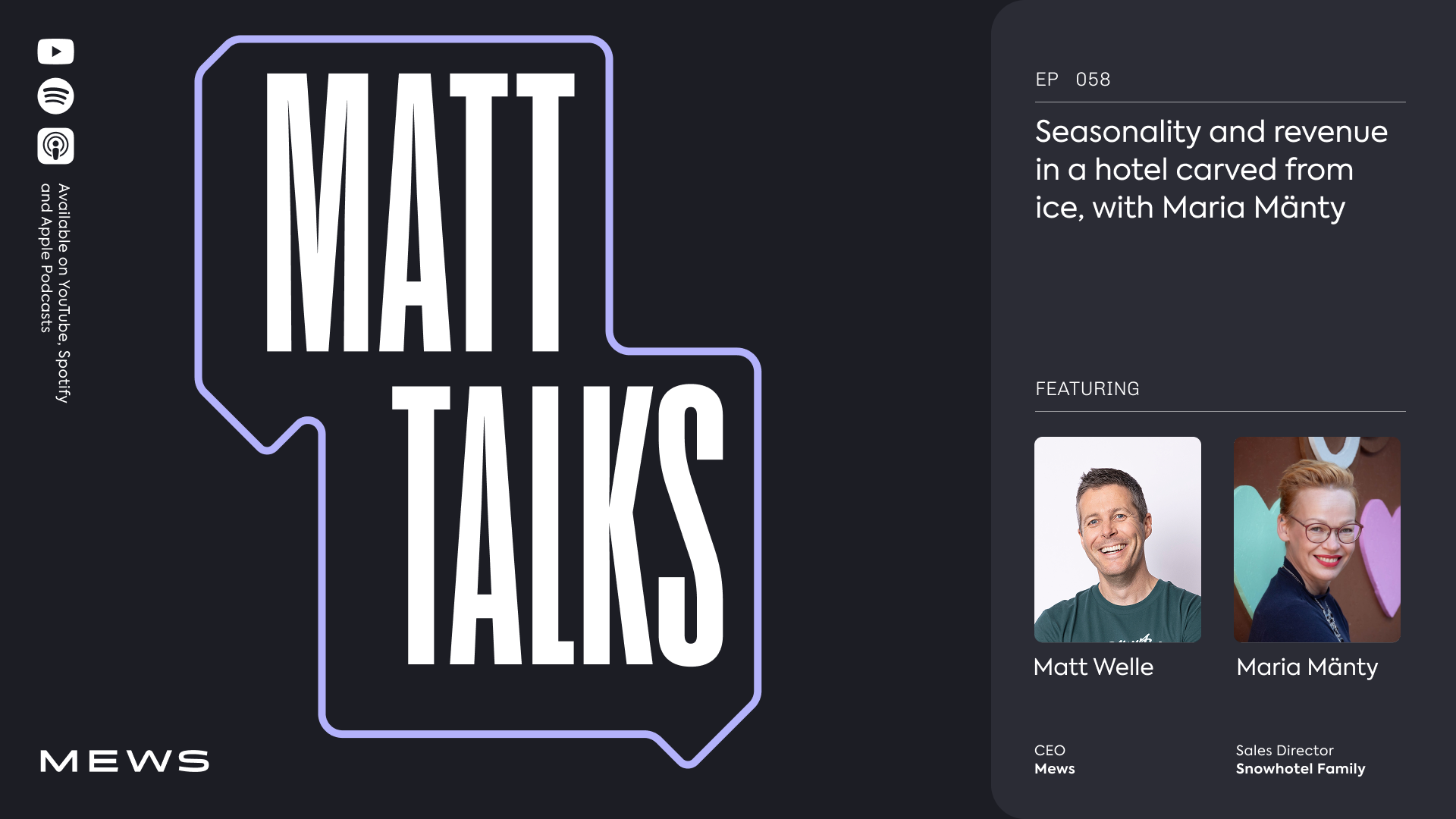
[00:00:24] Matt Welle: Hi, everyone. Welcome back to another Matt Talks. And since it's December and the holidays are upon us, we wanted to look at a place where seasonality is the whole operating reality. Arctic SnowHotel & Glass Igloos in Finland run on a calendar most hotels never deal with, which is building ice structures every single winter, glass Igloos opening as soon as the Aurora season starts, and demand that changes drastically between peak holiday weeks and the quieter months. It's a business that's heavily influenced by light, weather, and timing. Maria Mänty is joining us as the Sales Director from the SnowHotel family, the group behind the property, and she oversees how the hotel balances that seasonal rhythm with revenue, guest expectations, and the logistics of operating 30 kilometers north of the Arctic Circle. I'm so excited to start talking to her because it's that season when I've just put my Christmas tree up in my living room, and it's my favorite time of year. And this is one of those items that is on a bucket list. And I went to your website, and one of the first sentences says something with a bucket list, and I think many people who are listening to this are thinking, at some point in my life, I would love to go and visit that 30 kilometers above the Arctic Circle, see Santa Claus Village. So thank you so much for joining me today.
[00:01:36] Maria Mänty: Thank you very much that you're inviting us. And it's very, very interesting to see what kind of conversation we're gonna have, and I'm happy to tell you about the SnowHotel.
[00:01:46] Matt Welle: How far from Santa's Village are you?
[00:01:48] Maria Mänty: I'm sitting in Santa's Village. My whole, actually, our group’s office as well as my office, is in the Santa Claus Village.
[00:01:57] Matt Welle: That is crazy.
[00:01:58] Maria Mänty: Yeah. On the other side is the window on the right side. I can see the reindeer.
[00:02:02] Matt Welle: Like the real ones?
[00:02:02] Maria Mänty: The real ones. They are pulling the sledges on them. That's one of the activities that they're offering here. It's very famous in Lapland. And then on the other side, on the back window, I can see that we have this other snow structure apart from SnowHotel, it's like a babysitting place.
[00:02:18] Matt Welle: How do you land a job in Santa's Village? Like, how does that work?
[00:02:22] Maria Mänty: The first sales position I had was actually in Santa's Village, and, of course, Santa Claus Village is located in the Arctic Circle. It's a place where I think everyone who is visiting Rovaniemi will visit Santa Claus Village. And my goal, and our goal, is that maybe one day, all those people will also visit the SnowHotel.
[00:02:41] Matt Welle: So how would someone get there? Like, I live in Amsterdam. How would I come and visit? Is there a flight? Is there an airport? Or do I have to come by reindeer? What's the best plan to get there?
[00:02:50] Maria Mänty: The reindeer is the most popular, of course. Now, Rovaniemi, I mean…
[00:02:54] Matt Welle: Sorry. I was like, are you serious?
[00:02:58] Maria Mänty: First of all, this is a small city. This is my hometown. It's a small city. And then, we have the second busiest airport here in Finland after Helsinki. We have many, many direct flights, especially from Europe. So it's actually very easy access from the majority biggest cities in Europe.
[00:03:18] Matt Welle: Great. And I believe your background is actually nontraditional hotelier. You’ve actually had, I saw some history in theater. Is that correct?
[00:03:27] Maria Mänty: Yeah. It's mostly my side of there. I started the tourism as a guide when I was about 20 years old. Then I want to see some other businesses as well. And then, well, theater is art, and it is really close to my heart. So, and I saw already then that it’s actually both tourism and the theater; they match my values, and I highly appreciate those. And then, actually, there are a lot of similarities in the theater and tourism. And, especially, my background is in the DMC. So we were offering activities, and I was creating all kinds of programs based on activities. And then again, tourism activity is an experience, and I think it's an active spirit experience. And then when you go to theater, I see that it's passive, but it's an experience. And then an experience, anyway, is it passive or active? It's very personal, and it's also affected by, for example, what are your expectations? So, whether you are joining whatever activity it is or experience, let's say, then I really hope that more people would be heart-opened and take whatever they can from that experience.
[00:04:40] Matt Welle: I love that. I was talking to a hotelier in Paris just a couple of weeks ago, and he was talking about hiring talent. And he said, I've actually started hiring actors rather than traditional hotel hospitality people, just because actors have a way of connecting with people. And I thought it was such a nice way to rethink how you shape a guest experience when systems make your life a lot easier. You no longer need to hire system experts, but these people coming out of theater have a way of connecting with their audience. And I thought it was such a nice approach to hiring the next generation of hoteliers.
[00:05:14] Maria Mänty: That's a really nice way to do it.
[00:05:15] Matt Welle: So you are a sales director today. If you get into the office, what is the sales metric or what's the metric that you look for, as you start to evaluate whether you're going to have a good season?
[00:05:25] Maria Mänty: How bookings grow. Three factors. The booking flow. Second is the air access, and then, those are the air access that there are more direct flights coming. We know that there are more FITs coming. That's a really good sign. And then, of course, when the bookings are coming, what kind of bookings are we having, and how do they grow? That's one reliable data. But then there's also one factor, which is inside the house, as I said earlier, that this is a small city. We have a lot of seasonal workers outside of Rovaniemi. And then, they come here, maybe it’s their first time in Finland, first time in Rovaniemi, or ever, this is their first time. But then very clearly, when we have the onboarding, enough of that and when I see the team that they are working together, they trust each other, and they have a good boogie. And then they are talking about the rush hours, well, which is the peak in December. When they are talking about that with enthusiasm and not about stress, I know that we have a strong team. And when we have a strong team, of course, the sales are much easier.
[00:06:31] Matt Welle: And so you talked about flight access. So you are entirely dependent, I'm assuming, on what airlines do and the flights that they're bringing into the destination. What happens if they cut some flights to your hotel?
[00:06:42] Maria Mänty: We are really good partners. We’re not relying on FITs. Well, maybe we have at the moment, it's like fifty-fifty. But we are really good long-term partners; we have worked with since the beginning, so it's almost eighteen years. So it's not only about the direct flights with the FITs. You have to have good partners also, and those are very valuable for us.
[00:07:06] Matt Welle: And can you talk about the infrastructure? Because, like, it does sound like some of the hotels you have to rebuild every single year, and the glass igloos you have year-round, or how does that work?
[00:07:19] Maria Mänty: Yeah. We have two kinds, we have the glass igloos, and those are open starting from September. And then in the snow coat, they'll be open on the 15th, and we'll rebuild it every year. So…
[00:07:31] Matt Welle: 15th of December?
[00:07:33] Maria Mänty: 15th of December, it's opened. And then we start building that a month before, let's say.
[00:07:39] Matt Welle: But it's a literal igloo. Like, it's like walls of snow. What am I imagining here?
[00:07:44] Maria Mänty: Are you imagining here? Okay. It is huge. We have their, maybe, these numbers tell you something about, I don't remember them, how square meters or so, whatever they have. But we have 20 rooms, which are different sizes. From twin rooms to superior family rooms or suites family rooms, which are, when you go next, when you upgrade, it gets more space and then more beds and more art as well. And then we have 20 rooms, and then we have a chapel there - I’d quite want weddings there. And then we have an ice restaurant for 150-people seats, and then we have a huge ice bar.
[00:08:22] Matt Welle: And all of this doesn't exist in the summertime. It gets built in the wintertime, and it's entirely made of ice.
[00:08:28] Maria Mänty: Yes. And the walls are about one meter.
[00:08:30] Matt Welle: Wow. And it lasts the entire winter, or at some point, you have to rebuild?
[00:08:34] Maria Mänty: No. We are professionals in snow and ice, and you can see it in our snow structures. This is, it's something we do a bit differently. We do it much better. Our owner is a super, super expert, a high-level expert in snow building, so we don't have to do anything about it in the summer. Sometimes it's like some ice sculpture that people are touching, and then maybe they fine-tune that one, but until the end of March, when we are open, the household is open, it looks amazing, especially this year when it's been really cold early winter, so.
[00:09:07] Matt Welle: So are there risks that you have to keep in mind as you operate the hotel because you are so dependent on the weather? Or is the winter weather pretty consistent, and there's very little risk to the business?
[00:09:18] Maria Mänty: At the moment, there's very little risk. It's thanks to our experts and our expertise and the knowledge in the building.
[00:09:25] Matt Welle: Because people travel to see the aurora or the lights in the sky. What are they called?
[00:09:32] Maria Mänty: Northern lights.
[00:09:33] Matt Welle: Yeah. The northern lights. So they travel to see that, but, like, how many days do they come out? How does this work? Like, can you guarantee that they will see it? Or…
[00:09:41] Maria Mänty: No. We can't guarantee them. It's a natural phenomenon. So, of course, we can't see it. And that is one reason why people travel here to see them, but we can't control that. You can see them here in Lapland, in Finnish Lapland, Swedish Lapland, and Norway, and we're all in the same Iceland and anyway, in the Nordic areas. And then and when you see northern lights, it's like an extra gift. It's not something that we promise, and we are really honest about it. It's an extra gift. But what I see that is our advantage is that when they choose our hotel and they are staying in the especially when they're staying in the glass igloo, they have a huge possibility to see them. Because when they're sleeping in a glass igloo, well, it's a glass made of glass, this roof. And then we have this odor alarm in these glass igloos, but also in the snow hotel. The snow hotel guests just can't see it through the window. They have to go outside, and the alarm, outer alarm is manual work. So somebody comes and wakes them up if they want. If the northern lights appear in the sky, they have a good possibility of seeing them, because they are there, and they have the aurora alarm, so.
[00:10:56] Matt Welle: Nice. And this is just like a normal alarm that goes off once the aurora comes out, or how does that work?
[00:11:01] Maria Mänty: This is Aurora Watcher, one of our guys.
[00:11:04] Matt Welle: It's a human, or it's AI nowadays?
[00:11:05] Maria Mänty: It's a human.
[00:11:07] Matt Welle: Okay. I love it.
[00:11:09] Maria Mänty: Yeah. Then we also have what I think it's our advantage is that we already have so many unique services, and the hotel itself, is it a glass igloo, or a snow hotel? It is a unique experience anyway, as you mentioned, a supermarket list. So it is an experience in itself.
[00:11:27] Matt Welle: And it sounds like it's quite a complex operation that gets rebuilt every year, but also, you have multiple food and beverage outlets. How do you leverage technology to make your life easier?
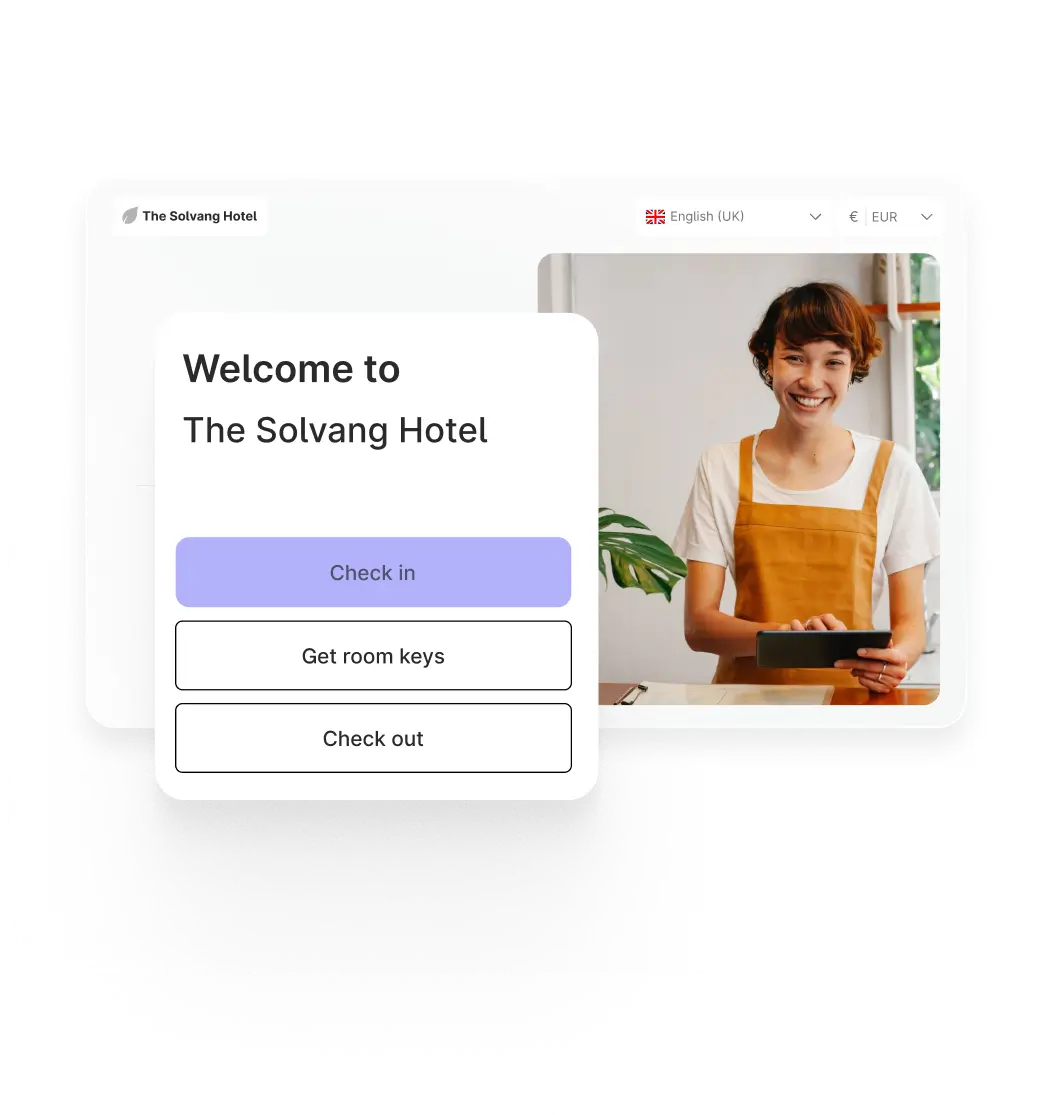
[00:11:37] Maria Mänty: That is true what you said. It is quite a bit complex. We have three restaurants, and we have two bars. One of the restaurants and one of the bars, we rebuild every year. So, before we had Mews, did we have challenges just as manual processes? They, of course, cause inefficiency and errors. And then, especially when we had two systems, one for the orders and one for the payments, of course, human errors a lot. And, of course and then there has that we have seasonal changes, for example, building a nice bar. It was a complicated table management. So the solution that Mews offered us was that, well, we still have the same complex FSD, but we implemented Mews terminal S2 for the combined ordering and payment. We integrated POS, PMS, and payments for real-time data. Hallelujah, I would say. And everybody said that. And then, of course, about the table management now, we have the easy updates for the seasonal layouts and the online check-in. And the results after this were, of course, amazing, to be fair.
[00:12:56] Matt Welle: Great.
[00:12:57] Maria Mänty: Faster payments, fewer errors, improved guest experience. And this comes, well, from many things, but also we calculated that every staff member that we have in the restaurant saved one hour of work time with this change. It's a lot, and we have so much, we have a lot of staff in the restaurants, of course. So, that was it. All that time they got, they can spend with the customers. We improved customer service, we improved upsetting a lot, and of course, the staff is much happier, no errors, more tips, and then what matters to us a lot is that it works even in minus five degrees, which is the temperature in the restaurant. So that's one factor.
[00:13:45] Matt Welle: But no one thinks about not making sure that this technology keeps working even if it's freezing cold outside.
[00:13:51] Maria Mänty: So it was a dramatic and drastic change for us.
[00:13:55] Matt Welle: I'm so happy to hear that. Thank you for sharing that. As a salesperson overseas in a hotel, I'm assuming you closed down in the summertime. So what does your year look like as a salesperson running a sales department like this?
[00:14:07] Maria Mänty: We have two sales teams; we have the group sales, and then we have the FITs. The group sales are working for the host of the hotel family, so all three destinations. And the FIT says it's working for the Arctic SnowHotel in Las Cruces. We have, part of them are seasonal workers, and part of them are permanent staff. For the permanent staff, it's actually one of our high peaks this summer. They can always, but it only downgrades by the number of customers. But then we are working here more for the strategic things, we are selling already two years ahead and preparations for the next year, preparations for the two years. So, we are working a lot in there.
[00:14:48] Matt Welle: You're busy.
[00:14:49] Maria Mänty: We are busy.
[00:14:50] Matt Welle: It’s not like you go on holiday for half the year, but you keep working throughout the year to fill the hotel in the wintertime, it sounds like.
[00:14:55] Maria Mänty: Yes. But to review the, let's say that the weak part of the sales is that they are made in the summer, in the meetings and sketches and sales calls and normally…
[00:15:05] Matt Welle: Nice. Because we're such a specialized product that works seasonally and you get these really big peaks, I'm assuming, of high occupancy, and then it drops once the snow starts melting. How do you price for that? Do you have a revenue management system like traditional hotels have, or do you have a different strategy towards pricing?
[00:15:21] Maria Mänty: Of course, the change is recognizable. Autumn is the shoulder season, and then December is the high season. But then again, we are quite a small hotel. We have only 39 in close and 20 low hotel rooms. And then we have a very nice demand, and the whole revenue sales is quite stable. So it's not actually that complex as one might think. So we have a really, the booking window is growing all the time. We don't do any dominant pricing. We plan everything in advance, all the campaigns, and strategically, of course, we put all the effort into the autumn growth and supporting that.
[00:16:04] Matt Welle: It's hard, is what I'm hearing, because it's such a challenging period, but at the same time, because you know how to run your operation, you know how to price it, for you, I think it sounds very natural. Whereas if I were a city center hotelier, I'd be like, “How do I price this? How would I go about planning my year?” But it is the thing that becomes natural once you've done it for a season, and then it just repeats. And then it just feels logical.
[00:16:28] Maria Mänty: We've been discussing. We're very open. As a company, we are really open to new things. We're really open to trying things, and we have the support from the owners that we are allowed to try things. So, of course, we've been thinking about a lot of things. But so far, it's been like this for many years, I assume. Not my knowledge is that long, but at the moment, it works really well.
[00:16:50] Matt Welle: And sometimes if something works, don't break it, right? Just keep doing it.
[00:16:53] Maria Mänty: Exactly. Yeah.
[00:16:54] Matt Welle: So, because the hotel's one of those bucket items on people's bucket list, what's something that you want people to remember once they've stayed? Like, what are some of the experiences that you guys create that people will remember for a lifetime?
[00:17:07] Maria Mänty: Accommodation, of course. It's an experience. We have amazing activities. One of the most wanted activities is a snow sauna. You know, in Finland, we love saunas. It's like a holy place for us, and we built 20 snow saunas in the SnowHotel. That is an amazing experience. I'm a local girl, and for a local girl, it's an experience. I tell you, it's quite tight. It's a narrow door there that you go, and it's made totally from snow and ice. And then the only thing is that when you're sitting on the bench in the sauna, that is a wooden one with so it feels nicer. There's just a normal stove inside, but it means that when you throw the water in the stove, because of its sauna, it's made of snow. It means that immediately, when the water hits the stove, it turns into steam.
[00:18:02] Matt Welle: Yeah.
[00:18:03] Maria Mänty: And the steam goes up and up and up and up. And soon, in a few seconds, you don't see anything because you are surrounded by the steam. And then you can feel the snow on your back, which is cold. And then, of course, because it gets warm, it starts melting a bit above a few centimeters, a few millimeters when we use it. So it starts melting the wall behind you, and you can start hearing the little tickling when it's, like, cracking then.
[00:18:30] Matt Welle: So, how often do you have to rebuild the sauna then if it melts every time you use it?
[00:18:33] Maria Mänty: I think we have at the moment, we have 20, and then we are using 5 at one time. So when one is refreezing, we can use the other one.
[00:18:42] Matt Welle: That's fascinating. I didn't know that. I thought you were just gonna put a sauna inside a thing, but you're using the actual igloo to kind of sit inside the heat.
[00:18:50] Maria Mänty: Yes.
[00:18:51] Matt Welle: Love that.
[00:18:52] Maria Mänty: It's amazing. It is amazing. It's one of the most, and then, of course, we have an activity, which is also, I said, we are professionals in Snow and Ice. So one is the ice sculpting that is like a workshop where we help and teach people to use the ice sculpting tools. And one last year, when we had a nice one, so oh, well, art is always a personal view, but then we placed them in our rice ice restaurant, so.
[00:19:19] Matt Welle: I'm so fascinated by this concept because it's so far from anything that I'm used to. I normally, in the winter, travel to the hot countries like Thailand or the South of Europe, and I'm so excited to actually travel up north very soon to actually experience what you guys are doing.
[00:19:33] Maria Mänty: Now that we are recording it, I will invite you next to visit us, latest next season, next winter, and now you have to promise that you will come.
[00:19:43] Matt Welle: I will promise.
[00:19:45] Maria Mänty: We will pamper you. We will take really good care of you. You're very welcome.
[00:19:48] Matt Welle: Knowing I'll be coming next season, what is something that you're planning next season, or what is something that you get excited about that you would love to deploy?
[00:19:56] Maria Mänty: Well, we have some plans, which I'm not allowed to tell or talk about yet. But for this year, for example, we had huge investments in the hotel. We're talking about the hotel as you're thinking about hotel guests, but we have two segments in the hotel. We have those who are staying in the hotel and also the visitors. Very important segments, both, and very different. So what we have done now is that we had a reception, and if you're a visitor, where do you go when we have questions? You go to the reception, which says we note that this is affecting the guest experience, especially for those who are staying in the hotel. So we have a huge, new park in our hotel that is a visiting point. That's for the visitors. Now we have the time because they are very different segments; those who come to the hotel, they have time, they want to know a lot about. They want to discuss. And, also, the checking sometimes even takes 20 minutes because there's so much, it is so, so different…
[00:21:01] Matt Welle: Experience.
[00:21:02] Maria Mänty: Experience that the guest wants to know a lot. And, of course, they will ask that from the reception. And then, again, the visitors know, they know exactly what they want, so they come, and they might have one question that where's the toilet, and then they will go and explore that place. So that's just the one thing. And then also we upgraded the hotel. For the hotel guest, we now have a huge old property for the hotel guest, the SnowHotel guest, I mean. And then, the SnowHotel lounge has it's their own private lounge with the facilities and also the plan B option if somebody wants to use the plan B option at night. So, for example, those, and then we had a new business we opened this year. So we have so many huge investments and so many huge things already this year. So, I think that next season, well, we’ll have something going on, of course, but we are enhancing the customer experience. And so that's like a continuous work that you can never be finished with.
[00:22:00] Matt Welle: Nice. I'm very excited to come and visit next year. Maria, you've, like, really described, like, a dream to me. I hope you have an incredible Christmas and holiday season, that the hotel is fully occupied and that people are spending lots of money, but also that they walk away with great experiences. Thank you so much for joining me today.
[00:22:19] Maria Mänty: Thank you.