Transcript
[00:00] Floris Licht: And there's always turnover in hotels.Right? So I mean, cross my heart, I know for sure that no housekeeper got firedbecause a hotel started planting trees. Right?
[00:21] Matt Welle: Hi everyone, welcome back to another Matt Talks Hospitality. And the topic I wanted to talk about today is housekeeping.Housekeeping has been a thing that I've experienced almost every week when Istay in a hotel. And I think, do I really need my room to be cleaned and mysheets to be changed and my towels to be changed? And a person who is, I think,very aligned with me on this particular topic is Floris. Floris is joining me.He's a hotel general manager for a large hotel here in the Netherlands. But atthe same time, he's the founder of Hotels for Trees. And he's approached thatchallenge of having to clean a room every single night with a solution that'salso good for the planet. Floris, thank you for joining.
[00:55] Floris Licht: Thank you for having me. Very excited to be here.
[00:58] Matt Welle: So I very quickly described what the idea was. Can youmaybe explain better what the idea around Hotels for Trees is?
[01:07] Floris Licht: It's actually as easy as you just explained. No, I mean,we have 250 hotel partners across the globe, about 40 different countries, andthey all offer their guests the opportunity to skip the stayover cleaning, aswe call it, so the in-between cleaning. So this only works if people stay formore than one night, of course. And then the hotel donates money, and withthat, a certified tree is planted on their behalf.
[01:33] Matt Welle: What does that mean, certified tree?
[01:34] Floris Licht: Well, that, you know, you can buy trees for a dollaronline and then hopefully somebody will chuck some seeds out of an airplane oruse a drone to plant something somewhere. But yeah, you might end up buying atree that's also sold to three other people. So we really work with certifiedplanters in the Netherlands or in Europe. We work with Trees for All, which isactually the biggest tree planting foundation in the Netherlands. They've beenaround for 20 years in the Netherlands. They've been around for 20 years. So wereally label the trees and actually have a notary who oversees this entireproject. And we only work on projects that we fully fund. So 100% our projectswith Trees for All, so that you don't run the risk that trees end up gettingsold to multiple parties. And we only invest in tree planting projects wherethe land is owned for the next 25 to 30 years. Because planting trees is veryeasy, growing trees is a different thing, right? So we grow trees actually.
[02:30] Matt Welle: So it's not one seed that you get for the skipping of thehouse, it's an actual tree that you plant.
[02:35] Floris Licht: Yeah, we plant trees. And we physically plant those treesourselves as well.
[02:39] Matt Welle: I've seen the photos. I've yet to make it there. I willcome one day.
[02:43] Floris Licht: We've had some users join us on the tree planting day.But we actually plant small trees between 50 centimeters and a meter, also withrespect for the biodiversity in the area, so no monocultures. And yeah, weorganize tree planting days where then our partners, our hotel partners, hotelcolleagues, general managers come and join us.
[03:04] Matt Welle: And it seems so simple, but then not many hotels are doingit around the world. There's thousands and thousands of hotels so what are theeconomics of it like how does it work financially for a hotel
[03:14] Floris Licht: Yeah the economics depend of course a bit on where thehotel is located and what the cost of labor is yeah but if you look at you knowa country like the Netherlands where we are now is that cleaning a roomtypically cost you know 10, 11, 12 euros. Many hotels use outsourced laboragencies and a tree costs five euros and because Hotels for Trees is acertified non-profit organization ANBI they call it in Dutch those donationsare tax deductible so then the net cost becomes about 3 euros 70, so hotelssave 11, 12 euros often struggle getting sufficient housekeeping employees inright so the labor market is not is very tight in the Netherlands and they save3 euro 80. So there's there's a benefit in the Netherlands and they save 3,80euro. So there's a benefit in the P&L of the hotel as well. And that's thewin, win, win, win, win, we always say, because guests like it, the teamstypically like it because it relieves a bit of the work pressure on thehousekeeping department, who are quite often a bit overwhelmed by all that'sgoing on in hotels nowadays. Employees like it, bookers like it, event plannerslike it, and the planet gains between 500 and 1000 trees every day at themoment.
[04:28] Matt Welle: How many trees have you planted to date?
[04:30] Floris Licht: We're approaching 800,000.
[04:31] Matt Welle: That's insane.
[04:32] Floris Licht: So we're hoping to hit a million nextyear.
[04:34] Matt Welle: Does that make a forest? How many trees in a forest?
[04:36] Floris Licht: Well about 2000 trees is about one square kilometer. Soyeah, you do the know. It's a forest.
[04:43] Matt Welle: It's a big forest.
[04:44] Floris Licht: Yeah, yeah. It's a big forest. Yeah. And we've supportedover 40 projects across the globe. We always try to source projects in theareas where our hotel partners are located, which then also offers us theopportunity to organize these tree planting days. So we've had those inBelgium, we've had those in the Netherlands. We're now working on two treeplanting days in Germany. We've looked at Portugal and Spain, so there'ssomething cooking there as well, which makes it extra nice for those hotelsbecause they can actually physically put the trees into the ground.
[05:18] Matt Welle: So you have a day job. You run a big, big hotel here inAmsterdam. So how do you combine this and where did this idea start from? Whydo you want to make your life so hard by having two jobs?
[05:28] Floris Licht: That's a good question. I ask myself the question everynow and then as well. No, I mean the main person running the Hotels for Treesorganization is Linda Borger. So she's my partner in crime as of the first daythat we launched Hotels for Trees. She's what we call the Chief Tree PlantingOfficer, CTPO. And yeah, this all started some three and a half years ago. Iwas allowed in my previous job, I was a general manager at the Novo Hotel atthe airport. And my owner allowed me to do an executive MBA at NyenrodeBusiness University. And during that course or during that program, I had thecourse on sustainability management with a very inspiring professor called AndréNijhof. And that really opened my eyes. Well, together with us going on fourtrips abroad and me seeing a bit more of the shape the world is in and thestruggles that we face. We went to Beijing, we went to Cape Town, we went toMontevideo, to Silicon Valley. And strangely enough, I started this executiveMBA and I thought, oh, if I come out of that, I'm going to be CEO of the world.And I actually ended up coming out of it a lot more holistic than I was everexpecting. So I thought, I started thinking about, okay, how can I make animpact? And I've always been passionate about sustainability. My former hotel NovotelAmsterdam Schiphol Airport was very sustainable as well. Not only builtsustainable, but also run sustainable. And I really wanted to, you know, impactthe industry, so to say. And for this course, sustainability management, I oncewrote a paper on Hotels for Trees, which got me a nice grade. It ended up thepile and then yeah funnily enough because of course the COVID period was verytough on all of us especially in the hotel industry but that actually gave methe time to you know think about oh you know I my excuse was always I'm not I'mI'm not going to execute hotels for trees because i already have a day job anda family and i want to do sports etc but then all of a sudden during COVID, Ihad tons of time to spend with my family and loved ones, which was nice. Butthen I also thought, okay, you always had this excuse of not doing it. Thatexcuse is now gone. So go for it. So that really triggered it. And we startedin 2021 with 10 hotels back then in the Netherlands only. And we're now, as Isaid, represented in over 40 countries, 250 plus hotels and counting.
[07:53] Matt Welle: What's your goal? What's the thing you hope to achieve withit? Is there an end goal to this, or is this an internal journey that you'reon?
[08:00] Floris Licht: Well, we're aiming for a million trees per year. That'slike our BHAG. But in a perfect world, it would be even nicer if hotels fortrees is not needed at all, because this becomes like the norm. But we're notthere yet. I think we're moving in the right direction in some parts of theworld. If you look at Scandinavia, for instance, it's very difficult for us toget started because many of the hotels there already have optional cleaning. Sothey've already flipped the system because they're a lot more eco-conscious ingeneral. And in the Netherlands, we're moving in the right direction. We havesome good movement in Germany and France, but in other parts of the world, it'sextremely challenging actually, because people from a cultural point of view,they're just not into sustainability as much as we are in parts of the Westernworld, so to say.
[08:45] Matt Welle: So I stay in hotels every single week, and most of the timethere's a little card in my bathroom that says, if you want to protect theenvironment, then drop your towels on the floor, and then we'll change yourtowels. And I always think that is not going to actually save the planet. Butwhat do you say to those hoteliers to convince them that Hotels for Trees isactually a better solution?
[09:07] Floris Licht: Yeah, I mean, those cards, I think, have been in hotelsfor the past 40 years and some then say, save the planet or be green orwhatever. And the question is indeed, you know, how much the impact is of, youknow, putting the towels on the ground. I mean, the way we sell this to generalmanager depends a bit on the general manager and if they are intrinsicallymotivated to do the right thing for the planet and the future of the planet, orif it's more of a money game. So it depends a bit. We test the waters becausethere is also this financial benefit. And in the hotel that I run, we'veactually done some AB testing. So we've had a period where we said to guests,okay, if you don't have the room cleaned, we'll give you a drink voucher. Wedid that for two months. And then we had another period of two months where wesaid, if you don't have the room cleaned, we'll plant a tree. And then thetrees won, so to say.
[09:59] Matt Welle: By a lot or?
[10:01] Floris Licht: No, it was a close call, but they won.
[10:02] Matt Welle: People like a drink.
[10:04] Floris Lich: Exactly. Yeah, but that also depends a bit, of course, onyour business mix. If you have a lot of leisure guests, they might go for thedrink more than single traveling corporates who wants to have a beer in a baron their own, you know, it might be a bit sad. Unless you have like a communaltable, then it becomes a different story. But then the trees won and yeah, andthat's how the concept also, you know, entered my hotel after I'd already beena GM there for quite a bit. But then it all started coming together.
[10:33] Matt Welle: Because how do you convince branded hotels? Branded hotelsoften have many rules about what's allowed, what's not allowed. Do you strugglewith getting into branded hotels versus independent hotels?
[10:42] Floris Licht: Yes, it's more difficult. So we have some, our key or ourperfect client, so to say, is either an independent hotel or a small chain or abranded hotel that is on the franchise side, and then takes a bit more freedominto how they live by the rules of the brand, so to say. But we have somecorporate branded hotels as well. But every now and then you come across brandswhere in the brand standards it's said that you're not allowed to incentivizepeople to skip the clean for reasons of security, for reasons of the quality ofthe room going backwards if somebody plants a tree for four days in a row, youknow, you have all the, you know, stuff going on in rooms.
[11:29] Matt Welle: Too many trees in the world. They can't handle their trees.
[11:30] Floris Licht: Exactly. So yeah, that sometimes becomes a challenge.
[11:38] Matt Welle: Yeah. So what does the data show? Like how, one in how manyguests will skip cleaning of the room and what's the impact that it has on thebottom line of a hotel?
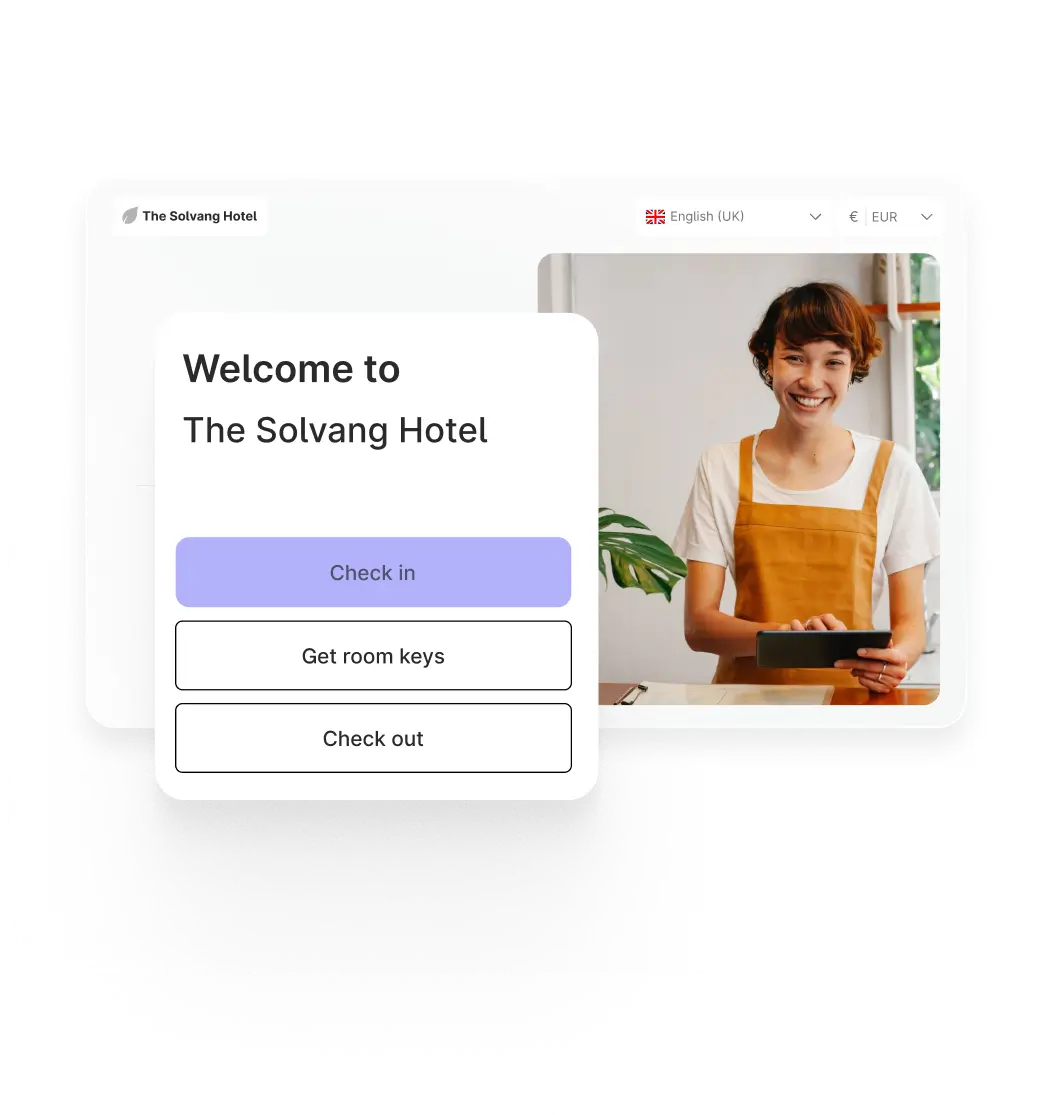
[11:45] Floris Licht: Yeah. So that very much depends on two things. The one ishow intrinsically motivated is the leadership of the hotel when it comes tomaking this work. And how do they engage the team and how do they get the teamon board? How excited is the team about this whole concept? And the secondthing is how is it embedded or not embedded into the entire guest journey? Soif you have a hotel that fully embeds it into the whole guest journey, and forinstance, a hotel that fully embeds it into the whole guest journey, and forinstance, a hotel that works with Mews, and people see this, maybe they get apre-arrival, you know, upsell email from Oaky saying, oh, you know, book a biketrip, get your bottle of champagne, oh, skip the clean. And then they get theonline check-in message from Mews where they can already skip the clean. Youknow, they can already indicate, don't clean my room, skip the clean. Then theycome into the hotel. There's a screen there saying, our guests have planted 500trees last month. There's maybe a little tree on the desk with one of the doorhangers. The receptionist has the time and takes the effort to explain theconcept. You know, that's where you see hotels with up to 40% uptake. And with40%, I mean, 40% of all stay over guests, right?
[12:55] Matt Welle: Yeah not every guest stays for more than one night.
[12:58] Floris Licht: Exactly, exactly. And we track that on the website aswell. So if you go on the website, you can actually see our top performinghotels.
[13:04] Matt Welle: Who is the number one?
[13:06] Floris Licht: Well, it typically tends to be like smaller, likeboutique hotels, where the owner is very passionate about this concept.
[13:11] Matt Welle: There's real culture built around it.
[13:13] Floris Licht: Yes. So we have, for instance, I think they might stillbe number one now. I should have looked at this morning. Sorry. So, no, butthere's like a hotel, Oasi Hotel in Italy, and the general manager there isalso a strong advocate of sustainability. She actually also co-organizes a bigconference in Italy where she also pushes this topic. And she has really, youknow, embraced our concept and is also sort of an ambassador in
the Italian market. And they have actually developed their own wooden engraveddoor hangers, which is a bit more fashionable than maybe the recycled plasticor the paper you see in other... So then it really becomes part of the boutiqueexperience as well. And they are doing very, very well.
[13:58] Matt Welle: Yeah. Nice. Because you started an issue with the doorhanger. So normally you have these door hangers in the room that says, oh,clean my room or don't disturb. And you added the door hanger to that, which isthe skip my cleaning and donate a tree. That's where you started more of ananalog approach, which I think is critical because not everyone's alwaysonline. And then with Mews, we started saying, well, there's also the digitalguest journey that we have. Do you see, you know, we've injected it with, for example,the booking or the journey online check-in or through a partner like Oaky. Doyou see that that digital and analog experience combined has a bigger effect?Are those hotels thriving more with this initiative?
[14:33] Floris Licht: Yes, absolutely. Absolutely. Yeah. So if a hotel doesn'thave Mews or like a more legacy PMS where they can't really embed this in theguest journey, then they only have the door hanger. If hotels say, oh, we don'twant anything in the rooms, we just use Mews. That's also of course an option.So you have the online option and the analog option, but it's when those twoare used, you know, combined, that's where we see the the biggest impact andand at all you know us becoming more part of the whole ecosystem of hotels thathas really shifted when we launched the second version of our our platformwhich actually became an API so initially we were just a WordPress website youknow that my good friend Casper van Diemen from continues offered to us. He didthe PR for us initially. He gave that to us for free because he liked the concept,but we had this WordPress site, which was like an Opel that we started puttinga spoiler on and new rims and a new race. So we started pimping the Opel, butin fact, you know, we maybe needed an Audi. So at the start of this year, weactually invested quite a substantial amount of money and our, yeah, we nowhave an API and the API now can connect with anything and everything that makesa hotel IT infrastructure. So it can be a housekeeping app, it can be anotherPMS, it can be a WhatsApp engine, the likes of Runnr.AI. You could link withRunnr.AI as well so that you're in the bar in the evening, it will say, MattWelle, another beautiful day tomorrow, would you like us to clean your room orplant a tree? And then
you say, oh, give me a tree. And then, bam, it goes into Mews. And thenhousekeeping knows, front office knows, the guest maybe gets an emailconfirming that a tree is planted on their behalf. So we really want to becomepart of that entire guest journey and that entire IT ecosystem that runshotels, basically. And with the API, we now can, which is really cool.
[16:28] Matt Welle: And do you see that housekeepers have embraced it? On theone side, you know, you might replace some labor, so that's their job. Do yousee that, you know, that culture building with housekeeping that they actuallylove it and it's not just creating another task for them to do?
[16:44] Floris Licht: Yeah, I mean, many hotels, housekeepers have some typeof, you know, app or tool in which they do the admin on their cleaningactivities. And nine out of 10 times, it's just a question of adding anotherbutton, right? They have a button saying D&D. So I did not clean this roombecause the guest had D&D and now there's another button with a tree on it,right? So for them, that's the only difference. And the impact depends a bit onif the housekeeping department is like fully insourced or outsourced. If you'reusing partial outsourcing, of course, then you can reduce this part of yourlabor, which makes the savings even more substantial, of course. And there'salways turnover in hotels, right? So I am, cross my heart, I know for sure thatno housekeeper got fired because a hotel started planting trees, right? Becauseyou slowly start working on it and then, you know, 10 trees a day, 23 trees aday. But that labor you can then also, or that time you can also use to increasequality or train people or you know what not. So yeah, we actually get verypositive feedback from the housekeeping teams as well.
[17:52] Matt Welle: So good. Yeah. So what does the futurelook like? What's your plan for next year?
[17:55] Floris Licht: Yeah, well, recently we hired a reallytalented market manager for the German market, Camilla. And actually yesterday,a press release went out in the German market, DEHOGA is, I think, the industryassociation. And I was like, oh, that's a good start, right? Announcing, youknow, her arrival saying, oh, hotels for trees. We've always been around inGermany, but I think so far we have just below 20 hotels, which is not veryimpressive considering the size of the German market. But Camilla is anabsolute superstar. So she's now, she used to be like an ESG lead at a bigconsultancy firm but also wanted to you know um have something with a bit morepurpose and impact and she felt that you know was a perfect match and we agreeso we're very happy to have her on board so we're hoping to uh yeah grow in theGerman market we have already we've had already our colleagues in Australia, NewZealand and America and Canada so two fellow Dutchies who live on oppositesides of the globe. So actually in two weeks we have another team call and thenone of them needs to wake up at like six in the morning and the other one isabout to go to bed. We make it work, but they have their own like chapters. Sowe have separated the globe in three parts and Linde and myself and Camilla andAnna who also works for us, we're basically focusing on on Europe, Middle Eastand Africa but we see great opportunity when it comes to hiring native speakingmarket managers to really develop countries because you you need to become partof you need to become part of the whole local community yeah the localcommunity but it's you know industry media it's talking at schools it's goingto conferences it's sitting on podcasts with Matt Welle you know but it's stufflike that, that really then you become like an entity and people start trustingyou. Because hoteliers, they tend to have their own mind. So for us to do coldcalling or approach people via LinkedIn and say, oh, do you like us? It doesn'treally work. They need to see an article and then hear a podcast and then see apresentation at a hospitality event, a booth at a conference and then maybeafter three, four, five times they're like this might be something and then sothat's how we start and that has really worked in the Netherlands and we nowneed to apply that same strategy in a country like Germany and then we'll go tothen we'll go to France, then we'll go to Belgium. We have a good colleague inBelgium and France as well so, there's enough opportunity there.
[20:29] Matt Welle: Nice. So if someone's listening and still doubting, likewhat would you say? Like how would you convince them that actually, right nowis the moment to go to your website and actually just sign up and get going?
[20:40] Floris Licht: Yeah, I mean, I find it difficult to answer because Idon't understand what's not to like, right?
[20:45] Matt Welle: Why would you not do that?
[20:47] Floris Licht: Why would you not do it, right? And especially when hoteliersthen say, oh, but we have a system whereby we offer people 1 000 loyalty pointsor when whereby we offer people a free coffee in the bar you know that thatdoesn't really work actually yesterday there was um the there was a banker fromING they did research and and uh he was a sector leisure specialist and theydid research and they had concluded then you know offering people a free drinkto skip the clean doesn't work. Well, I think we're proving that planting atree and skipping the clean does work, right? So if it improves the bottomline, if it reduces workload in housekeeping, if your employees love it, yourcommunities love it, municipalities love it, meeting and event bookers love it.If you look at the conversion that we have in our hotel linked to us beingfront runner when it comes to sustainability, it's hard to quantify, right? Abig event booker would never say to you, oh, we signed with you because you'replanting trees and filtering bottled water and stuff like that. They will neversay that, but they are asking us these questions, you know, and recently thehotel was awarded Green Key Gold and that helps. It helps conversion, it helpsyour branding, it helps your engagement, you know, especially the youngergenerations coming into the workforce they increasingly want to work for hotelsthat show a bit more purpose in the way they go about their business so if youthen really make this a part of your culture and the way you operate yourbusiness not only build a hotel right yeah the building side is more owners andcapex but how you run the hotel if you do that in a more sustainable way itwill help your recruitment it will lower your turnover it will lower your sickleave but it's hard to quantify but we are experiencing that in our hotel thatit's really making an impact.
[22:32] Matt Welle: We've been working together for a few years and and you'realways very thankful to me for becoming a partner but actually I'm verythankful for to you to the thing you're doing is really special and you couldjust get on with your job and then go home and have the easy life but you chosethe hard routes to do the right thing for the planet and i just want to saythank you for on behalf of all of our people who love our planet yeah um Ithink it's actually really special for someone to just go out of their way todo something good for the world and actually have an impact on our industry aswell and then you've combined somehow your passion for hotels with your passionfor the world and like it seemed like such a simple idea but then no one haddone it so I'm like yeah it seems simple but the execution is still hard and I'msure that you work more hours than your contract states in life. But thank youfor everything you're doing. It's really powerful.
[23:17] Floris Licht: Thank you. Yeah, that really means a lot to me hearingthat from you, especially. So thanks.
[23:21] Matt Welle. Nice. Thank you for joining today.
[23:23] Floris Licht: Thank you.