
Key takeaways
- Higher hotel employee satisfaction leads to lower turnover, more consistent guest service and less operational pressure on hotel teams.
- Strategies like competitive compensation, flexible scheduling, peer recognition and structured onboarding help hotels build a more motivated, stable and engaged workforce.
- Tracking turnover rates, absenteeism and employee pulse survey results helps managers detect satisfaction issues early and take action before service quality declines.
How much does a disengaged front desk employee cost your hotel's reputation? In hospitality, the guest experience starts and ends with your team, and when staff feel undervalued, it shows.
High turnover, low morale and inconsistent service are often signs of one underlying problem: poor hotel employee satisfaction. Employee recognition helps, but improving satisfaction takes a broader approach across scheduling, leadership, onboarding and daily operations.
For hoteliers and operations managers, addressing this starts with knowing where to focus. In this article, we'll cover practical ways to improve hotel employee satisfaction, reduce turnover and deliver better guest experiences.
Why hotel employee satisfaction matters more than ever
Hotel employee satisfaction matters more than ever, as disengaged staff can directly impact service quality and the overall guest experience.
According to the AHLA's 2025 State of the Industry Report, 64.9% of U.S. hoteliers are still dealing with staffing challenges, and retention remains one of the hardest problems to solve. When teams are constantly changing, service becomes inconsistent and pressure builds across every department.
Consider a housekeeping team stretched thin during peak season with no recognition for their effort. Morale drops fast and guests start to notice. The effects of employee recognition are clear in situations like this. Staff who feel valued stay longer, work more consistently and take greater pride in representing your hotel.
Benefits of higher hotel employee satisfaction
Higher hotel employee satisfaction strengthens every part of your daily operations, from on-the-floor service delivery to long-term business performance and guest loyalty.
The following key benefits show exactly why investing in your team pays off well beyond morale alone:
Benefit
What it means for your hotel
Reduced turnover and recruitment costs
Satisfied employees stay longer, reducing hiring and training costs while giving managers the staffing consistency needed to maintain service standards.
Enhanced guest experience and review scores
Supported staff communicate more clearly, stay composed under pressure and deliver more attentive service, resulting in stronger guest reviews and higher repeat-booking rates.
Increased productivity and operational efficiency
Engaged teams coordinate more effectively across housekeeping, maintenance and front desk roles, reducing delays, improving room readiness and handling guest requests faster during demanding shifts.
Stronger employer brand and easier recruitment
Structured employee incentive programs, fair scheduling and visible career paths build a workplace reputation that attracts quality candidates and reduces time spent on hiring.
Proven strategies to raise employee satisfaction levels
Raising hotel employee satisfaction starts with addressing the everyday experiences that shape how staff feel about their work. The strategies below cover the areas that have the greatest impact on how hotel employees feel, perform and grow within their roles.
Create a supportive working environment
A supportive working environment starts with clear communication and accessible leadership. For starters, make sure that your employees know who to go to when they have an issue.
Setting up regular one-on-one meetings and check-ins helps you gauge staff satisfaction and identify any pain points before they escalate.
When employees know there is a structure in place to support them, satisfaction levels improve. That support helps your team feel heard and makes it easier to solve small issues before they turn into bigger operational problems.
Offer competitive compensation and benefits
Competitive pay is one of the most direct ways to show employees they are valued. Beyond base salary, benefits like transport support, flexible leave and meal allowances make a real difference to daily work life.
These offerings form the foundation of broader employee engagement strategies, helping hotels reduce turnover and build a workforce that feels genuinely invested in the property's success.
Prioritize work-life balance and flexible scheduling
Unpredictable schedules are one of the fastest ways to burn out hotel staff. Giving employees enough notice before shift changes, rotating unpopular shifts fairly and limiting overtime shows respect for their time.
Staff who can plan their personal lives tend to be more focused and consistent during busy service periods.
Implement horizontal leadership
A horizontal leadership structure improves employee satisfaction when managers stay visible, approachable and ready to address problems as they come up. It also ensures that employees understand the hotel's business goals and feel genuinely invested in helping to achieve them.
When staff feel part of a shared purpose, coordination between departments improves naturally. Teams communicate more openly, adapt faster and take greater ownership of the work needed to keep daily operations running smoothly.
Send out satisfaction surveys
Building trust is essential for happy employees, and one of the ways you can do this is by actively showing that your hotel management cares.
Short regular pulse surveys help you understand how your team is feeling without waiting for annual reviews. They make it easier to spot what's working, what needs attention and where frustration may be building.
You can use similar strategies with your staff as you do with reputation management.
Recognize outstanding performance with hotel employee awards
Employees perform better when their efforts are consistently acknowledged. Formal recognition, such as top service awards or employee-of-the-year programs, gives staff a clear reason to take pride in their work.
Peer recognition matters just as much as manager feedback. When colleagues can openly acknowledge each other's contributions, it strengthens team culture and reinforces positive behavior across departments.
Guest feedback is another powerful motivator. Sharing positive guest comments with the team reminds employees that their work directly affects the hotel's reputation, giving staff a genuine reason to maintain high service standards.
Upskill and enable career growth
Upskilling is key not only for operations but also for hotel employee satisfaction levels. It offers numerous benefits like filling skills gaps across departments, increasing employee retention levels and giving your hotel a competitive advantage.
Career growth opportunities are just as important as upskilling. Employees who can see a clear path forward are more likely to stay motivated, perform consistently and build long-term careers at your property rather than looking elsewhere.
Setting up a defined pay and position structure, with clear levels such as Junior, Senior and Lead, gives employees a tangible goal to work toward. Knowing that dedication and hard work lead to real advancement directly supports long-term job satisfaction and reduces the risk of losing good staff to competitors.
Encourage accountability and empowerment
Accountability is important to give staff a sense of responsibility. Instead of micromanaging employees, hold them accountable for their daily tasks.
Give them the tools they need to be successful at their job, like adequate on-the-job training, and designate people they can go to when they have questions.
This way, they are ready to handle anything that comes their way, and they are empowered to make decisions for the benefit of the hotel.
Invest in onboarding and the first 90 days
The first 90 days shape how new hires feel about your hotel long before they settle into a routine. Structured onboarding, practical role training and regular manager check-ins help employees build confidence from day one. Staff who feel supported early are more likely to stay and grow within your property.
Use technology to reduce frustration
Outdated systems create avoidable frustration that chips away at staff morale over time. Modern technology like hotel property management software simplifies task management, reduces repetitive admin work and improves communication between departments.
When employees spend less time wrestling with inefficient processes, they have more time and energy to focus on delivering better guest experiences.
How Stay Awesome scaled from 2 to 7 properties in 18 months
Stay Awesome relied on Mews to simplify onboarding, automate operations and reduce repetitive front-desk work across its growing portfolio. Teams adapted quickly to the system, while self-service check-in and automated workflows helped staff spend more time supporting guests instead of handling manual operational tasks.
How to measure and monitor employee satisfaction over time
Improving hotel employee satisfaction starts with understanding what your team experiences day-to-day. Tracking the right metrics and maintaining a consistent feedback culture helps managers spot problems early, before they affect retention or service quality.
Key satisfaction metrics to track
- Track turnover rates to identify departments where disengagement or workload issues are most concentrated.
- Monitor absenteeism trends, as frequent absences often signal burnout or low morale within specific teams.
- Run short pulse surveys to measure satisfaction more regularly than annual reviews allow.
- Review guest feedback about staff, since service-related comments often reflect underlying employee satisfaction levels.
Continuous feedback culture
- Schedule monthly manager check-ins so employees can raise concerns before frustration builds across departments.
- Use anonymous feedback channels to give staff a safe space to share honest opinions.
- Share survey results with the team to show employees that their input leads to real action.
- Clearly communicate the changes that the management plans to implement after each round of employee feedback.
Build a more satisfied hotel team with Mews
Hotel employees perform better when the systems around them work just as hard. Outdated workflows add friction to everyday tasks, leaving staff with less time for guests.
Mews brings PMS, housekeeping, payments and reporting into one connected operating system, helping teams spend less time on repetitive admin and more time with guests.
Hotels that have made the switch have seen the difference firsthand.
"Mews proved to be a supportive and strategic partner that helped us modernize the hotel, especially the way we approach guest experience." – Hotel Lancaster.
Here's what hotel teams can do with Mews:
- Automate repetitive front desk tasks like check-ins, check-outs and reservation management
- Manage housekeeping with real-time mobile updates and task assignments
- Access live billing and operational updates, with dashboards that refresh every two hours
- Reduce manual work with connected workflows across bookings, payments and guest communications
Book a demo to see how Mews can help your team work smarter and deliver better guest experiences.
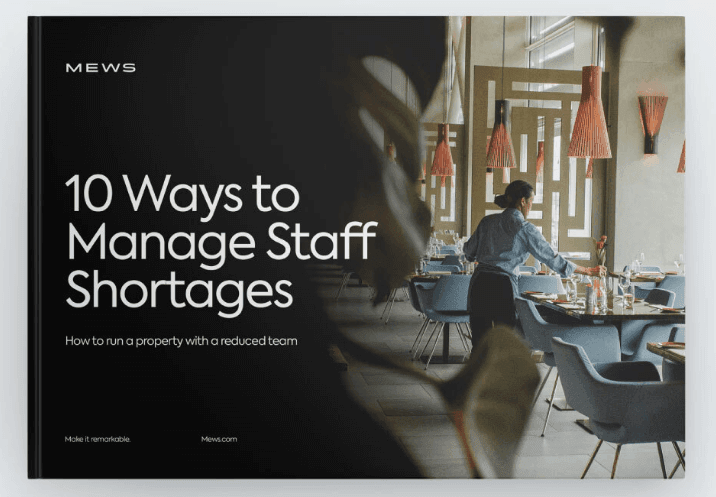
10 Ways to Manage Staff Shortages
Sometimes even if you have great employee satisfaction levels, global factors beyond your control may disrupt your operations.
But your property doesn’t have to suffer. Our guide, 10 Ways to Manage Staff Shortages, gives you tips on how to run a property with a reduced team, from smart technology that reduces your workload to better staff engagement.
How do you measure hotel employee satisfaction accurately?
How do you measure hotel employee satisfaction accurately?
Hotel employee satisfaction can be measured through regular anonymous surveys, one-on-one feedback sessions, employee retention rates and engagement metrics. Tracking trends in absenteeism, turnover, productivity and guest satisfaction scores also helps identify how employees feel about their workplace.
How often should employee recognition programs run?
How often should employee recognition programs run?
Employee recognition programs work best when they run consistently throughout the year, with informal recognition happening regularly and formal programs conducted monthly or quarterly. Regular, timely recognition helps employees feel valued and keeps engagement and morale high.
Which low-cost benefits improve staff morale quickly?
Which low-cost benefits improve staff morale quickly?
Low-cost benefits like flexible scheduling, employee recognition programs, free meals during shifts, wellness initiatives and professional development opportunities can quickly boost staff morale. Small perks such as extra break flexibility, team appreciation events or public acknowledgment of achievements also help employees feel valued and motivated.
How does staff satisfaction influence guest review scores?
How does staff satisfaction influence guest review scores?
Higher staff satisfaction often leads to better guest experiences because engaged employees are more attentive, responsive and motivated to provide excellent service. As a result, hotels with satisfied staff typically see stronger guest review scores, increased loyalty and more positive online feedback.
What technology can streamline employee feedback collection?
What technology can streamline employee feedback collection?
Employee feedback platforms, pulse survey tools, mobile apps and HR management software can streamline feedback collection by making it faster and more accessible for staff. Tools with anonymous surveys, real-time reporting and automated insights help managers gather honest feedback and respond more effectively.
Written by

Eva Lacalle
Eva has over a decade of international experience in marketing, communication, events and digital marketing. When she's not at work, she's probably surfing, dancing, or exploring the world.