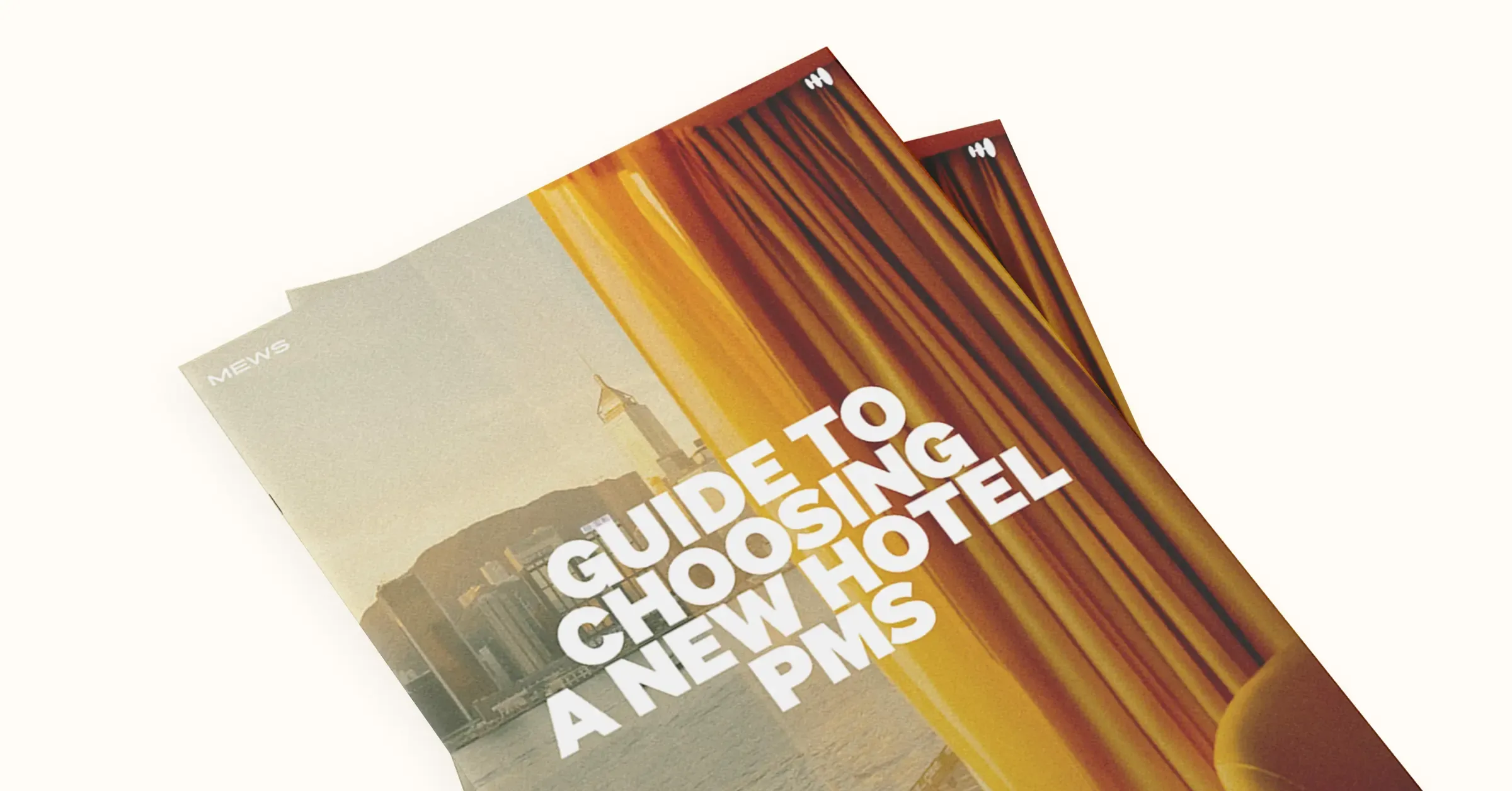
Thinking about changing your property management system? That’s usually a sign that your hotel has outgrown your current software.
This guide will help you:
- Spot the signs your current system is holding you back
- Understand what a modern, connected hospitality operating system should unlock
- Prepare for a smooth, low-risk switch
No scare tactics. No sugar coating. Just practical insight from hotels that have already made the move.
When do you know it’s time to change your PMS?
On average, hoteliers used to switch systems every seven years. Today, with cloud-native platforms and faster onboarding, that timeline is shrinking.
But the real trigger is rarely age. It’s friction. If you’re experiencing any of the following, it’s time to reassess:
- Manual workarounds and repetitive admin
- Slow check-ins and clunky guest journeys
- Disconnected tools and fragmented data
- Revenue leakage from siloed systems
- Limited visibility across multiple properties
- A platform that can’t scale with your growth or security needs
Hospitality is under pressure – rising costs, staffing challenges and higher guest expectations. Your hotel PMS should relieve that pressure, not add to it.
Start by speaking to your team. Where are they losing time? What tasks pull them away from guests? If the system feels like a barrier instead of a backbone, that’s your signal.
One of the main reasons why hoteliers don't migrate more often is the fear of change – what if the PMS switch doesn't bring substantial improvements and cost savings?
The truth is, hoteliers who stay in the same place lose in the long run. Modern platforms deliver more personal, seamless guest experiences while unlocking additional revenue streams and improving operations. That’s something you can’t afford to miss out on.
From siloed PMS to connected operating system
You shouldn’t approach tech transformation as a like-for-like switch. If you do, any deep lying issues won’t change – and your hotel won’t reach its true potential.
A traditional PMS manages rooms. Often, it sits in a silo, meaning everything gets harder. Data is fragmented. Reporting is manual. Guest experiences feel disjointed.
A connected operating system, however, links your PMS with payments, POS, guest messaging, revenue management and more. That means:
- One source of truth across departments
- Real-time insights instead of static reports
- Automated workflows instead of manual reconciliation
- A smoother experience for both guests and staff
The shift isn’t just technical – it’s strategic. You move from managing tasks to orchestrating performance.
Useful tips to keep in mind when switching to a new PMS
Even with modern cloud platforms, preparation matters. Here’s what to focus on.
1. Guest experience impact
Look beyond features. How does the system improve check-in, payments and communication? Can it automate messaging and personalize offers without extra work for your team?
2. Revenue potential
Ask for proof. A modern PMS should help you drive upsells, use dynamic pricing and boost revenue from bookable services like meeting rooms or parking. Case studies with hard numbers are your best friend.
3. Integrations and flexibility
No single provider does everything. The bigger the integration app store, the better, but also consider the cost of connecting new integrations (it should be free). Check whether there are plug-and-play options, and if add-ons can be rolled into your PMS contract.
4. Security and compliance
You’re responsible for guest data. Enterprise-grade security, clear documentation and strong uptime records should be non-negotiable.
5. Analytics and visibility
Real-time dashboards across departments and properties are essential. If reporting is fragmented or comes at extra cost, think twice. Integrated analytics tools are a real bonus, as they’ll help you to make strategic decisions based on trends, reports and smart business intelligence.
6. Onboarding and support
Fast onboarding, embedded training and responsive support reduce risk. Ask about response times, self-serve resources and what happens after go-live.
7. Innovation mindset
Choose a partner with a product roadmap that matches your ambition. AI, automation and new revenue models should be part of the conversation.
The advantages of switching to Mews
Hospitality is changing fast. You need a tech partner that focuses on what will truly make a difference for your guests, staff and bottom line: efficient automation, revenue from more than just rooms, and connected systems that drive scalable impact.
1. Efficiency by design
With Mews, automation removes the repetitive work that slows teams down. The result is simple: less admin, more time for guests.
- Embedded payments reduce errors and reconciliation time
- Automated guest messaging runs in the background
- Real-time housekeeping updates speed up room turnover
Proof point: Hotels using Atomize with Mews report up to 35% higher RevPAR and save 20–30 hours per month per revenue manager.
2. Revenue beyond rooms
Your PMS should help you capture value across the entire guest journey. With Mews, hotels drive revenue through:
- Automated upsells during online check-in and kiosk journeys
- Bookable spaces such as meeting rooms, parking and coworking
- Dynamic currency conversion for international guests
Proof point: Hotels see a 3x higher upsell rate when guests use Mews Guest Portal and Mews Kiosk, with 70% more upsell revenue per check-in than front desk.
3. Impact that scales
Growth creates complexity – your PMS should simplify it.
Mews offers:
- Centralized portfolio management across properties
- Connected guest profiles with spend history and preferences
- AI-ready infrastructure built on clean, structured data
Proof point: At Hotel Lancaster, the team connected 13 solutions through Mews Marketplace, automated payments and freed up the equivalent of one full-time employee.
Ready to make the move?
Switching your hotel software isn’t just a system change. It’s a strategic upgrade.
Download the Guide to Choosing a New Hotel PMS to explore the warning signs in detail, see what a connected hospitality operating system can unlock for your business, and learn how onboarding with Mews works in practice.
What happens if something goes wrong with the switch or my PMS?
What happens if something goes wrong with the switch or my PMS?
Mews offers 24/7 support, fast response times and an in-product AI assistant that resolves around 90% of queries instantly. If you need a human, you’ll get one quickly. You’re never left alone.
Will switching PMS help me make more money?
Will switching PMS help me make more money?
Yes – and the data backs it up. Hotels using revenue management with Mews report up to 35% higher RevPAR. Automated upsells and embedded payments unlock incremental revenue while reducing leakage and operational costs.
Does Mews integrate with what I already use?
Does Mews integrate with what I already use?
Mews has an open API and a large marketplace of plug-and-play integrations. Whether it’s CRM, housekeeping, spa or loyalty tools, you can build a tech stack that fits your needs. Book a demo or explore the Marketplace page to see what’s possible.
Do other hotels like using Mews?
Do other hotels like using Mews?
Thousands of properties globally run on Mews. You can explore detailed customer stories on our website and independent reviews on Hotel Tech Report to see real-world results and feedback.
Will I break my operations during the switch?
Will I break my operations during the switch?
No. With structured onboarding, pre-configured templates and guided setup, many properties go live in as little as a week. Careful migration planning minimizes disruption and ensures continuity.
How much does changing PMS cost?
How much does changing PMS cost?
Mews offers transparent pricing with no hidden fees. You can choose onboarding options that suit your property size and complexity, ensuring clarity from day one.
Why does Mews onboarding work so well?
Why does Mews onboarding work so well?
Because it’s built for modern teams. Embedded guidance, micro-learning and scalable rollouts allow single properties and large groups to deploy efficiently. Many multi-property operators standardize globally without relying on costly consultants.
Written by

Anuska Linc
Anu prefers unscrambling words over mincing them. Always punny, sometimes funny. You will find her if you want to in the garden unless it's pouring down with rain.