What to expect?
Meet your speakers

Matthijs Welle
CEO, Mews
After years in the trenches of hospitality, Matt joined the Mews journey during its early days in 2013. Since then, he’s been our fearless CEO, leading the company and the industry forward.

Tess Mattisson
Vice President & Head of Product - Hospitality, ASSA ABLOY
Tess started out on the hotel side, having worked in leading roles at Strawberry, Choice Hotels and Scandic Hotels, before moving into technology. She is now the Vice President & Head of Product for the hospitality sector at ASSA ABLOY.
Episode chapters
Transcript
[00:00:00] Tess Mattisson: If you look at locks, something you can touch and put it on the door, but the magic is in the software. What you can do with the access management system has nothing to do with the handle of the lock. Today, the magic is in the software. The hardware reacts to the capabilities of the software.
[00:00:31] Matt Welle: Hi, everyone. Welcome back to another Matt Talks Hospitality. And today we have a topic that is very near and dear to my heart, which is door locks in hotels. And it's close to my heart because it's been one of the challenges that we struggled with 13 years ago when we started with Mews and we wanted to get rid of reception desks. And back in the day, you could not run a door lock system from an iPad. But the times have changed, and we've had a really special partnership with Assa Abloy. So, today I'm excited to bring in Tess Mattisson, who's the Vice President and Head of Product for Hospitality at Assa Abloy. She started out on the hotel side, just like myself. We worked in hotels for years, and Tess worked at, I think, Strawberry and at Choice Hotels. So, I'm really interested to actually get her perspective on that time in hotels and how the kind of door lock integrations have changed and then talk about what this partnership is that we have between Assa Abloy and Mews. Tess, thank you for joining me today.
[00:01:21] Tess Mattisson: Oh, thank you for having me, Matt. And so good to see you again.
[00:01:24] Matt Welle: Did you, like, me, always want to work in hotels? Because I knew when I was like, 5 that I was going to be a hotelier. Was it the same for you?
[00:01:31] Tess Mattisson: I had my first job at a hotel, the Sheraton Hotel in Stockholm, when I was 17 years old. And to be honest, the reason I got that gig is they kicked me out of school and to kind of preserve the place, my spot to, like, reapply next year. I needed to have, like, an internship, so to speak. And my mom was a travel agent. She knew the head of sales for Sheraton. She was like, just give her a gig, give her anything. But because I was 17, I wasn't allowed to be in front of guests. So, they're, like, we can put her in the laundry. It's a time when actually the hotels had their own laundry in the building. That's how long ago this is. So, you know, I started and Matt, I just fell in love with the industry, fell in love with the people that were in love with the industry. And it's just been a love affair ever since.
[00:02:15] Matt Welle: I love it. And you went the sales and marketing route. So, there's always two ways to get to general manager. One is kind of the sales and marketing route, and the other one is the F&B route. Was your plan to become a general manager ultimately, and then you just veered off that path, or what was your career…
[00:02:29] Tess Mattisson: The grand plan, you mean? I had none. That's the thing. So, I've done everything from operations. Actually, the reason I ended up in commercial was because I did F&B. So, starting in operations, then I did F&B, and I realized we're doing so many great things, and I want to share this. How can I get more people to experience what our hotel guests are experiencing? And that's kind of how I went into marketing. And then I was like, okay, marketing is all about putting heads in beds. How do we make money out of this? And that's kind of where I combined it with sales. So, there hasn't been a kind of beaten path to where I ended up. It's just been, is there a business problem or an opportunity, and can I help solve it or tap into it? That's kind of where my path has taken me. So, no grand plan.
[00:03:12] Matt Welle: No, it's great. Like, sometimes it's for the best because I, sometimes, regret that I had such a solid plan that it didn't allow me to sometimes take an opportunity left or right, but actually just keep wanting to go up and. And it blocked me at times. So, I think sometimes not having a plan is a better plan.
[00:03:26] Tess Mattisson: Never too late, Matt. Never too late.
[00:03:29] Matt Welle: So, at the time when you were in hotels, technology was very different than it was today. What was something you were missing back then in hotels that you wish you had technology for that today we actually have that you would have loved?
[00:03:40] Tess Mattisson: Oh, it's just the free up time for the staff. I think that, you know, starting in operations, my team and myself, we were spending too much time behind the screens because we had to, you know, and I think that was, everyone was struggling with it because the people that are passionate about hospitality, they are really, really passionate about meeting people and giving that, like, exceptional experience. So, when you're forcing these people to be stuck behind a screen or stuck in a POS, that takes forever and ever; it's frustrating for them. So, I think that was the one thing I think that we've gone along long way. Like, 30 years, Matt. That's how old I am. A lot of things have happened, but we're now enabling like the service agents or the staff that are really passionate about meeting people that actually provide service. And I think that warms my hospitality heart to see.
[00:04:34] Matt Welle: I love that. So, you're head of product at Assa Abloy Hospitality. Is that door locks, or are there other products that you're also taking care of?
[00:04:41] Tess Mattisson: So, interesting that you call door locks because I think that is my biggest kind of, what? What do you mean, door locks? Yeah. So, I think you're perfectly right. I think that's how we're perceived, you know, and that's a very legacy way of looking at it. Because if you look at locks, it's something can touch and put on the door, but the magic is in the software. What you can do with the access management system has got nothing to do with the handle of the lock. So, if we look at buying a lock and you look at Assa Abloy as a lock provider, that dates back to like 50 years ago, when we did like the punch cards, and everything was just hardwired, you know, from mechanical locks to electronic locks. Today, the magic is in the software. The hardware, you know, reacts to the capabilities of the software. So, I don't see us as a lock company. We sell hardware that's compatible with a range of software products. Some of them are access, some of them are EMS (energy management systems), some of them are guest room management systems, some of them are networks, gateways, connectivity, so, I mean, we have a broad range of services, but I think that the perception is that we're selling a lock.
[00:05:57] Matt Welle: So, is the core of the company a software company then today, or is the core still hardware?
[00:06:01] Tess Mattisson: I would say the core is hardware. Well, you can't have one without the other, right? But there's just limitations on what the hardware can do. Where we're looking at what has developed and all the new features, functionalities, and enablers that sit in the software. The hardware, yes, we can tweak it, you know, but it's going to be on your door for like 15 years. You know, how much software develops in 15 years? You, of all people, know, imagine, you know, if that would be the same cadence for hardware, that wouldn't work. So, that's kind of we're putting our emphasis in developing software. You still keep your hardware because that's fixed on the door. You don't want to tear that down. But the magic sauce is in the software today, Matt. So I think that we're more a company that enables you to leverage all those different systems and enhance that guest experience. We just happen to have a component that you cannot run a hotel without. And that's the door lock.
[00:06:57] Matt Welle: Love it. Thank you for reframing that. If you think about the most forward-thinking customer today that's using your solutions, what does it enable? Like, what are some of the experiences that have transformed because of the Assa Abloy end-to-end solutions with software and with hardware that have been deployed?
[00:07:12] Tess Mattisson: I think that we have customers that have, it's important to think that customers that have invested in their digital infrastructure and ecosystem, they can leverage so many features and functionality from our products and solutions. I think the ones that have done it really, really well have started with choosing partners and not vendors and picking the right core. I know I'm preaching to the choir, but PMS - which PMS provider or I would say PMS partner - you choose is going to set the standard for what you can do in the guest experience. But equally so, which access provider or lock vendor you choose to partner with. And the most important thing for these two to work well together is that's how the customer and the customer's guest actually benefit from technology. And those are the ones that are the most successful.
[00:08:07] Matt Welle: And can you make it come to life? Like, what are some of the things that you're able to do today because of the software that you couldn't do 10 years ago?
[00:08:15] Tess Mattisson: So, for example, direct to room, like today you can do a full digital guest journey. You can do it, like, from booking your hotel, which most of us actually do online today, and then you get to the 'book your ticket', like flight or train or what have you, you can have the entire journey: check-in when you're at the airport, actually two days prior to arriving, do your pre-check-in. So, once you actually hit the ground, you have your mobile key in your wallet if you prefer, and then you can go straight to your room. And so that was impossible 10 years ago and the technology wasn't there. I still believe that we have a way to go with our people. Technology is there. The technology is the easy part of change. It's the people that's going to use the technology, support the technology. That's the kind of where we need to double down on the investment, I think.
[00:09:11] Matt Welle: Thank you. And then we launched our partnership last year, which is part of that journey of the digital online check-in to the key, but what's our specific partnership? What makes it special?
[00:09:21] Tess Mattisson: First of all, the fact that we consider it a partnership, not a you do you, I do me. It's really like, how can we combine the best of our bits and serve an industry that both our companies genuinely love. That is the core. And then I think like we are one of the most stable, secure, we've been around forever, Matt. We have a lot of knowledge, and the level of security that we work with is insane. You know, me not coming from the locking industry or from access, I'm really, really impressed. But we find a really good balance. Taking this super tank that is Assa Abloy Vingcard and combining it with you guys, your technology and your speedboat. And I think that's how you get the best of two worlds. You get, you know, the innovative and the here's how we can launch these things fast while leveraging the experience and the stability and the security of someone like us. I think that's how you get the best of two worlds.
[00:10:23] Matt Welle: And before we get into the digital door lock, so we have Assa Abloy, we have Vingcard, we have Vostio, can you explain the different brands and what they mean? Because I'm sure some people are confused.
[00:10:32] Tess Mattisson: I'm still one year in this role, I'm confused as well. So, Abloy is the kind of mother company, so to speak. And we got multiple divisions in there. So, I mean, you got YALE Doorman; that's our lockdown, but that's opening solutions. So, we got, for the private market, we got that part. We got industrial doors, like all these doors, security for, like, high-security airports and stuff like that. Right? So, those are very different divisions. And then we have something called Global Solutions which we're part of. Vingcard is the business area that serves hotels, build-to-rent, and student accommodation. So, essentially, it's the name of the business area that is only targeting hospitality.
[00:11:17] Matt Welle: Got it. And Vostio?
[00:11:19] Tess Mattisson: Vostio and Visionline, those are two different products in our line. So, look at Visionline; that's our crown jewel. That's the on-prem system that has functionality built into it that's grown over 25 years. That is the most capable access management system in the world. When someone comes to us and go like, I got 7,000 doors, I wanted to do this, this, this, this, this, this, this. We go, like, yep, gotcha. We got Visionline because somewhere in that codebase we solve your problem because we've been building that for so long. So, that's Visionline, our crown jewel. Then, a couple of years back, we launched Vostio, which is kind of our new and shiny. It's fast. It's a cloud. So, Visionline being on-prem, and Vostio is fully cloud, so that's targeted a different need. If you've got the most complex, let's work with a complex system that meets that. But if you have a smaller hotel, or I would say less complex operations, then we have Vostio, easy to manage and is cloud. And we all know where the world is going, right? So, we got two complementary products, depends on how the hotels actually run their operations and what requirements they have. And not only today, Matt, but what are you going to do for?
[00:12:25] Matt Welle: And for certain hotels? On-prem is still a better solution than cloud in your opinion then?
[00:12:31] Tess Mattisson: It depends on what you mean by better. And there are pros and cons with both. Some of our customers say, like, yep, we see the benefits of cloud, but we want to have the control with on-prem. Some of them have been operating in an on-prem environment for 20 years. They're not looking to move. And I think it comes back to what are we selling? If we've been selling this for 25 years, there was no such thing as cloud. You know, that was immature. Everything that launches now - yes, everything is cloud. You would be looking pretty hard for an on-prem solution that's deployed or developed in 2026. I think for us, Matt, it's not either/or; it's and. And we want to be able to offer both solutions so that our customers can actually choose what works best for them.
[00:13:16] Matt Welle: I'll tell you what I recommend to customers that I speak to about door locks and I speak to a lot of people about door locks. Always. It always seems to be the thing that we end up talking about. But because we are cloud native, we love Vostio because with on-prem, we still have to sometimes get access. We have to install a local app that communicates with the on-prem system, and sometimes the IT manager leaves, and no one knows where it's installed or which computer it's on, etc. And we found that once we started deploying Vostio, we have zero support tickets. Like, no support tickets around the door locks because it's cloud-to-cloud and it just works all the time. So, for Mews customers, if you're listening and you're thinking of upgrading, I'd say definitely go with Vostio because you have to deal with our support department, much less when something breaks, which I absolutely love.
[00:13:56] Tess Mattisson: And when it comes to cloud versus on-prem, at like, conceptually, I agree with you with the cloud what we're selling and I would say we're selling peace of mind. Because that's the thing. Like, we take the pain and the risk away from your operations and we say we know what we're doing. We've been doing this for enough years to be able to deploy a stable and secure solution for you. I agree with you. Conceptually, cloud is the preferred. I just don't want to make that choice on behalf of our customers. I still want them to be able to say, "Like, I hear you, but Tess, this works better for me."
[00:14:32] Matt Welle: The way you explained it with Visionline saying, you know, some hotels have very complex access rules with multiple doors that you have to get into and sometimes with a new product it doesn't tick all of the boxes of the feature set that you require and you do get that with like older products that have had 25 years to develop. So, there's definitely a use case for both. Mews supports all three of them, even supports the vision integration as well, but you know, if Visio ticks the box for us, it makes our life a lot easier.
[00:15:00] Tess Mattisson: It does for everyone. The most important thing is it makes it easier for our customers. And I think that's what we say.
[00:15:08] Matt Welle: Ultimately, no one gets joy out of calling a support desk when something breaks. So, the less tickets we can raise, the better, actually, the experience for Mews or for Assa Abloy in that sense. So, that's my goal always to make sure that no one ever has to pick up the phone to us. But we want to make sure that there is a phone number that you can call.
[00:15:24] Tess Mattisson: They're very nice though when they pick up the phone but you can spend that time elsewhere.
[00:15:28] Matt Welle: I would love to talk about digital keys. We've talked for years about Bluetooth and Bluetooth being the solution that gets incorporated into the native apps. Suddenly, there's this shift towards NFC, which is, you know, the more wallet technology where your Google and Apple wallets. It's integrated. Can you give some explanation about the difference between, you know, a Bluetooth-enabled lock versus an NFC-enabled lock?
[00:15:50] Tess Mattisson: Happy to give a little bit of context to the BLE versus NFC and you're, actually, Matt talking to the right person because 2010 when I was at the Clarion Hotel Stockholm, we actually launched the world's first mobile key. It was a partnership between Assa Abloy and Clarion Hotel Stockholm, and we used NFC. That was 2010.
[00:16:13] Matt Welle: Oh my God! How many years ago?
[00:16:16] Tess Mattisson: 2010.
[00:16:17] Matt Welle: That's crazy.
[00:16:18] Tess Mattisson: Yes. It was NFC that we tried out. Now, the pilot was, from a technical perspective, awful because the technology was so immature. We did it with our kind of most loyal customers, you know, the ones that stay with you every month, you know, so we had a really good relationship with them. We learned a lot. We learned what was important to them. They go like, "Actually, the digital key, that's all nice, but I want the digital check-in. That's the most important thing for me. And I don't want to do ID over and over again. I don't want to go through the same things over and over again." So, we learned a lot. But technology was not ready. But it was NFC. The reason the whole industry went with BLE is because NFC was not a standard - I'm going to say component, so to speak, or protocol in iPhone, in iOS - so, to get a communication that actually worked across smartphones, we needed, as an access management industry, to develop mobile keys over BLE. So, that's the whole reason why, kind of, BLE became the standard. The biggest difference, I would say, is the guest experience.
[00:17:23] Midroll: Thank you so much for listening to Matt Talks Hospitality. I really enjoyed these conversations. I did want to take a moment to talk about the Mews Revenue Management System. Two years ago, we acquired Atomize and we then, from that moment, started rebuilding the whole platform from the ground up at the core. So, the idea was that the Mews Operating System becomes the core platform that everyone in the hotel lives in. But we had to rebuild the whole user experience inside that same platform whilst we optimized the algorithms. That product is now live. Hoteliers and revenue managers love it because once they log into Mews, they get their business intelligence insights. They can manage the rates and the connectivity to the channel managers. And now all the price recommendations are sitting in that same platform. And this makes the life of revenue managers much more interesting because it turns them into revenue strategists. You can see this demo straight away, directly inside the system. We can get you live by tomorrow, and we can get recommendations flowing to instantly make your business a better business. I hope you enjoy it.
[00:18:17] Tess Mattisson: And essentially, you should look at it, like, BLE, when you have your, not these wired headphones, but you have your other headphones, someone is calling, you open up the lid, you put them in, and you wait like a second or so for them to connect. That's BLE - it takes a second. A second 10 years ago was nothing. Today, it's a lifetime.
[00:18:35] Matt Welle: Feels like a lifetime.
[00:18:36] Tess Mattisson: I think in today's world and how impatient we are, we don't wait that second. So, the reason that the Bluetooth experience is less user-friendly is that it takes a while for the two devices that are going to talk to each other to actually connect, as it has latency, and that's the nature of Bluetooth. What we can do with NFC is, like, instant. It's a totally different communication protocol. So, it's very, very different. And what that enables is you go into an elevator and you have the reader and with Bluetooth, because there was a dependency to have an app for technical reasons, right? So, imagine you're in the elevator, and you go, like, "Okay, it's 12 floors. I gotta take out my phone. I gotta open the app."
[00:19:24] Matt Welle: You've got to find where the app is.
[00:19:26] Tess Mattisson: "Find the app. Open the app. I see the key, and maybe it's not on my home screen. Maybe I gotta go into my reservation or find that little button that says 'key', hold it against the reader. Wait 3 seconds." The reader flashes.
[00:19:40] Matt Welle: The lights in the elevator are going off because the elevator is like, there's no one in the elevator.
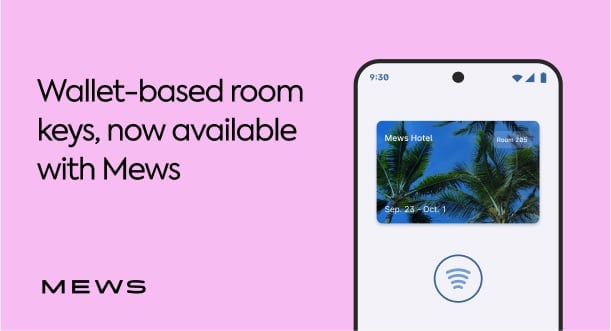
[00:19:43] Tess Mattisson: There you go. Not even that. Like, by the time you press 4th floor, someone who's been on the 8th floor has already pressed the button, and you're going to the wrong floor because you didn't activate your floor, you know, so that's the BLE experience. NFC, you would go in, you will take your phone - either it's your Android or your iOS; you don't even have to open it because the key is in your wallet, in the digital wallet, meaning that you can, in express mode, just take your phone; you don't even open it. You just tap it against the reader. It automatically detects which element in your wallet it should communicate with. And in a heartbeat map, you can press your floor, and you go there.
[00:20:22] Matt Welle: I'll tell you this story. Like, the other day, my watch had died, and you know, because the battery doesn't last a full day when I have a very busy day, I could still tap it against the lock, and it still worked. How does that work? Because I really thought that when the battery dies, that, actually, the whole thing stops working. But my lock still opens.
[00:20:39] Tess Mattisson: Yeah. It's magic, isn't it?
[00:20:40] Matt Welle: I thought so.
[00:20:41] Tess Mattisson: It is the magic. So, one other big difference between the BLE experience and the NFC, or I would say, the wallet experience, because those are different. Of course, you can, like your phone or your wearable can be totally drained of battery, and you can still get into your room. It's a couple of hours, you know, because that's the native functionality of the wallet. So, you benefit - I mean, the phone companies that spent a lot of time and money into creating the best user experience ever, so they thought about these things. And when we move the room key or hotel room key into the wallet, we also benefit from all the other native functionalities that sit in the wallet. So, there's a lot of benefits of doing the wallet key instead of doing the BLE key.
[00:21:30] Matt Welle: And if a hotel has, you know, and we talked about hardware before, often you put a door lock in and it lasts very long time because the hardware is really, really good. Can anyone with a legacy lock upgrade into deploying an NFC technology kind of enabled wallet solution, or how does that work for hoteliers?
[00:21:48] Tess Mattisson: Yeah. So, a hotel that has like a legacy lock as long as it's an Assa-1, they can deploy wallet because we were one of the first to actually have the communication, the RFID reader in the locks. So, of course, if they're 30 years old, you need to upgrade your electronics platform and could have 10-year-old locks and still be able to use wallet if you have chosen the right provider to begin with. And if there are older locks, I mean, I would say that there should be more reasons to actually do an upgrade of your infrastructure, including the electronics platform in your lock. So, if your lock is 10, 15 years old, I would strongly recommend you look over it regardless. There's also so much that's happened in security and performance. I mean, things that we don't think about are the performance of the electronics platform, how much battery it drains. We have a new electronics platform, and it has processed battery life up to 5 years. That's a massive cost for operations.
[00:22:46] Matt Welle: On a door lock with a battery - 5 years.
[00:22:49] Tess Mattisson: Yep. With the new electronics platform. So, it could go from 1 to, you know, 5 years. Just imagine the cost, but also the labor walk-around if you got, like, a couple of hundred rooms. Well, just the labor cost alone to replace those batteries. So, a lot of things have happened, and not only in software but in the electronics platforms in the locks. So, a lot of things there as well to kind of tap into from a technology perspective that's saving you money and time, which essentially is money, right?
[00:23:18] Matt Welle: So, if a hotelier has now upgraded their door locks, they have now set up the digital wallet or the wallet solution with Mews with Assa Abloy, do guests actually use it? Do you see really strong usage of this solution, or is this just a thing that we hoteliers seem to think that people want, but actually guests prefer the plastic key?
[00:23:35] Tess Mattisson: I can see we compare this across the globe. So, it's not like, oh, we could say Scandinavia is a digitally mature market, etc., but if you look at it across the globe, the key factor of success is how the staff embrace the technology. So, I think again, coming from service, I'm hardwired to give you service, Matt. I'm hardwired to take care of you, and I'm hardwired to make sure that I solve your problem in the quickest way possible. The quickest way for me is to do the same thing I've done for the past 10 years. That's the quickest way for me to solve your problem. So, the quickest way for me to solve your problem is to cut your key card and say, "This, I trust. I know how the encoder works. I've been doing this for 10 years. This is my preferred means of access." It doesn't mean that it's your preferred means of access, Matt. And I think that's why I say we can buy the technology and we can install the technology, but the investment needs to go towards the staff because we need to educate them, we need to train them, we need to have them being guests, we need to have them use the wallet so they firsthand experience the great things about doing the check-in through the Mews webflow, getting that pre-provisioned pass, just going straight to the room. So, we need to invest in our staff to be equally confident in supporting a guest through the wallet journey as they are supporting them through the physical journey.
[00:25:03] Matt Welle: I love that. Again, and what we've deployed, so we have now talked about apps and Bluetooth and NFC and we do support all of the different functionality. So, we do have a native digital key app that you can download on phones for guests, etc., and it works well. But like you said, there's a delay of over a couple of seconds with finding the app, opening the app and waiting for the Bluetooth to respond. And then we've got the deployed solution with Assa Abloy and Apple and Google where the wallet functionality is enabled. So, you go through a web app online, check in via email; you don't have to download anything, and then you download the key that sits inside your wallet, that will activate on the day of arrival, and we can communicate with you when your room is inspected. So, you know, actually, when you get to the hotel that your room is 101, you can go straight to the room with the key that sits in your phone or in your Apple Wallet. And I think that, like, just holding it against the lock and within a nanosecond, it opens the door lock. That is the experience that we're seeing with our hoteliers that they're loving the seamlessness of it, but it's, you know, not for everyone. My mother and my father will probably not be using that right now. But when I see it, I'm like, yes, I want to use this. And I think there are different generations of guests that are going through this different learning cycle. But I agree with you 100% that if your team doesn't understand how it works and why your app is better than what guests may have experienced elsewhere, because guests have gone through different experiences, and there's an education process that needs to happen, but once you get these return customers that always use this, it's going to, you know, make the load much lighter for the team at the front desk. But education is a really key component for this.
[00:26:33] Tess Mattisson: I couldn't agree more. And I think also, Matt, that you're raising a big kind of question. App or web? That's also a big question. And I think what I tell my customers or whoever, like, would listen is that, really, if you're going to go the app route, because again, there's a purpose of the app route, the app needs to bring so much more value, in my experience, I have to be proven wrong, but in my experience, just having the digital key is not value enough to download an app. If you're a brand, I think it makes total sense to have your app where you can book, you can rebook, you can have your vouchers, you know, you can have a digital experience, you can have your experience in the app, and if you've got more than maybe 1, 2, 3 hotels, it makes sense for me to have a single digital point on my phone to access all your properties. So, that makes sense. It doesn't replace the kind of direct-to-room web experience. That is launched, like, if you cannot bring enough value through your app for your guests to find it useful to download it, go with Webflow, because that's so much easier. Again, that's enabled by NFC. We couldn't do Webflow with Bluetooth. You needed to have an app for security reasons. Now the secure element sits in the phone, so it's a much better kind of experience when you do the web versus the app. But I think that's also something we talk about: who's going to deploy this? Understand the value you bring to your guests, and then decide on the infrastructure, app or web and don't look at, "Oh, I want an app, or I want this." Just figure out what value you can bring to your guest in the digital space and then choose your means to provision access.
[00:28:13] Matt Welle: Love that. How do you feel about PIN codes? Like, we still get requests from a lot of hoteliers who like the PIN code solution because it doesn't require the guests to go through an online check-in. They can just be SMS'd a number, a PIN code that gets them access to the door and the requests for PIN codes come, like, steadily throughout the years, and it hasn't diminished. Is that something that you think is still in the future, or we will actually solve that use case as well?
[00:28:37] Tess Mattisson: So, I think that wallet solves that use case in a way. We do have a product that is titled for the build-to-rent, which has PIN codes. So, it's a different use case.
[00:28:48] Matt Welle: You said built-to-rent. So, meaning Airbnb kind of, or is that what you mean with that?
[00:28:52] Tess Mattisson: Kind of. Sorry. So, common for all our products, it's centrally managed. So, in some parts of the world it's really, really, really, really common that you build apartment and then you rent it out. Like, that's your business model. But the tenant of the flat actually manages access to their own, but you also have it centrally managed. So, it's more like rentals, not necessarily Airbnb. You could do Airbnb as well, but then they are targeted. That would be more our YALE Doormant product. This is for someone that is doing the kind of centrally managed access. There, you have PIN codes. The beauty of PIN codes is that you can provision temporary access. So, if you look at a hotel versus a flat, like a hotel would never, well, I'm not going to say never, but it's very unlikely to have a dog walker that's going to go to my room, get the dog, and they can have access or someone helping me, you know, to take care of my home, whereas in the build-to-rent or that area, yeah, you need someone, maybe to have temporary access. PIN codes are great for temporary access. One of the things that we need to look at when it comes to PIN codes is that the vast majority of those locks are online because you will essentially send the command, the code, to the lock because that's kind of where the access sits in hospitality. So, that is called data unlock, and you need to have that online to send that data to the lock, and then you use your PIN, whereas in hospitality the data sits on the card. So, it's a different technology because what happens when you check in at a hotel is that their front desk staff or if you do it in a kiosk, you put the data on the card. That's the encoder. You encode the card. The door lock is stupid. It doesn't hold the data; it just counts down. Right? So, it's very, very different. I think there is a market for PIN codes, but I think that's not necessarily a mature hotel operation that wants PIN codes. I think the digital and the wallet really solve the same challenge, so to speak.
[00:30:50] Matt Welle: I love that. Great breakdown. Thank you for that. How do you feel about facial recognition to open doors? Is that ever going to happen, or is it just like a GDPR nightmare that we have to deal with?
[00:30:59] Tess Mattisson: I'm not going to say never. I learned that the hard way. Never say never because you know, the impossible is only impossible until it's done. I think that's kind of never say never. I think that I'm not sure of the actual value it would bring. How much easier it will be for our guests, because unless you have a single means of identification and that's your face and you do it at the airport, you do it at the hotel, you do it at your house, you do it when you're grocery shopping. Unless my face is the only identity, the only thing I need, I don't see how it serves a great purpose for the guest. It would be cool. It's a super cool gadget. But will it be broadly adopted? Not sure. But never say never, Matt.
[00:31:42] Matt Welle: Like, in the U.S., when you go through the airline gates nowadays you just walk through and it just has this camera recognition. And yes, it's a bit freaky, but I do kind of love it that I don't have to whip out my passport at all points there. But yeah, to install that into a thousand doors in your giant hotel is probably a lot more expensive than one camera at a gate that you have to then use.
[00:32:02] Tess Mattisson: And also, I think when we look at access we tend to compare it just like we do now go like oh, but I had a great experience here at the airport. It's just a one-way street. They check you, and then off you go. There's no one saying, like, "Matt has got access to that camera between those hours, and then he might actually change to that camera because he didn't like what was behind door one." So, I think that in the same way we go, like, choose a room, and we say, "Oh, but I can choose my seat on my flight." But it's very different because that seat is never occupied by someone that choose to stay another day, or that seat is not occupied because something was, like, dirty; we haven't cleaned it, you know, that's not the same use case. So, I tend to say, instead of looking at, oh, this worked great in another area, let's get inspired by that area. But let's not do the copy-paste in our industry. Let's figure out how we can have a solution that actually solves the problem for our industry while taking inspiration from others.
[00:33:01] Matt Welle: What's on the roadmap? What's something that you get really excited about that, you know, AI is now enabled or something that you guys have been developing that you're allowed to talk about? I'm sure that you have lots of secret projects that you can't talk about. Well, what can you talk about?
[00:33:13] Tess Mattisson: Full of secrets, Matt. But I think one of the things we all talk about, AI, I mean, that's the buzzword. It used to be when I started like digital transformation and we talked about personalization, we got all these Asians, everything. For me, the biggest thing that we're doing is really looking at AI beyond operational efficiency. So, we always start with: how can we be faster, better, smarter, cheaper? Right? That's kind of how we start. What we're looking at is: how can we use AI and increase the value of the solutions and products that people buy from us? So, not only how can we be better, but how can we use the data from our product to help the hoteliers to make better decisions? Let me give you an example. We know that a lot of cost comes to maintenance, you know, changing batteries and all of that stuff. We don't think about it, but it's a lot of cost. It's labor and it's material, right? So, if there is a way that we could use AI to not only do predictive modeling that we can do forever and ever, but look at, okay, how can you assign rooms to actually optimize the battery life of a room? How can we build out predictive modeling for when to do maintenance? You don't wait until the guest cannot access the room. Are there ways that we can help you plan your resources better? That's one example. Because I think we have access to a lot of data, Matt. There's a lot of data everywhere. The problem is that I don't think that we're good enough at helping our customers to activate that data. Because in my opinion, data means nothing unless you can actually activate it to the benefit of my operations. So, that's what keeps me up at night. We got all this information in the technology that we're selling, but how can we help hotels to actually save money or increase efficiency or guest experience using that data in an actionable way?
[00:35:07] Matt Welle: My last question is always more of a personal question, but what's something that frustrates you in a hotel that you wish that technology could go at and fix and maybe we will end up fixing it for you?
[00:35:16] Tess Mattisson: I would say the one thing that still bothers me is ID verification. That is still a very, very cumbersome ask for me as a guest. There are technical solutions. I don't think they're good enough. I think it creates more pain for me as a guest than it adds value. So, if we solve that one, Matt, I think we will help the industry that we love a lot.
[00:35:38] Matt Welle: It's a hard one, but like, it's in the back of my mind because every check in requires us to identify that the human that's there is actually the human that's supposed to be in the room as well, but I agree that the technology is smart enough. It's just like we are stuck at the rules level and what legislation allows us to do. And, you know, do you want a camera to record you once you walk into the reception desk? But I agree that it is probably the most painful piece of check-in at a hotel. So, I will keep that in the back of my mind, and when we develop it, I'll give you a call back to come back here and talk about it. But thank you for joining me today.
[00:36:08] Tess Mattisson: I think that maybe that face recognition isn't that far out anyway.
[00:36:12] Matt Welle: Now, I don't think it is that far. I think we're just probably talking 1 or 2 years away. But yeah, we do definitely need to bridge the legislation challenges that come with that. But I've really, really enjoyed the winding roads that we've gone today into discovering Bluetooth versus NFC and the different technologies that you guys have. Thank you for joining me today.
[00:36:31] Tess Mattisson: Thank you so much for having me, Matt.
[00:36:32] Outro: I hope that you're enjoying this episode because if you do, make sure that you press that subscribe button. It really helps grow the audience and keep you informed whenever a new episode drops. We have some of the best hoteliers on this platform, and I love asking them the hard questions so that, hopefully, you can improve your hospitality business as well.
Resources