Key takeaways
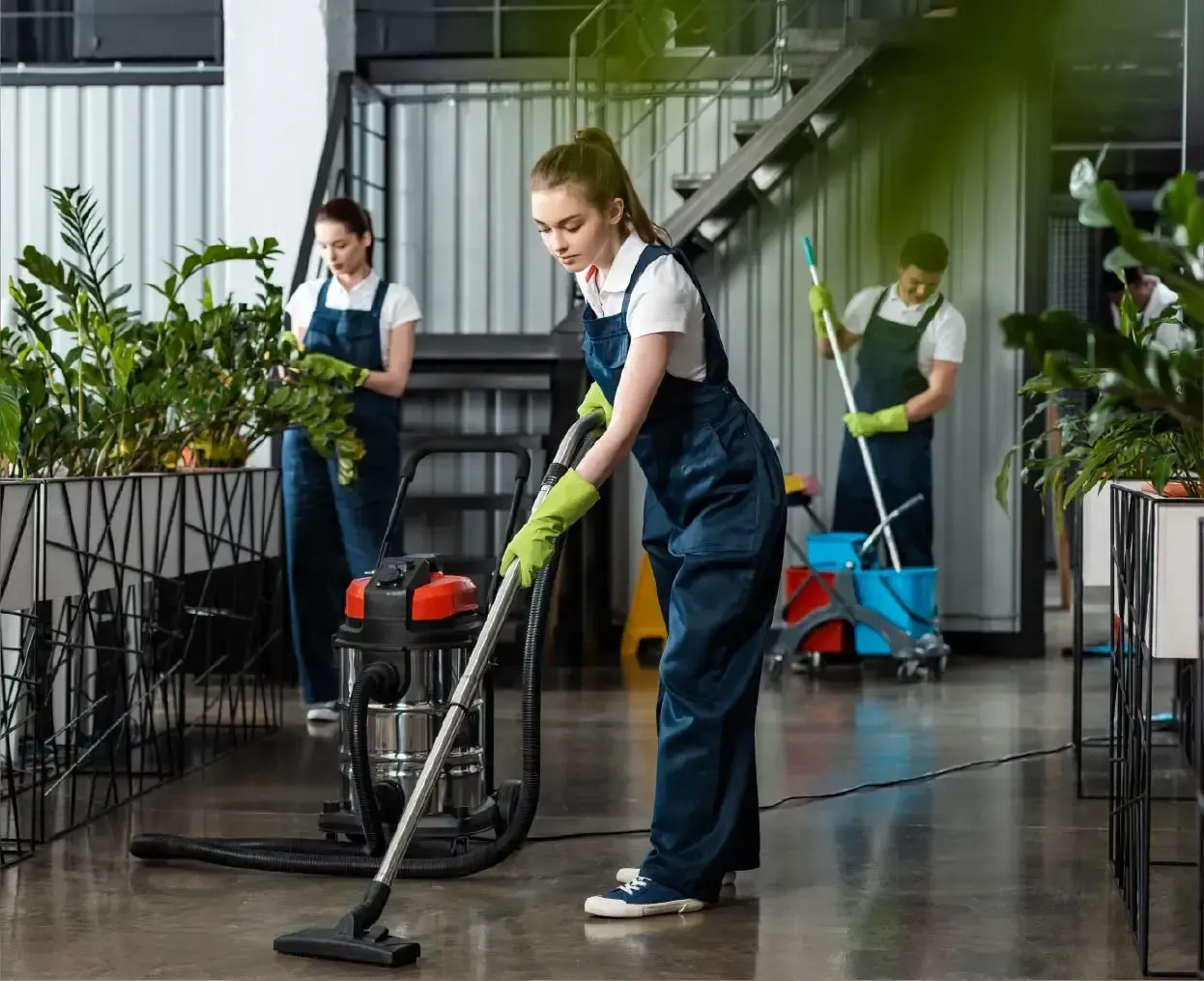
- Cleaning standards in hotels give housekeeping teams a clear way to clean, disinfect, restock and inspect every room.
- Strong hotel cleaning protocols help protect guest trust, staff safety, brand reputation and compliance.
- Room cleaning should follow a set order: remove used items, clean surfaces, disinfect high-touch areas, refresh linen, restock supplies and inspect.
- Daily, weekly, monthly and seasonal cleaning tasks help hotels maintain room quality beyond basic turnover cleaning.
- Training, checklists and audits help housekeeping teams keep standards consistent during busy shifts and high-occupancy periods.
Clean rooms do more than pass a visual check. They shape how guests feel about your property, how confidently your staff work and how well your hotel protects health and safety standards.
Clear hotel cleaning protocols give every team member the same playbook. They define what to clean, when to clean it, which supplies to use and how to document each task. That consistency matters because one missed surface, one rushed room or one unclear handover can affect guest trust.
In this article, we’ll look at cleaning standards in hotels, why they matter and how to build practical procedures that support spotless rooms, safer teams and better guest experiences.
What are cleaning standards in hotels?
Cleaning standards in hotels are the documented rules that tell housekeeping and operations teams how to keep every area clean, hygienic and guest-ready.
These standards usually cover guest rooms, bathrooms, lobbies, restaurants, elevators, laundry areas and back-of-house spaces. They define:
- What needs to be cleaned
- How often each cleaning task should happen
- Which products and tools the staff should use
- How teams should handle high-touch surfaces
- How managers should inspect and record completed work
Clear hotel cleaning protocols turn these standards into repeatable steps. Instead of relying on memory or individual habits, your team follows the same process every time. This creates more consistent rooms, safer spaces and fewer missed tasks during busy shifts.
Key hotel cleaning standards and regulations
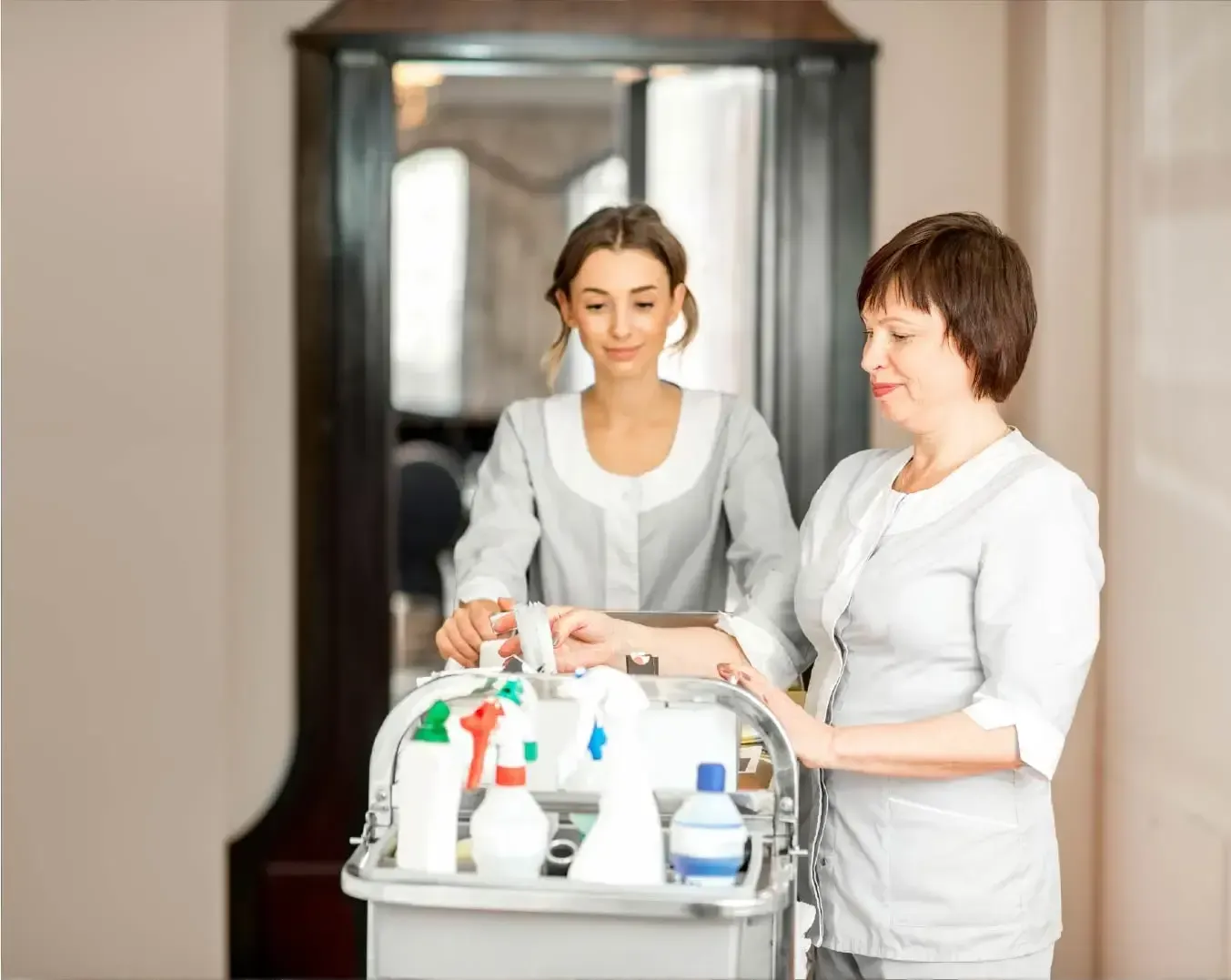
Cleaning standards in hotels are shaped by industry guidelines, workplace safety rules and local health codes. These standards define how hotels approach hygiene, sanitation, disinfection and safe cleaning practices across guest-facing and staff-only areas.
AHLA Safe Stay guidelines
The American Hotel and Lodging Association’s (AHLA) Safe Stay guidelines focus on hotel cleanliness, guest safety and employee safety. They cover enhanced cleaning practices for spaces such as guest rooms, public areas, meeting spaces and back-of-house areas.
The guidelines include recommendations for:
- Cleaning and disinfecting high-touch surfaces
- Using approved cleaning products
- Supporting hand hygiene
- Managing employee health and safety
- Maintaining clear cleanliness practices across the property
CDC and OSHA requirements
Centers for Disease Control and Prevention (CDC) guidance focuses on cleaning and disinfection practices that help reduce the spread of germs. It covers when to clean, when to disinfect and how to handle high-touch surfaces, especially in shared spaces.
Occupational Safety and Health Administration (OSHA) requirements focus on worker safety during cleaning tasks. They cover:
- Safe handling of cleaning chemicals
- Use of personal protective equipment
- Hazard communication for chemical products
- Employee training on chemical risks
- Procedures for reducing exposure to workplace hazards
Together, CDC and OSHA guidance connect hygiene standards with safe working conditions.
State and local health codes
State and local health codes set location-specific rules for sanitation, public health and safety. These rules vary by region and may differ depending on the services a hotel offers.
They often cover:
- Food service sanitation
- Pool and spa hygiene
- Laundry handling
- Waste disposal
- Pest control
- Water safety
- Inspection and recordkeeping requirements
Why are rigorous cleaning standards critical for guest trust?
Rigorous cleaning standards are critical for guest trust because cleanliness is one of the first things guests evaluate when they arrive, and it shapes their overall perception of your property. Guests notice cleanliness before they notice most operational details.
A spotless lobby, fresh linens and a well-maintained bathroom signal that your hotel takes care of the basics. That first impression matters because guests often connect cleanliness with safety, comfort and overall service quality.
Rigorous hotel cleaning protocols also protect consistency. When every room attendant follows the same process, guests receive the same standard whether they check in on a quiet weekday or during peak occupancy. This reduces missed tasks, rushed turnovers and complaints about room condition.
For hotel managers, strong cleaning standards also support:
- Guest confidence: Clean rooms and shared spaces help guests feel comfortable throughout their stay.
- Health and safety: Regular cleaning and disinfection reduce the spread of germs in high-touch and high-traffic areas.
- Brand reputation: Consistent cleanliness lowers the risk of negative reviews and protects repeat bookings.
- Staff productivity: Clear procedures help teams work faster without guessing what needs to happen next.
- Compliance: Documented standards make it easier to meet health, safety and inspection requirements.
Cleanliness is not only a housekeeping task. It is a trust signal that shapes how guests judge your property, your team and their decision to return.
The benefits of cleaning protocols
There are many benefits to keeping your hotel cleaning standards high.
Guest satisfaction
The cleaner your hotel, the higher guest satisfaction. And positive reviews are every hotelier's dream. When guests feel like you prioritize their health and well-being by meeting or exceeding cleanliness standards, they are more likely to have a positive experience at your hotel.
Brand reputation
A hotel's reputation reflects the attention put into maintaining its facilities. Your property is your business card, creating an unforgettable first impression when guests enter the lobby. Hotels with high standards of cleanliness give guests a reason to return and help strengthen the brand's image by building a loyal guest base.
Risk management
Good hygiene prevents the spread of germs, bacteria and viruses. The more pride your hotel takes in cleanliness, the less likely your staff will have to handle negative reviews and complaints about sub-standard cleanliness. Risk management helps you prevent cross-contamination that could damage your hotel's reputation.
Employee health and safety
It's not only the guests you need to worry about. Keeping your employees healthy and safe so that they can work and provide excellent service should also be your priority. Cleanliness is crucial for a positive working environment. Reducing the spread of germs and pathogens creates an orderly space where it's easier to concentrate on work.
Training and compliance
A set of protocols lets you more easily design training and education about cleaning practices to follow health and safety regulations. It also makes it easier to monitor compliance, identify areas for improvement and promote consistent housekeeping standards across your hotel.
Legal liability protection
Documented cleaning procedures protect your property from liability claims. When incidents occur, records prove your commitment to maintaining safe conditions. Courts examine whether hotels followed industry standards and internal protocols. Thorough documentation demonstrates due diligence and reduces legal exposure.
Essential hotel cleaning supplies and equipment
Strong cleaning standards in hotels depend on the right supplies, tools and protective gear. Housekeeping teams need products that clean effectively, disinfect safely and help staff move through rooms without missing key tasks.
The exact supplies may vary by property type, but most hotel cleaning protocols rely on three categories: cleaning chemicals, professional equipment and personal protective equipment.
Cleaning chemicals and disinfectants
Cleaning chemicals remove dirt, stains, grease and odors from surfaces. Disinfectants go one step further by reducing germs on high-touch areas and shared surfaces.
Common hotel cleaning products include:
- All-purpose cleaners for desks, counters, shelves and other general surfaces.
- Glass cleaners for mirrors, windows and shower screens
- Bathroom cleaners for sinks, toilets, tiles and shower areas
- Floor cleaners for hard flooring in rooms, corridors and public spaces
- Laundry detergents for linens, towels, uniforms and other washable items
- Disinfectants for high-touch surfaces such as switches, handles, remote controls, faucets and elevator buttons
Each product should match the surface it is used on. A bathroom disinfectant may not be suitable for wood, upholstery or food-contact surfaces. Clear labeling, correct dilution and safe storage help staff use each product consistently.
Professional cleaning equipment
Professional equipment helps housekeeping teams clean faster, reach more areas and maintain consistent results during every shift. It also reduces the need for manual effort, especially in larger rooms, corridors and public areas.
Common cleaning equipment includes:
- Housekeeping carts to organize linens, amenities, chemicals and waste bags
- Vacuum cleaners for carpets, rugs and upholstered furniture
- Mops and microfiber cloths for floors, counters and high-touch surfaces
- Floor scrubbers or polishers for lobbies, banquet halls and other large hard-floor areas
- Steam cleaners for deeper cleaning on suitable surfaces
- Laundry equipment for washing, drying and handling linens safely
- Waste collection tools for removing trash without cross-contamination
The right supplies and equipment also support broader hotel cleanliness goals, from cleaner rooms to safer shared spaces.
Personal protective equipment (PPE)
Personal protective equipment (PPE) helps protect staff while they handle used linens, waste, chemicals and disinfectants. It reduces direct exposure to germs, spills and cleaning products during daily housekeeping tasks.
Common PPE includes:
- Disposable or reusable gloves for cleaning bathrooms, handling trash and working with chemicals
- Masks for tasks that involve dust, strong odors or specific cleaning products.
- Eye protection when using products that may splash
- Aprons or protective uniforms for cleaning tasks that involve moisture, waste or chemicals
- Non-slip footwear to reduce the risk of slips on wet floors
PPE works best when staff know when to use it, how to remove it safely and where to dispose of or store it after each task. This keeps cleaning routines safer for the people doing the work.
What is the step-by-step process for cleaning a hotel room?
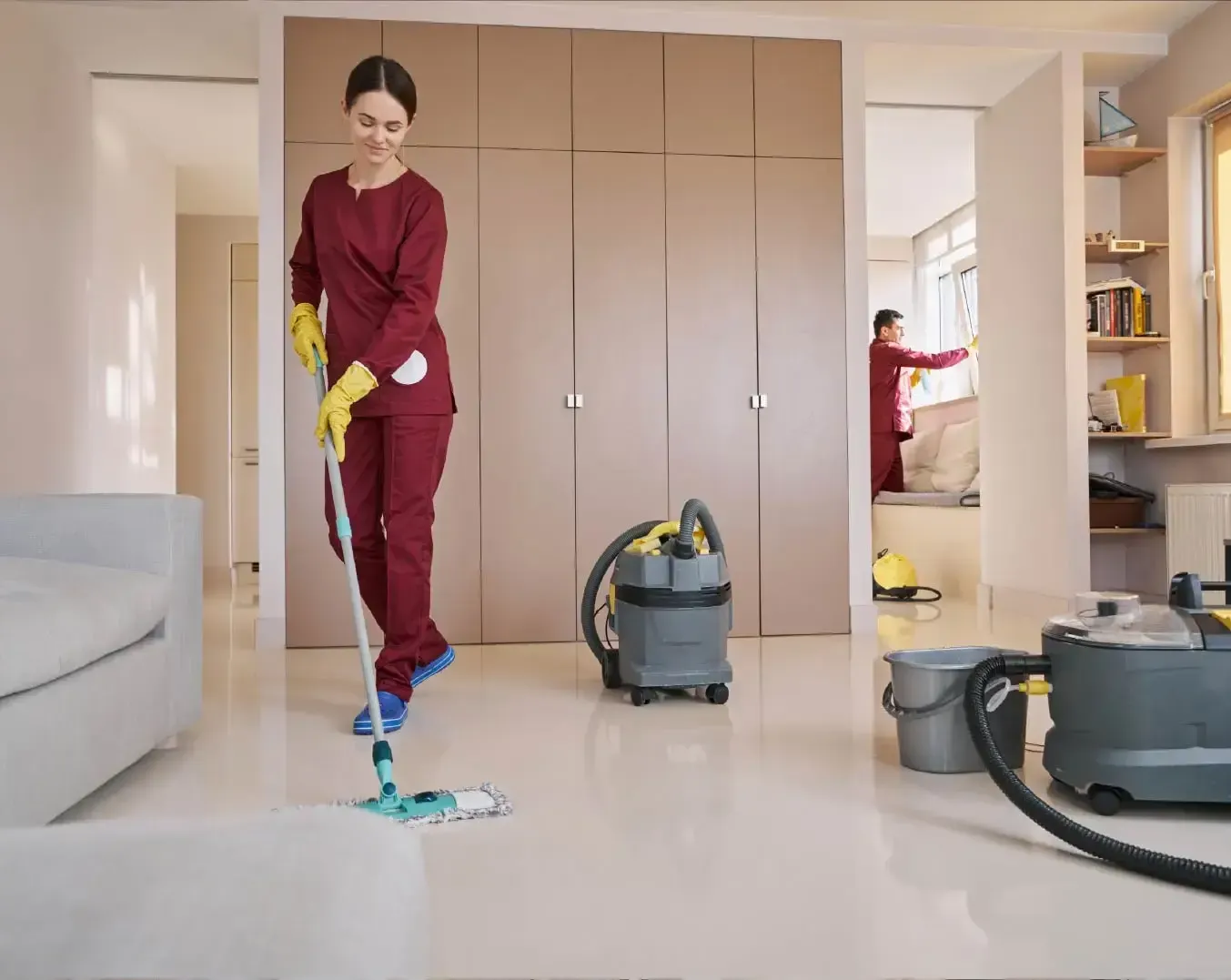
The step-by-step process for cleaning a hotel room follows eight stages: prepare the room, remove used items, clean surfaces, disinfect high-touch areas, make the bed and refresh linen, restock supplies, check floors and final details, and complete a final inspection.
A clear room-cleaning process helps housekeeping teams follow the same standard every time, whether they are preparing a room after check-out or refreshing it during a guest’s stay.
Step
Why is it important
What you need to do
1. Prepare the room
A quick room check helps staff spot guest belongings, damage, stains or maintenance issues before cleaning begins.
Confirm the room status, open curtains or windows where possible and check for safety concerns, missing items or visible damage.
2. Remove used items
Removing used items first reduces clutter and helps prevent cross-contamination between dirty and clean supplies.
Take out trash, used towels, bed linen, room service trays, used cups and empty amenity packaging. Keep waste, dirty linen and clean supplies separate.
3. Clean surfaces before disinfecting
Disinfectants work better on clean surfaces because dirt, dust and residue can reduce their effect.
Dust furniture, wipe desks and counters, clean mirrors and glass, scrub bathroom surfaces and vacuum or sweep the floor.
4. Disinfect high-touch areas
Guests use these surfaces often, so they carry a higher risk of germs spreading from one stay to the next.
Disinfect door handles, locks, switches, remotes, phones, thermostats, faucets, toilet seats, safe panels and minibar handles. Follow the product label for contact time.
5. Make the bed and refresh linen
Fresh linen has a direct impact on how clean and comfortable the room feels to guests.
Replace sheets, pillowcases, covers, towels, bathmats and robes according to the hotel room cleaning policy. Check for stains, tears or worn-out linen.
6. Restock guest supplies
Missing basics can make an otherwise clean room feel unfinished and poorly checked.
Refill toiletries, toilet paper, tissues, coffee, tea, water bottles, glasses, mugs, laundry bags, stationery and other room amenities.
7. Check floors and final details
Final presentation shapes the guest’s first impression when they enter the room.
Vacuum or mop floors, remove visible marks, align furniture, check room scent and confirm that lights, air conditioning, television, safe and bathroom fixtures work.
8. Complete the final inspection
A final check catches missed tasks before the guest does and keeps cleaning standards in hotels consistent.
Review the room against the hotel cleaning checklist, note maintenance issues and mark the room guest-ready only after it meets the required standard.
Protocol checklists by hotel area
Cleaning protocols change depending on the area in the hotel. Because hotel housekeeping costs per room have a direct impact on your hotel's profitability, understanding and implementing housekeeping protocols can help teams work more efficiently while maintaining consistent service and compliance standards. Let's look at some of the most common ones per area.
Guest rooms
Let's start with guest rooms – your staff should clean first and then disinfect. Disinfecting means wiping down high-touch surfaces, light switches, remote controls and doorknobs with antibacterial spray. Afterward, housekeeping can change bed linens, vacuum carpets and clean bathrooms. When guests stay longer than a few days, changing towels and bed linen is also necessary.
Public areas
High-traffic areas should also undergo regular cleaning and disinfection. It includes daily vacuuming, cleaning bathrooms and furniture, mopping floors and opening windows to air out these areas. Make sure your staff frequently cleans lobbies, elevators, corridors and reception desks throughout the day.
In areas like gyms, pools and business centers, it's also a good idea to wipe down equipment and sun loungers to prevent the spread of germs.
Food and beverage
If your hotel offers food and drinks, you should regularly clean and sanitize tables, chairs, menus and food preparation surfaces. Always label ingredients and food to avoid spreading pathogens by serving expired food. Dishes should be put through a sanitization cycle in the dishwasher to kill germs before serving to another guest.
Laundry
Laundry services are a crucial area where strict hygiene standards must be implemented to avoid cross-contamination. Using hot water and bleach for white linens and towels will kill germs and bacteria. Those in the laundry services should also regularly wash their hands as they touch used sheets and towels to avoid the spread of germs.
HVAC systems
Regular maintenance and cleaning of air conditioning, heating and ventilation filters is essential for maintaining indoor air quality. It helps ensure guests and staff can enjoy fresh, healthy air free from airborne contaminants.
Employee areas
Don't neglect back-office areas such as the staff kitchen, locker rooms and break rooms. All of them should be regularly cleaned and sanitized. Encourage staff to regularly wash their hands and let them stay home when sick to minimize the risk of more employees falling ill.
Room cleaning frequency and timing standards
A strong hotel room cleaning policy should define how often each task happens. Some areas need attention every day because guests touch them often. Others need deeper cleaning weekly, monthly or seasonally to keep rooms fresh, safe and well-maintained.
Daily cleaning tasks
Guest rooms receive a full clean between check-out and new guest arrival. Daily tasks cover the items guests notice first and the surfaces they use most often. These tasks apply to check-out cleaning and may also apply to stayover service, depending on your property’s policy.
Daily room cleaning usually includes:
- Making the bed or replacing linen after check-out
- Replacing used towels and bathmats
- Emptying trash bins
- Cleaning toilets, sinks, showers and bathroom counters
- Wiping mirrors and glass surfaces
- Dusting furniture, lamps, shelves and fixtures
- Vacuuming carpets or mopping hard floors
- Disinfecting high-touch surfaces such as handles, switches, remotes, phones, faucets and flush handles
- Restocking toiletries, tissues, toilet paper, coffee, tea and other guest supplies
- Checking for maintenance issues, stains, odors or damage
These tasks keep rooms guest-ready and help teams maintain consistent cleaning standards in hotels during busy turnover periods.
Weekly and monthly deep cleaning
Deep cleaning covers areas that do not always need daily attention but still affect hygiene, comfort and room quality. These tasks help remove buildup, reach overlooked areas and protect room assets from wear.
Weekly or monthly deep cleaning may include:
- Vacuuming under beds and behind furniture
- Cleaning vents, skirting boards and corners
- Washing shower curtains or deep-cleaning glass partitions
- Descaling taps, showerheads and bathroom fixtures
- Spot-cleaning walls, doors and upholstery
- Cleaning inside drawers, wardrobes and minibars
- Sanitizing phones, remote controls and other reusable items more thoroughly
- Rotating mattresses where applicable
- Checking curtains, cushions and soft furnishings for stains or odors
Properties can set the frequency based on room use, occupancy levels, climate and guest profile. A beachfront resort, for example, may need more frequent floor and upholstery care than a city business hotel.
Quarterly and seasonal cleaning
Quarterly and seasonal cleaning focuses on larger maintenance tasks that keep rooms in good condition over time. These tasks often require more planning because they may take rooms out of service for longer than daily cleaning.
Seasonal cleaning may include:
- Deep-cleaning carpets, rugs and upholstered furniture
- Washing curtains, blinds and other fabric fixtures
- Cleaning windows, balcony areas and outdoor furniture
- Inspecting mattresses, pillows and protective covers
- Servicing air conditioning, heating and ventilation filters
- Checking for mold, dampness, pests or water damage
- Reviewing room amenities, furniture condition and décor
- Refreshing rooms before peak season or after high-occupancy periods
This level of cleaning supports long-term room quality. It also helps hotels catch small issues before they become guest complaints or expensive repairs.
How do you train staff and audit compliance for hotel cleaning?
Training turns cleaning standards into daily habits. Audits make sure those habits hold up during busy shifts, staff changes and high-occupancy periods. Together, they help hotels keep hotel cleaning protocols consistent across rooms, public areas and back-of-house spaces.
Train staff on the full cleaning workflow
Housekeeping training should cover more than task completion. Staff need to understand the order of cleaning, which products to use, how to prevent cross-contamination and when to report issues.
Training should include:
- Room-cleaning steps: How to prepare the room, remove used items, clean, disinfect, restock and inspect
- Product use: Which chemicals to use on each surface, how to dilute them and how long disinfectants need to stay wet
- Safety practices: How to use gloves, masks, eye protection and other personal protective equipment
- High-touch surfaces: Which areas need extra attention, including handles, switches, remotes, phones, faucets and elevator buttons
- Lost-and-found rules: How to handle items left behind by guests
- Maintenance reporting: When to flag broken fixtures, leaks, stains, odors or pest concerns
A documented process keeps training consistent. If your team needs a structured starting point, this guide to housekeeping standard operating procedures explains how to define repeatable steps for daily housekeeping work.
Use checklists for daily consistency
Checklists help staff clean with fewer missed steps, especially when rooms need to be turned around quickly. They also make expectations clear for new hires, temporary staff and teams working across different room types.
A strong checklist should cover:
- Guest room and bathroom tasks
- High-touch surfaces
- Linen and towel replacement
- Amenity restocking
- Floor care
- Odor checks
- Maintenance issues
- Final inspection points
The checklist should be specific enough to guide the work, but not so long that staff stop using it. A practical hotel housekeeping checklist can help teams keep daily tasks clear and easy to review.
Audit rooms and shared spaces regularly
Audits help managers confirm that cleaning standards in hotels are being followed. They also show where staff may need more training, clearer instructions or better tools.
Audits can include:
- Random room inspections after check-out cleaning
- Stayover room checks, where appropriate
- Public area inspections during peak hours
- Back-of-house checks for laundry, storage rooms and staff areas
- Review of cleaning logs, chemical storage and supply levels
- Follow-up checks after complaints or maintenance reports
For general managers, connected housekeeping software can make it easier to monitor room status, follow up on inspection issues and keep housekeeping aligned with front desk priorities.
Common hotel cleaning challenges and solutions
Even strong hotel cleaning protocols can break down when teams face tight check-in windows, staffing gaps or unclear handovers. The most common issues often come from inconsistent routines, missed details or gaps between cleaning, inspection and reporting.
Challenge
Why it happens
Solution
Inconsistent room cleaning
Staff may follow different routines, especially when training is informal or room types vary.
Create one clear room-cleaning sequence and support it with checklists, inspections and refresher training.
Missed high-touch surfaces
Teams may focus on visible dirt and overlook remotes, switches, handles, thermostats and faucet controls.
Add high-touch surfaces to every room checklist and make disinfection a required inspection point.
Slow room turnover
Teams may lose time searching for supplies, waiting on maintenance or re-cleaning rooms after failed inspections.
Organize carts before each shift, report maintenance issues early and track common causes of delay.
Supply shortages
Cleaning products, linen or guest amenities may run out when inventory checks are irregular.
Set minimum stock levels and check supplies before peak check-out and check-in periods.
Cross-contamination risks
Used linen, waste, clean supplies and cleaning cloths may mix during rushed room cleaning.
Use separate bags, color-coded cloths and clear handling rules for dirty and clean items.
Chemical misuse
Staff may use the wrong product, incorrect dilution or too little contact time for disinfectants.
Label products clearly, keep safety data sheets accessible and train staff on safe use for each surface type.
Guest complaints about cleanliness
Complaints often come from small but visible misses, such as hair in the bathroom, odors, stains or dusty surfaces.
Track complaint patterns and use them to update the hotel room cleaning policy, staff training and inspection checklist.
Ensure spotless stays that inspire repeat bookings with Mews
Consistent cleaning standards protect the people who stay at your property and the teams who keep it running. When every room attendant follows the same process and every inspection is completed before a guest checks in, the result is a stay that feels cared for from the moment they arrive.
That is where we come in. Mews is a hospitality operating system built to help hotels automate operations, reduce friction and keep guest-facing teams connected. Our housekeeping tools give operations managers and front desk teams the visibility they need to keep rooms on schedule and standards consistent.
Here’s what we offer:
- Real-time room status tracking: See which rooms are occupied, vacant, dirty or inspected at a glance, so front desk and housekeeping stay aligned without phone calls or manual updates.
- Automated task assignment: Housekeeping tasks are assigned automatically based on room status and check-out data, reducing coordination time and keeping teams focused on the work rather than the admin.
- Mobile housekeeping app: Staff mark rooms clean, flag maintenance issues and receive task updates directly from their device, cutting unnecessary trips to the front desk.
- Maintenance issue reporting: Housekeeping staff can log faults, leaks, stains or equipment problems instantly from the room, ensuring nothing slips through between a guest departure and the next arrival.
- Front desk and housekeeping integration: Room readiness updates feed directly into the hotel property management system (PMS), so front desk staff can check guests in faster and with confidence.
The results of connected housekeeping are measurable. At Domaine du Gouverneur, implementing Mews housekeeping coordination reduced average room turnaround time from 45 to 30 minutes – a 33% improvement – and pushed the share of rooms ready before 3 PM from 45% to 75%. Guest satisfaction scores rose from 8.2 to 8.7/10 over three quarters as a direct result of smoother arrivals and more consistent room quality.
“Our housekeeping and front desk teams use the Mews app to stay aligned, resulting in better internal coordination, earlier room readiness and smoother guest experiences.”
– Jeremy Barth, Director of Operations, Domaine du Gouverneur
If your property is ready to bring the same consistency to its cleaning standards, we’d love to show you how. Book a demo.
Looking to elevate your housekeeping standards and boost guest satisfaction?
Download our guide "10 Tips to Improve Your Housekeeping Operation"
What is the standard room cleaning checklist in hotels?
What is the standard room cleaning checklist in hotels?
A standard hotel room cleaning checklist covers trash removal, linen and towel replacement, bathroom cleaning, surface dusting, floor care, high-touch surface disinfection and amenity restocking. It should also include a final walk-through inspection covering odors, stains, damage and any maintenance issues.
How often should high-touch surfaces be disinfected?
How often should high-touch surfaces be disinfected?
High-touch surfaces should be disinfected during every room clean. In shared areas with frequent guest use, more frequent disinfection is recommended. Key surfaces include door handles, elevator buttons, light switches, remote controls, faucets, handrails, reception counters and public restroom fixtures.
Which organizations set hotel cleaning guidelines?
Which organizations set hotel cleaning guidelines?
Hotel cleaning guidelines come from the American Hotel and Lodging Association (AHLA), the Centers for Disease Control and Prevention (CDC), the Occupational Safety and Health Administration (OSHA), and state or local health departments. Most hotels also apply brand-level standards alongside these external frameworks.
What training do housekeeping teams need?
What training do housekeeping teams need?
Housekeeping teams need training on cleaning workflows, chemical use, disinfectant contact times, personal protective equipment (PPE), cross-contamination prevention and safe linen handling. Regular refresher training sessions are also important whenever cleaning standards, products or room configurations change across the property.
How can platforms like Mews help maintain standards?
How can platforms like Mews help maintain standards?
Mews helps housekeeping and front desk teams stay aligned by tracking room status, assigning tasks in real time and reducing manual coordination. This makes it easier to manage room readiness, catch missed updates and maintain consistent cleaning standards during busy turnaround periods.
Written by

Eva Lacalle
Eva has over a decade of international experience in marketing, communication, events and digital marketing. When she's not at work, she's probably surfing, dancing, or exploring the world.