
Key takeaways
- A select-service hotel offers essential amenities without the operational complexity of a full-service property, making it one of the most profitable segments in hospitality.
- Select-service properties can achieve higher gross operating profit (GOP) margins than full-service hotels because they run on lower labor costs, simplified food and beverage (F&B) operations and leaner staffing.
- Running a select-service hotel depends on the systems behind it, particularly the technology that handles operations, pricing and margin management as the property scales.
What does it take to run a hotel that skips the frills but still keeps guests coming back? The answer lies in a deliberate trade-off. Select-service properties skip elaborate dining, banquet halls and full-scale recreation in favor of clean rooms, reliable Wi-Fi and a handful of guest-facing amenities that keep costs lean.
For operators, developers, investors and property managers, that trade-off translates into stronger margins and simpler staffing, provided the model is executed well.
In this article, we'll cover what a select-service hotel is, the amenities it typically includes, how these properties generate revenue, notable brands in the space and how the right technology supports profitability at scale.
What sets select-service hotels apart from other categories?
The select-service category sits between the limited-service and full-service models in terms of the breadth of services offered and that positioning is exactly what makes it so profitable for operators.
The table below compares select-service to the two service models on either side of it.
Category
Position on spectrum
Key differentiator
Limited-service hotel
Lowest tier, core accommodations only
Minimal staff and no on-site dining or amenities
Select-service hotel
Mid tier, focused on core guest needs
Limited dining paired with a few high-value amenities
Full-service hotel
Upper tier, extensive on-site offerings
Multiple restaurants, banquet space and full recreation

Typical amenities and services offered by select-service hotels
Select-service hotels focus on a curated set of amenities rather than a full property-wide experience.
Here's how that focus plays out across guest-facing facilities, in-room upgrades and the services these properties typically leave out.
Guest-facing facilities
Select-service properties still offer a short list of shared amenities guests expect from any modern stay.
- A fitness center gives guests access to basic workout equipment.
- A small business center supports printing and quick work needs.
- A pool is available at many properties, though not universally.
- A grab-and-go breakfast area replaces a full restaurant.
In-room upgrades
Rooms often include small comforts that raise guest satisfaction without adding major cost.
- Mini refrigerators let guests store food and drinks.
- Upgraded bedding improves comfort during longer stays.
- High-speed Wi-Fi supports remote work and streaming.
Less commonly offered services
Select service offerings aren't cut and dry, and what's included varies from one property or brand to the next. That said, certain amenities common in full-service hotels are less commonly offered.
- Room service is not available at most properties.
- Banquet halls and large event spaces are usually absent.
- Turndown service is rarely provided, since it requires dedicated evening housekeeping staff.
- A spa or dedicated concierge team is less common, though some upscale select service hotels include them.
Leaving out these higher-overhead services is a deliberate choice. It reduces labor costs and simplifies daily operations, which is the foundation of the stronger margins that make this model attractive to operators and investors.
How do select-service hotels make money?
Revenue in a select-service hotel comes from a narrower set of sources than a full-service property, which makes each lever more important to manage well.
Here's how that plays out across pricing, F&B and cost control:
Revenue per available room (RevPAR) and GOP margins
RevPAR is a key performance metric for select-service hotels because room revenue makes up the majority of their income, with minimal food, beverage or event revenue to cushion slower periods. Their lean staffing models and limited amenities also keep operating costs lower than those of full-service hotels, eliminating the need for large F&B, banquet and service teams.
This structure allows GOP margins to run higher than at full-service hotels with comparable occupancy, since a larger share of each dollar earned flows straight to the bottom line instead of covering additional departments.
F&B contribution
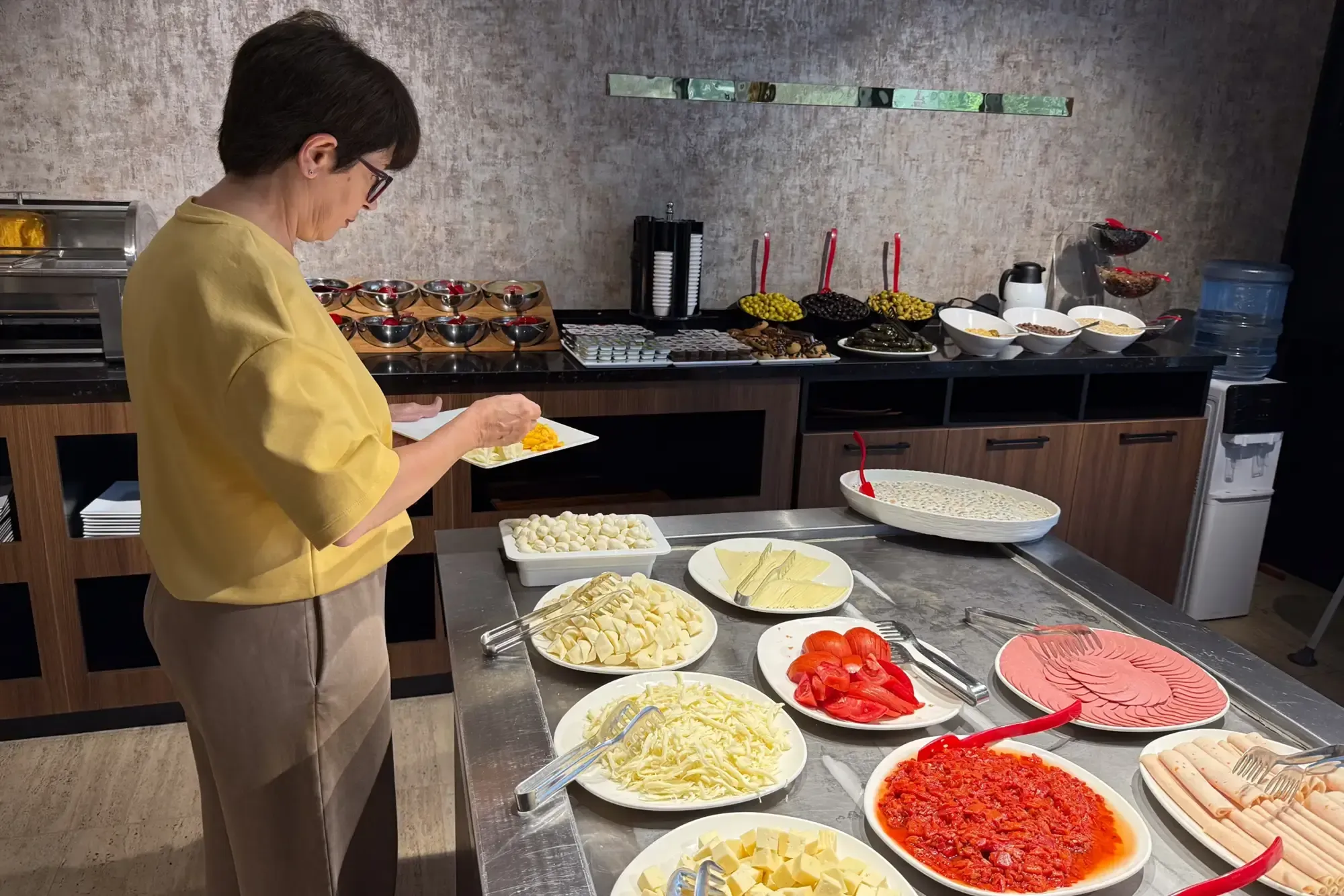
F&B plays a limited role at select-service hotels, since the model is built around rooms rather than dining. Most properties offer only a grab-and-go breakfast, a small pantry market or a basic coffee station, none of which require a dedicated kitchen team or extensive inventory.
This helps keep food and labor costs significantly lower than those of full-service hotels that operate full-service restaurants and provide room service. As a result, F&B typically contributes a small fraction of total revenue, well below what full-service properties generate from dining, but it protects margins by avoiding those added costs entirely.
Cost control levers
Many hoteliers rely on lean staffing models, standardized room designs and outsourced housekeeping to protect margins. Hotel add-on services, such as parking fees, late checkout and pet fees, provide extra revenue without the overhead of full-service amenities. Technology-driven pricing and automated check-in further reduce labor costs without affecting guest satisfaction.
This labor pressure is industry-wide. According to CBRE Hotels Research, the number of hours worked at the typical U.S. hotel has fallen 7.4% since 2019, even as labor spending has risen 22.1% over the same period, a trend that makes automation and staffing efficiency more critical than ever for select-service hoteliers.
Notable select-service hotel brands and examples
The select-service segment includes both established global hotel chains and independent boutique properties, each adapting the model to suit its brand and target guests.
The categories below highlight how that range plays out in practice:
Major global chains
Holiday Inn Express built its reputation on consistent rooms, free breakfast and predictable quality across thousands of locations worldwide. Hampton by Hilton follows a similar model, pairing efficient service with a strong loyalty program that keeps guests returning across markets.
Both brands prioritize scale and consistency over elaborate amenities, which keeps operating costs predictable for franchisees.
Emerging boutique concepts
Beyond the major chains, a wave of lifestyle-oriented select-service brands is reshaping the segment, pairing a leaner service model with design-forward guest spaces that punch above their price point.
- Moxy Hotels targets younger travelers with compact rooms and vibrant social lobbies built around the idea of a "bar that happens to have rooms on top of it."
- AC Hotels by Marriott takes a more European-inspired approach, trading the social buzz for clean aesthetics and a tightly focused F&B offering.
- Further up the tier, Canopy by Hilton leans into neighborhood storytelling, with locally inspired welcome gifts and, at many properties, breakfast bundled into the rate.
Together, these brands make the case that a lean service model doesn't have to mean a generic guest experience.
For independent hotels exploring the select-service approach, the takeaway is clear. A strong concept and thoughtful design can differentiate a property just as effectively as a big brand name.
Drive profitability with Mews select-service tech stack
Select-service hotels run on lean teams, which makes every manual task at the front desk a hidden cost. Automating those touchpoints is where profitability gets protected.
Mews – the hospitality operating system – supports this directly with Mews Kiosk as a key part of your stack, handling check-in, payments and upsells without adding headcount.
Its core capabilities include the following:
- Guests check in independently, issuing keys and completing payment without staff involvement.
- Automated upsell prompts offer upgrades and add-ons during check-in and check-out.
- Early check-in fees apply automatically, with no manual entry.
- Late check-out is surfaced as an upsell option during check-out for guests to self-select.
- Mews Kiosk connects directly to Mews PMS, keeping guest data and room status accurate in real time.
At Good Hotel in London, adopting Mews Kiosk freed the team from repetitive check-in admin. As Maurizio Zaccagnino, Hotel Operations Manager, put it: "Changing to Mews has allowed us to start thinking bigger and be more ambitious. We spend more time focusing on our customers and our internal training, instead of spending hours on paperwork."
Book a demo to see how Mews helps you run a leaner front desk while still growing ancillary revenue.
Is a select-service hotel the same as a limited-service hotel?
Is a select-service hotel the same as a limited-service hotel?
No, although the terms are sometimes used interchangeably, select-service hotels typically offer more amenities than limited-service hotels. They often include features such as fitness centers, meeting spaces or casual dining, while limited-service hotels focus on essential accommodations with minimal extras.
What amenities are usually missing from select-service properties?
What amenities are usually missing from select-service properties?
Select-service hotels typically do not offer amenities such as full-service restaurants, extensive room service, large banquet facilities, concierge services or luxury spa and valet services. Instead, they focus on essential amenities that balance guest comfort with operational efficiency.
Who is the typical guest for a select-service hotel?
Who is the typical guest for a select-service hotel?
The typical guest at a select-service hotel is a business traveler, leisure traveler or family seeking a comfortable stay with essential amenities at a reasonable price. These guests value convenience, efficiency and modern accommodations over extensive luxury services.
How large is a standard select-service property?
How large is a standard select-service property?
A standard select-service hotel typically has between 80 and 200 guest rooms, although the size varies by brand, market and location. These properties are generally smaller than full-service hotels, allowing for more efficient operations and lower operating costs.
Can a select-service hotel offer full-service features?
Can a select-service hotel offer full-service features?
Yes, some select-service hotels offer select full-service features, such as a restaurant, bar or meeting rooms. However, they do not provide the broad range of amenities and personalized services typically found at full-service hotels.