
Key takeaways
- Self-check-in kiosks streamline arrival by reducing front desk queues and giving guests a faster, more convenient start to their stay.
- Automating routine check-in tasks frees up staff to focus on personalized service and higher-value guest interactions.
- Integrated with a property management system, kiosks ensure accurate data capture while enabling a smooth and connected guest journey.
- Self-service technology creates new upsell opportunities by allowing guests to add upgrades and extras during check-in.
- By minimizing manual processes and human error, self-check-in kiosks improve operational efficiency while enhancing the overall guest experience.
Guest expectations are evolving quickly and hoteliers are under growing pressure to deliver faster, more flexible and more personalized experiences at every stage of the stay. At the same time, operational efficiency has never been more important, especially as teams navigate staffing challenges and rising costs.
Self-service technology is becoming a strategic advantage for properties that want to stay competitive. While some may question whether automation fits within a service-driven industry, many hotels are discovering that the right tools can actually enhance both the guest experience and day-to-day operations.
In this article, we’ll explore the key benefits of self-service kiosks and how they can help hotels improve efficiency, increase revenue opportunities and create a smoother arrival experience for modern travelers.
What are self-service kiosks?
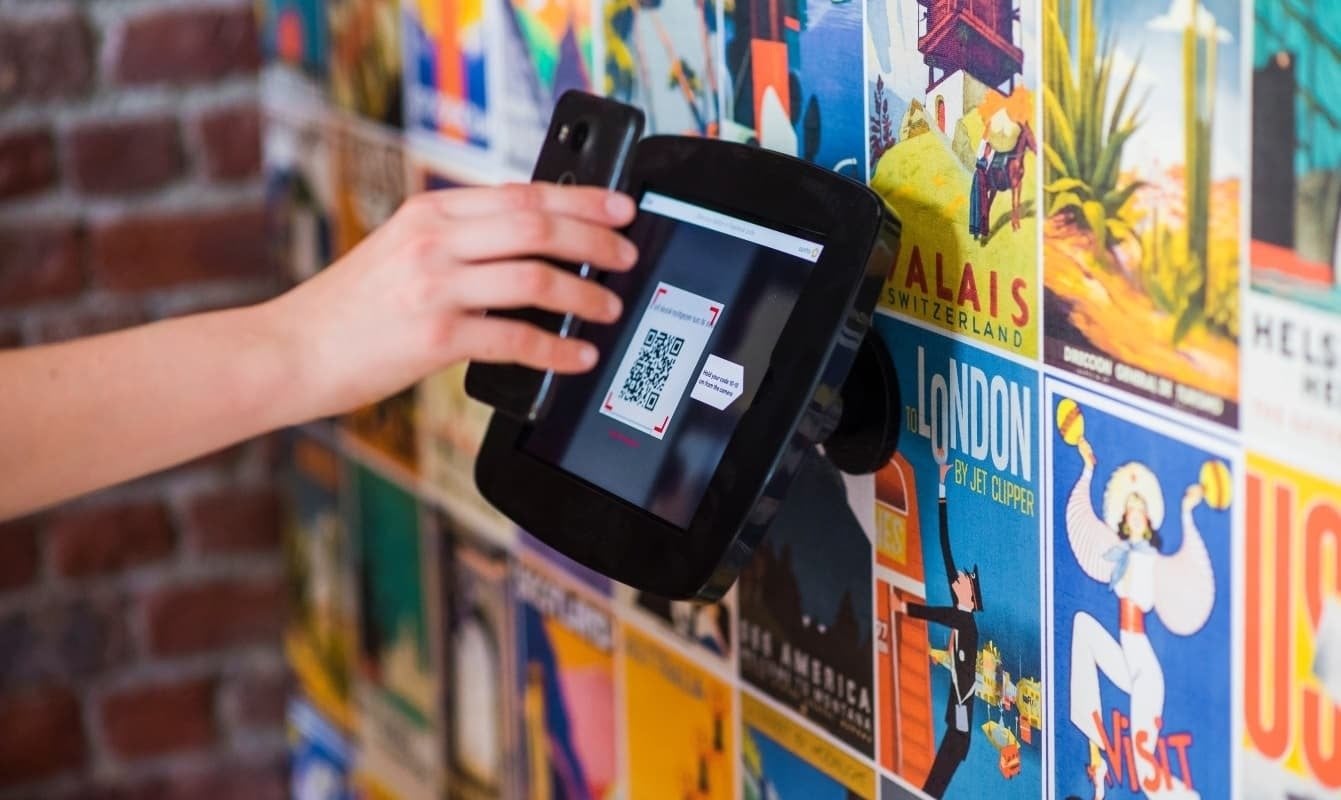
Self-service kiosks are digital check-in and check-out stations that allow guests to manage key parts of their stay independently, without needing to wait at the front desk. Typically located in the hotel lobby, these touchscreen terminals are connected directly to the property management system (PMS), enabling real-time access to reservations, payments and room availability.
Through a self-service kiosk, guests can check in, verify their details, make payments, create or encode room keys and even purchase upgrades or add-ons. The process is designed to be intuitive and fast, offering travelers greater flexibility while reducing congestion at reception.
For hotels, self-service kiosks act as an extension of the front desk rather than a replacement for it, automating routine administrative tasks so staff can focus on delivering more meaningful, personalized guest interactions.
How self-service kiosks are used within hotels
Kiosks extend beyond the check-in desk to cover multiple touchpoints across a property:
- Front desk: guests check in and out independently, entering a confirmation number or scanning an ID while the kiosk pulls reservation details straight from the PMS. Room keys get encoded on the spot and any outstanding balance is settled without a staff member involved.
- Spa: guests book or check in for treatments directly at a kiosk, viewing available slots and adding services like an extra 30 minutes or a couples package – all charged straight to the room.
- Restaurants: kiosks let guests reserve a table, join a waitlist or place a room-service order, freeing staff to focus on service rather than order-taking during peak meal times.
Positioning kiosks across these areas – not just the lobby – means guests get the same fast, self-directed experience at every stage of the stay, while staff time is freed up for higher-value interactions.
What are the benefits of self-service kiosks?
1. Optimize hotel resources
To gain a guest's loyalty, it’s vital to provide them with memorable and positive experiences while at your property. In order to do so, hoteliers should make optimum use of all resources at their disposal. When connected to the hotel PMS software, a self-service kiosk can transform the quality of service your team delivers.
For instance, guests can reserve rooms the moment they become available. Real-time updates enable staff across departments to act on this information quickly, freeing them to focus on higher-value work.
2. Eliminate front desk queues
One of the major advantages of a check-in kiosk is that it can reduce queues and shorten wait times at reception. Kiosks allow multiple guests to complete routine check-in steps simultaneously, reducing pressure on the front desk during peak arrivals.
Many guests now prefer self-service over a staffed interaction, and for travelers arriving after a long journey, a faster check-in sets a positive tone for the rest of the stay. Kiosks also support multiple language settings, so international guests move through the process just as quickly.
3. Deliver a personalized guest experience
When integrated with a hotel's PMS, self-service kiosks can surface guest information such as room preferences, previous purchases and special requirements to deliver a more personalized experience.
This stored information can be used to create bespoke promotional emails, including tempting offers that fit the tastes of different guests. Better still, any guest requests from previous stays can be catered for, surpassing expectations and making their stay memorable.
4. Unlock new revenue opportunities
Through the kiosk, guests can view additional amenities and upgrades in their own time, which appeals to those who prefer to browse without pressure. This gives hotels the ability to drive incremental revenue without additional staffing costs
5. Offer 24/7 service availability
Kiosks don't clock out at the end of a shift, so guests arriving on a red-eye flight or checking out before dawn can complete the process without waiting for a staffed desk to open. This matters most for properties near airports or transit hubs, where off-hours arrivals are routine rather than the exception, and it removes the cost of staffing a round-the-clock front desk to cover a handful of overnight check-ins.
6. Minimize human error
Booking errors are common even with committed staff – a misspelled name or the wrong room type booked by accident can happen to anyone. By reducing manual data entry, kiosks can lower the risk of errors in guest details and reservation information.
7. Create a connected guest journey
When a kiosk is integrated with the PMS, payment processing and guest profiles, check-in becomes one link in a connected journey rather than a standalone step. A guest who books online, pays a deposit and lists a room preference sees all of that carried through to the kiosk – no re-entering details, no separate system for staff to reconcile at the desk.
8. Facilitate guest interaction
Self-service doesn't make check-in impersonal – it frees staff from the routine parts of the process so they can focus on the guest in front of them. That could mean recommending a sightseeing spot or just chatting to make someone feel welcome, and it's exactly the kind of interaction that turns a first stay into a repeat booking.
9. Strengthen operational scalability
As demand fluctuates throughout the year, self-service kiosks give hotels a way to scale without adding headcount for every peak. Kiosks handle the routine volume of a seasonal rush, a large group arrival or a late check-in, which frees staff to step in exactly where a guest needs a person, not a screen. Technology works best when it clears routine demand so your team can give direct attention where it counts.
10. Cut down on paper
Self-service kiosks replace printed registration cards, key packets and receipts with digital confirmations, digital keys and e-receipts. For a 100-room property running dozens of check-ins a day, that difference adds up in printing costs alone, while also reducing paper waste.
What are the challenges of self-service kiosks?
Self-service kiosks solve real friction points, but they come with trade-offs hoteliers should weigh before investing.
Guest experience trade-offs
Not every guest wants a screen at check-in. A returning guest who values a warm, personal welcome may see a kiosk as a step backward rather than an upgrade, particularly at boutique or luxury properties where staff interaction is part of the brand. The fix isn't skipping kiosks – it's giving guests the choice between self-service and a staffed desk, rather than replacing one with the other entirely.
Upfront cost and ROI timeline
Kiosk hardware, software licensing and installation represent a real capital outlay, and smaller independent properties may take longer to recoup that cost than a 300-room hotel processing high check-in volume daily. Before purchasing, hoteliers should model the payback period against actual front desk labor hours saved and incremental upsell revenue, not just vendor projections.
Integration complexity
A kiosk is only as useful as the systems it connects to. If it can't pull real-time reservation data, encode keys or process payments through the property management system, staff end up double-checking transactions manually – undermining the efficiency gain entirely. Properties running outdated or heavily customized PMS setups may face a longer, costlier integration process than those already on a modern, cloud-based system.
Staff training and change management
Kiosks shift front desk responsibilities rather than eliminating them, and staff need clear guidance on when to step in – a guest struggling with an unfamiliar language setting or a failed card payment still needs a human to intervene quickly. Without that training, a kiosk built to reduce friction can end up creating a new bottleneck.
Guest data and payment security
Kiosks handle sensitive guest data and payment information, so hoteliers need assurance that the system meets PCI compliance standards and encrypts data in transit and at rest. This is worth confirming directly with any vendor before rollout, rather than assuming baseline security is included.
Modernize your check-in experience with Mews
Self-service kiosks are more than a convenient feature – they're a strategic investment in operational efficiency, guest satisfaction and revenue growth, and the Mews Kiosk is built to deliver on all three from day one.
Because it's built directly into the same hospitality operating system that runs the property, not bolted on as a third-party add-on, the Mews Kiosk pulls live reservation data, encodes keys and processes payments without a separate integration step. That connection is what turns a standalone convenience into a connected guest journey, from booking through to check-out.
Traditional reception will always have its place, but modern hospitality is about offering choice. The Mews Kiosk enhances, not replaces, human interaction – giving guests the flexibility they expect while freeing staff to create the moments a screen can't.
Ready to see what the Mews Kiosk can do for your property? Get a demo.
Do self-service kiosks replace front desk staff?
Do self-service kiosks replace front desk staff?
No. Self-service kiosks are designed to support front desk teams, not replace them. They automate routine tasks like check-in and payment processing so staff can focus on delivering personalized service and resolving more complex guest needs.
Are self-service kiosks secure?
Are self-service kiosks secure?
Yes. When connected to a hotel’s property management system and payment solutions, kiosks securely process guest information and transactions using encrypted systems that meet industry standards.
Can guests still choose traditional check-in?
Can guests still choose traditional check-in?
Absolutely. Self-service kiosks give guests more flexibility, but traditional reception remains available for those who prefer face-to-face assistance.
Do self-service kiosks help increase revenue?
Do self-service kiosks help increase revenue?
Yes. Kiosks can present room upgrades, add-ons and additional services during check-in, creating upsell opportunities without adding pressure to staff or increasing labor costs.
Are self-service kiosks suitable for small hotels?
Are self-service kiosks suitable for small hotels?
Self-service kiosks can benefit properties of all sizes. Whether managing a boutique hotel or a large chain, kiosks help streamline arrivals, improve efficiency and enhance the overall guest experience.
How long does it take to implement a self-service kiosk?
How long does it take to implement a self-service kiosk?
Implementation typically takes a few weeks rather than months, depending on how many kiosks are being installed and how the property's existing PMS is configured. Most of the timeline covers hardware setup and PMS integration testing rather than staff training, since the guest-facing interface is designed to be intuitive from day one. Properties already running a modern, cloud-based PMS tend to see faster rollouts than those on legacy systems requiring custom integration work.
How much additional revenue do kiosks typically generate per booking?
How much additional revenue do kiosks typically generate per booking?
The revenue impact varies by property type and how upsell offers are configured, but kiosks create a consistent channel for upgrades and add-ons that might otherwise go unoffered during a busy check-in. A city hotel surfacing a room upgrade or early check-in option at the kiosk captures incremental revenue without adding staff time to sell it. The bigger value for revenue managers is consistency – every guest sees the same offer at the same moment, rather than upsells depending on which staff member happens to be at the desk.
Written by

Eva Lacalle
Eva has over a decade of international experience in marketing, communication, events and digital marketing. When she's not at work, she's probably surfing, dancing, or exploring the world.