
Key takeaways
- Hospitality leadership empowers teams to own decisions and deliver exceptional guest experiences.
- Strong communication aligns staff with strategic goals and improves operational performance.
- Leading by example builds credibility and motivates teams to maintain high standards.
- Recognition programs boost morale and encourage collaborative work environments across departments.
The best hotel teams do not wait to be told what to do. They read a situation, make a call and keep the guest experience moving. That does not happen by accident. It happens because someone upstream built a culture where people feel trusted enough to act.
That is what hospitality leadership actually looks like. Not a title, not a management style pulled from a business school textbook, but a set of daily decisions about how to communicate, how to build accountability and how to develop the people who carry your operation when you are not in the room.
The hotels that get this right see the difference across every metric that matters: staff retention, guest satisfaction and the kind of consistent performance that does not fall apart during a sold-out weekend.
In this article, we cover six practical keys to stronger hospitality leadership, the skills that underpin them and how the right approach to team development keeps your property performing at its best.
What is hospitality leadership?
Hospitality leadership is the practice of guiding hotel teams toward operational excellence while maintaining guest satisfaction. It combines strategic vision with daily operational management. Hospitality leaders balance business objectives with staff development and guest experience priorities.
Strong leadership in hospitality creates accountability at every level. Teams feel empowered to solve problems independently. This approach builds resilient operations that adapt to changing guest expectations and market demands.

Why does hospitality leadership matter to hotel performance?
Hospitality leadership creates positive guest experiences, inspires employees, upholds your brand's reputation and ensures the long-term success of your hotel. Good leaders contribute to profitability, helping hotels better navigate challenges and stay ahead of the competition.
Inspiring leadership in hospitality is also vital in boosting staff performance and keeping hotels responsive to industry trends. Staying competitive and innovative leads to financial success through increased revenue, repeat business and efficient operations.
Essential leadership skills every hotel manager needs
Mastering core competencies separates effective managers from exceptional hospitality leaders. These skills build the foundation for strong team performance through hotel best practices.
Strategic thinking and decision-making
Strategic thinking helps you prioritize initiatives that drive revenue and improve guest satisfaction. Making informed decisions quickly also prevents operational bottlenecks. That's why hospitality leaders who master this skill are better able to align daily operations with long-term business goals.
Communication and transparency
Clear communication eliminates confusion and builds trust across all departments. Transparency about challenges and changes keeps teams engaged and informed. This skill ensures everyone understands their role in delivering exceptional guest experiences.
Trust and authenticity
Building trust creates psychological safety where teams feel comfortable sharing concerns and ideas. Authentic leadership plays a crucial role here by following through on commitments and admitting mistakes.
As a result, hospitality leaders who demonstrate integrity inspire loyalty and higher performance from their teams.
Different leadership styles in hospitality
Various leadership approaches in hospitality work depending on your property's culture and operational needs. Understanding different styles helps you adapt to changing situations.
Transformational leadership
Transformational leaders inspire teams through vision and enthusiasm rather than rigid rules. They focus on developing people and encouraging innovation.
This style works well when building culture or implementing major operational changes.
Service-oriented leadership
Service-oriented leaders prioritize team needs alongside guest satisfaction. They remove obstacles that prevent staff from doing their best work.
This approach builds strong loyalty and reduces turnover in high-pressure hospitality environments.
Innovative and entrepreneurial leadership
Innovative leaders encourage experimentation and calculated risk-taking. They view challenges as opportunities to differentiate your property.
This style drives competitive advantage through unique guest experiences and operational improvements.

How to balance hands-on management with leadership responsibilities
One of the most difficult transitions in hotel management is learning when to step into operations personally and when to lead from a strategic level.
Strong managers are often promoted because they are excellent problem-solvers and operational experts. However, leadership at a higher level requires creating systems, developing people and building consistency so the hotel can perform well even when the manager is not directly involved.
The goal is not to stop being hands-on entirely. Instead, effective hotel leaders know how to balance immediate operational involvement with long-term leadership responsibilities.
A useful way to think about this balance is:
- Management focuses on solving today's problems.
- Leadership focuses on preventing the same problems tomorrow.
The best hotel leaders move fluidly between both. Here's how to do it:
Hands-on management
Leadership responsibility
Why the balance matters
Example in practice
Handle immediate guest issues during peak times
Develop staff to resolve future situations independently
Guests need immediate recovery, but long-term success comes from employees confidently handling issues themselves
A GM personally assists with an upset VIP guest during a sold-out weekend, then later coaches the front office team on service recovery techniques so they can handle similar situations without escalation
Review daily operations reports
Analyze trends to improve systems and processes
Daily metrics show what happened today; trend analysis reveals recurring operational weaknesses
Instead of only checking the previous day's housekeeping delays, a manager identifies that weekend turnover times are consistently slow and adjusts staffing models accordingly
Cover staffing gaps when necessary
Build cross-trained teams that reduce dependency
Stepping in occasionally supports the team, but constantly filling gaps creates burnout and operational dependency
A hotel manager helps at reception during unexpected call-outs, but also implements cross-training between concierge and front desk staff to improve future flexibility
Monitor service delivery during busy periods
Create standards that maintain quality without constant oversight
Constant supervision is unsustainable; systems and standards create consistency at scale
During a conference check-in rush, the manager observes guest interactions and later updates arrival procedures and training standards to improve efficiency
Participate in morning briefings
Empower department heads to lead their own teams
Leaders should align teams strategically while allowing department managers ownership of execution
Rather than leading every operational discussion, the hotel director allows department heads to present updates, challenges and action plans themselves
Solve operational problems directly
Build decision-making confidence in supervisors
Over-involvement can unintentionally weaken leadership depth in the organization
Instead of immediately resolving a room inventory conflict, a manager asks the front office supervisor to recommend solutions first
Personally inspect rooms and public spaces
Create accountability systems that maintain standards daily
Direct inspections are valuable, but sustainable quality depends on structured accountability
A GM conducts random inspections while also implementing inspection scorecards and departmental quality audits
Respond to guest feedback personally
Use feedback patterns to improve the guest experience strategically
Individual complaints matter, but repeated themes reveal opportunities for operational improvement
Multiple complaints about breakfast wait times lead leadership to redesign seating flow and staffing allocation
Drive operational urgency during high-pressure periods
Protect team morale and prevent burnout over time
Short-term intensity can improve performance, but long-term pressure without support damages retention
During holiday occupancy peaks, management remains highly visible operationally while also adjusting schedules and recognizing team performance afterward
Be highly accessible to staff
Avoid becoming the solution for every issue
Teams need support, but excessive dependence slows decision-making and limits growth
Employees are encouraged to escalate major concerns while still being expected to solve routine operational challenges independently
How to build and motivate high-performing hotel teams
Strong teams form the backbone of successful hotel operations. Nurturing the right hotel organizational culture encourages staff to perform at their best consistently.
Create a positive work culture
- Set clear expectations for behavior and performance standards.
- Celebrate wins publicly and address problems privately.
- Encourage work-life balance through fair scheduling practices.
- Foster inclusivity by welcoming diverse perspectives and backgrounds.
- Make recognition part of daily operations, not occasional events.
Recognize and motivate your team
- Acknowledge specific achievements rather than general praise.
- Offer development opportunities that align with individual career goals.
- Provide immediate feedback when you observe excellent performance.
- Create peer recognition programs where staff appreciate colleagues.
- Tie recognition to behaviors that support hotel values.
Develop future leaders within your team
- Identify high-potential employees early through performance observation.
- Assign stretch projects that build new skills safely.
- Provide mentorship opportunities with senior team members.
- Encourage attendance at industry conferences and training programs.
- Create clear advancement paths that reward leadership development.
6 keys to improve hospitality leadership
So, how can hoteliers sustain strong hospitality leadership, promote this key value and keep their properties performing at their best?
1. Start from the bottom up
Successful hotel operations require a bottom-up rather than top-down approach. Good managers empower employees to make relevant decisions and encourage a flexible, horizontal structure where staff across teams can partner up, making everyone an active participant in keeping operations running smoothly and delivering unforgettable guest experiences.
2. Communicate with clarity and consistency
Hotel employee communication is at the core of hospitality leadership. Proper communication among employees ensures that everyone is aligned. Strategic goals should also be communicated clearly and effectively.
Communication can be verbal, non-verbal or written. The goal of any communication within the hospitality industry should be to help clearly state goals and create a plan to achieve those goals.
Good leaders ensure everyone understands how to complete their tasks.
3. Lead by example on the floor
A hospitality leader's credibility grows when their words and actions are aligned. It's one thing to say: "We need to improve guest satisfaction," but it's completely another to see a leader at the reception shaking hands with guests and welcoming them to the hotel.
Leading by example is one of the most effective strategies to motivate a team.
If you want to establish a set of values, then the most important thing you can do as a leader is show them to your team. If you value timeliness, set an example for others by never being late.
4. Create a collaborative environment
Collaboration sets the tone for an inspiring working environment. When someone is out of the office or busy, others in the team can pick up the slack. As a leader, you can encourage collaboration by sharing what other members do daily.
You can even set up "a day in the life of..." where the front desk shadows housekeeping and vice versa. Teams are likely to become more empathetic when they know what goes into each job. After all, facing unhappy guests can be just as unpleasant as cleaning up after unruly guests.
5. Reward and recognize
There's nothing like the sense of pride people feel when they receive recognition for a job well done. Don't underestimate the power of praising and rewarding good work. Sharing positive feedback with everyone will make the complimented employee feel good and inspire other team members.
Encourage staff to recognize their colleagues as well. Giving kudos to staff members is an excellent employee engagement strategy – a sense of comradeship inspires people to keep working as a team.
6. Encourage creative problem-solving
Creativity is a must-have in hospitality. Things will go wrong, and staff who think outside the box will be able to solve challenging situations. Hospitality leaders capable of encouraging creativity create a positive working environment and help deliver better guest experiences.
Encourage your team to go outside their comfort zone and adapt to the ever-changing circumstances in hospitality. The more they practice creativity, the more they'll be ready to face change head-on.
How technology supports hospitality leadership
Modern platforms give hospitality leaders more time for strategic work by automating routine tasks. Technology strengthens team performance in several ways:
- Automated workflows: Free managers from repetitive administrative work to focus on staff development and guest interactions
- Real-time data access: Enables informed decisions based on current occupancy, revenue and performance metrics
- Mobile communication tools: Keep distributed teams aligned across shifts and departments instantly
- Task management systems: Assign responsibilities clearly and track completion without constant check-ins
- Guest feedback integration: Surfaces patterns that inform training priorities and service improvements
- Staff scheduling automation: Balances labor costs with coverage needs while respecting employee preferences
Improve hospitality leadership with Mews
Strong hospitality leadership is not a management style you adopt once and leave in place. It requires ongoing attention: building the right culture, developing people consistently and staying visible enough that your team knows you are invested in their success.
Mews is the hospitality operating system designed to give leaders the operational clarity they need to lead confidently. When routine tasks are automated and real-time data is always available, managers spend less time chasing information and more time developing their teams.
Here’s what we offer:
- Real-time operational visibility: Dashboards providing room status, reservation data, revenue performance and task completion, so leaders always have a clear picture of how the property is performing.
- Automated workflows: Repetitive administrative tasks are handled by the system, freeing managers to focus on coaching, guest interactions and strategic planning rather than manual processes.
- Integrated task management: Housekeeping, front desk and maintenance teams stay aligned through connected task assignments and mobile access, reducing miscommunication and improving accountability across shifts.
- Data-driven staffing insights: Occupancy forecasts and performance trends help leaders make informed scheduling decisions, reducing labor costs during quieter periods and preventing understaffing at peak times.
- Guest experience tools: Self check-in, digital guest communication and booking management reduce front-of-house pressure, allowing staff to focus on the personal interactions that define hospitality.
Hotels that reduce administrative pressure on their teams consistently see a shift in how leaders spend their time. At Good Hotel, switching to Mews had a direct impact on leadership capacity:
“Changing to Mews has allowed us to start thinking bigger and be more ambitious. We spend more time focusing on our customers and our internal training, instead of spending hours on paperwork.”
– Maurizio Zaccagnino, Hotel Operations Manager
If you want to lead with clarity and give your team the tools to perform at their best, we’re ready to show you what that looks like in practice. Book a demo with Mews.
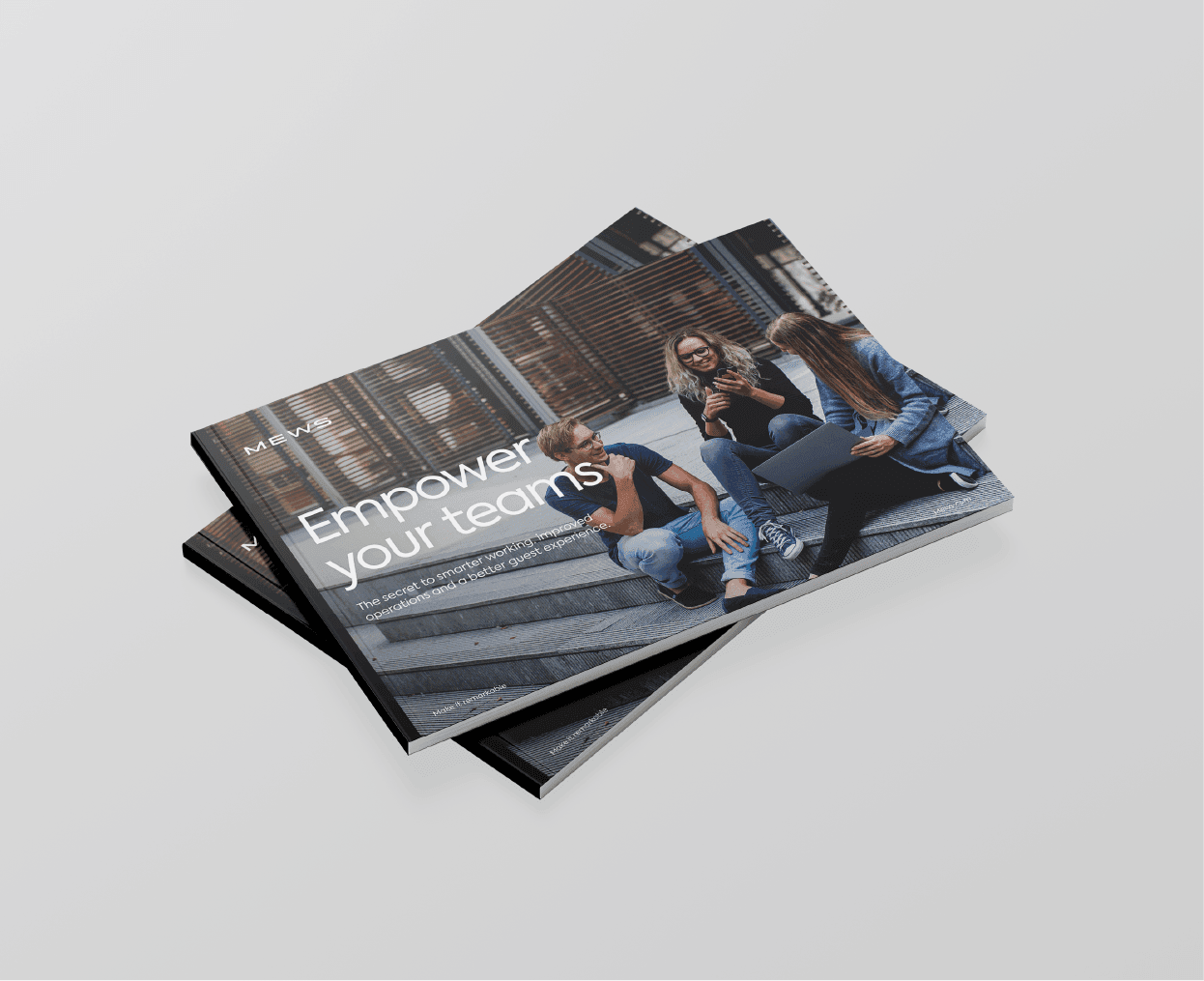
Download our guide "Empower your teams"
How do small hotels build leadership on a budget?
How do small hotels build leadership on a budget?
Small hotels build leadership on a budget by investing in internal development rather than external hires. Cross-training staff creates flexibility and shared expertise. Free online resources, industry webinars and structured mentorship programs develop leadership capabilities without requiring significant financial investment from smaller properties.
Which leadership style suits high-season pressure?
Which leadership style suits high-season pressure?
Service-oriented leadership works best during high-season pressure because it focuses on removing obstacles that prevent staff from doing their best work. Combine this approach with daily briefings that clarify priorities, redistribute workloads proactively and give teams the authority to resolve guest issues without escalation.
How does technology support hospitality leaders today?
How does technology support hospitality leaders today?
Technology supports hospitality leaders by automating routine tasks so managers can focus on coaching and guest experience. Real-time data from property management systems enables faster, more informed decisions. Mobile platforms keep distributed teams aligned across shifts without constant in-person coordination or manual status updates.
What KPIs show improvement after leadership training?
What KPIs show improvement after leadership training?
Employee retention rates typically improve first following leadership development, as staff respond to clearer direction and recognition. Guest satisfaction scores usually follow within one to two quarters. Revenue per available room (RevPAR) and departmental productivity metrics strengthen over time as teams execute strategy more effectively.
What behaviors define effective hospitality leaders?
What behaviors define effective hospitality leaders?
Effective hospitality leaders listen actively, follow through consistently on their commitments and remain visible on the floor rather than managing only from behind a desk. They delegate authority while staying accessible and treat recognition as a daily habit rather than a periodic event.
Written by

Eva Lacalle
Eva has over a decade of international experience in marketing, communication, events and digital marketing. When she's not at work, she's probably surfing, dancing, or exploring the world.