
Key takeaways
- Hotel productivity is about maximizing efficiency across operations, staff and resources while maintaining a high-quality guest experience.
- Streamlining workflows through automation and centralized systems helps reduce manual work, minimize errors and improve overall performance.
- Consistent staff training and strong communication are key to empowering teams and ensuring smooth day-to-day operations.
- Proactive strategies like preventative maintenance and data-driven decision-making help reduce disruptions and optimize long-term efficiency.
- Leveraging technology like Mews enables hotels to connect operations, personalize experiences and drive productivity at scale.
Hotel productivity can be the difference between a property that simply operates and one that consistently performs at a high level. To stay competitive and run a profitable business, hotels need to maximize space and service efficiency while improving operations and guest experience.
In this article, we’ll explore what hotel productivity means, how to measure it and the most effective strategies to improve it.
What is hotel productivity?
Hotel productivity refers to the efficient use of resources like staff, facilities and time to maximize revenue while controlling costs. It requires different departments, like front desk, housekeeping, F&B, maintenance and administration to work together like a well-oiled machine.
When these teams operate efficiently together, hotels can improve service quality, increase operational efficiency and deliver a better guest experience.

How to measure hotel productivity
Hotel productivity is measured by how efficiently your property turns inputs (like staff time, resources and costs) into outputs (like revenue, guest satisfaction and occupancy). At its core, it’s about doing more with less - without compromising the guest experience.
To get a clear picture of productivity, hoteliers need to track a combination of operational, financial and guest-focused metrics.
Key productivity metrics to track
Revenue per available room (RevPAR): Measures total room revenue generated per available room, combining occupancy and average rate performance.
- Revenue per available room (RevPAR): Shows the average rate paid per occupied room and helps evaluate pricing performance.
- Average daily rate (ADR): Shows the average rate paid per occupied room and helps evaluate pricing performance.
- Occupancy rate: Indicates the percentage of available rooms sold over a given period
- Total revenue per available room (TRevPAR): Measures total hotel revenue per available room, including rooms, food and beverage and other services.
- Revenue per employee or hour worked: Indicates how efficiently your team is contributing to overall output.
Operational efficiency metrics
- Hours per room occupied: Tracks how much labor is needed to service each room
- Room turnaround time: Measures how quickly rooms are cleaned and ready for the next guest
- Manual vs automated task time: Helps identify opportunities to streamline operations
These metrics highlight where time and resources are being used efficiently - and where improvements can be made.
Guest experience indicators
- Guest satisfaction scores and reviews: track survey results and monitor reviews across your site, OTAs and platforms like Tripadvisor and Google to identify trends and areas for improvement.
- Net promoter score (NPS): Measures how likely guests are to recommend your hotel, helping you gauge loyalty and identify promoters and detractors.
- Repeat guest rate: Shows how often guests return, making it a key indicator of satisfaction and long-term loyalty.
Strong productivity isn’t just about efficiency, but it’s also about delivering a seamless experience that keeps guests coming back.
Why hotel productivity matters for hotel success
Hotel productivity is crucial for many reasons. It makes operations more cost-effective, enhances guest satisfaction and helps you gain a competitive edge while generating more revenue.
1. Enhanced guest satisfaction
When your hotel runs smoothly, the guest experience improves - from faster check-ins to quicker service and more consistent interactions. Meeting guest needs efficiently and without friction leads to better reviews and stronger loyalty.
This comes from a combination of well-trained staff, clear processes and the right technology supporting operations - ensuring guests feel valued at every touchpoint.
2. Improved cost efficiency
A productive hotel is better at using resources like labor, energy and supplies. It lets you do more with less, something every ambitious hotelier strives for. Greater cost savings are another significant benefit.
3. Gives you a competitive edge
Hotels with efficient operations can deliver faster, more consistent service. This helps differentiate them in a competitive market and supports stronger guest loyalty over time.
4. Boosted revenue
More productive teams are better able to support upselling opportunities, such as room upgrades and additional services, and can handle higher demand during peak periods without compromising service quality.

7 strategies to boost hotel productivity
Here are seven practical ways to improve productivity across your hotel and keep operations running smoothly.
1. Leverage technology
The right hotel technology doesn’t just support operations - it actively improves productivity and profitability by reducing manual work and streamlining workflows.
Key ways to do this include:
- PMS with integrated RMS: Connect your property management system with a revenue management system to automate pricing, forecast demand and optimize rates in real time.
- Housekeeping management tools: Use technology to assign rooms, track status updates and communicate instantly with staff, improving coordination and reducing room turnaround times.
- Digital check-in and kiosks: Enable guests to check in, access their room and check out with minimal friction, reducing front desk queues and freeing up staff time.
- Virtual concierge and guest messaging: Automate responses to common guest questions and requests, allowing staff to focus on higher-value interactions and personalized service.
- Automated payments and reporting: Streamline billing, invoicing and performance tracking to reduce errors and give teams real-time visibility into operations.
By automating repetitive tasks and centralizing information, your team can spend less time on admin and more time driving revenue and improving the guest experience.
2. Train your staff consistently
Consistent, ongoing training is essential for maintaining high productivity across your hotel. When staff understand their roles, systems and expectations, they can work more efficiently, reduce errors and deliver a better guest experience.
What effective staff training includes
- Role-specific training: Ensure each team member is fully equipped to handle their day-to-day responsibilities
- System and technology training: Help staff confidently use your PMS and operational tools to reduce friction and errors
- Guest experience training: Reinforce service standards, communication skills and problem-solving approaches
- Cross-training: Enable team members to support multiple roles during busy periods or staffing gaps
- Ongoing refreshers: Keep skills sharp and introduce new processes or updates as your operations evolve
Well-trained teams not only work more efficiently, but they also feel more confident and engaged in their roles - leading to higher job satisfaction and lower turnover.
3. Monitor KPIs
Tracking the right KPIs gives you a clear view of performance and highlights where productivity can improve. Focus on core metrics like occupancy, ADR, RevPAR and guest satisfaction, then use them to guide day-to-day decisions.
- Occupancy rate: Understand demand patterns and identify opportunities to fill gaps, especially during off-peak periods.
- ADR (Average Daily Rate): Evaluate pricing strategy and ensure you’re maximizing revenue per room without hurting demand.
- RevPAR: Combine occupancy and rate to measure overall revenue performance and spot trends over time.
- Guest satisfaction scores: Monitor feedback to identify service gaps that may be slowing operations or impacting repeat business.
Regularly reviewing these metrics helps you catch issues early, test improvements and adjust quickly. With clear targets in place, your team can stay focused on what drives the biggest impact on both productivity and profitability.
4. Empower your staff
Productivity improves when teams are aligned, informed and motivated. Focus on creating an environment where communication is seamless and employees feel engaged in their work.
- Improve operational communication: Ensure teams can easily share updates across departments. This reduces delays, minimizes errors and keeps operations running smoothly.
- Strengthen employee engagement: Involve staff in processes and decision-making where possible, and give them the tools they need to do their jobs efficiently. Engaged employees are more proactive, take ownership of their roles and contribute to better overall performance.
- Encourage recognition and feedback: Regularly acknowledge strong performance and create opportunities for peer recognition. Celebrating wins helps boost morale, increase retention and motivate teams to maintain high standards.
5. Practice preventative maintenance
Preventing issues before they arise is one of the most effective ways to protect productivity. Just like routine maintenance keeps a car running smoothly, proactive upkeep ensures your property operates without disruption.
Instead of reacting to problems after they occur, schedule regular inspections across rooms, equipment and shared spaces. This helps identify wear and tear early - before it turns into costly repairs, guest complaints or unexpected room downtime.
What preventative maintenance looks like
- Routine room checks: Inspect furniture, fixtures, plumbing and HVAC systems on a regular basis
- Scheduled servicing: Plan maintenance for elevators, boilers and other critical systems
- Seasonal planning: Use low-demand periods to complete larger repairs or upgrades
- Safety checks: Ensure fire alarms, locks and emergency systems are functioning properly
Taking a proactive approach reduces the risk of last-minute room closures and helps maintain a consistent guest experience. It also allows your team to plan workloads more effectively, rather than scrambling to fix urgent issues.
6. Optimize processes
Streamlining operations means removing friction from everyday workflows so tasks get done faster and more consistently. For example, digital check-in and mobile key access can reduce front desk queues, while automated housekeeping schedules update room status in real time as guests check out.
Technology can also automate repetitive tasks like assigning rooms, sending pre-arrival messages, processing payments and generating reports. Instead of manually coordinating these steps, your team works from a centralized system that keeps everything aligned.
This shift reduces errors, saves time and allows staff to focus on higher-value work - like improving the guest experience, handling special requests or driving upsells. The result is a more efficient operation that supports both better service and stronger profitability.
7. Implement an omnichannel communication strategy
Clear, consistent communication is essential for running an efficient hotel operation. An omnichannel communication strategy ensures that guest interactions and internal updates flow seamlessly across every touchpoint - whether it’s email, messaging apps, front desk systems or in-person conversations.
When communication is centralized and connected, teams can respond faster, reduce errors and avoid duplicated work. For example, housekeeping, front desk and maintenance teams can stay aligned in real time, improving coordination and speeding up room readiness. At the same time, guests benefit from quicker responses, fewer misunderstandings and a more cohesive experience throughout their stay.
An effective omnichannel approach also allows you to meet guests where they are, making communication more convenient and personalized without adding extra workload for your staff.
Unlock your hotel’s full productivity potential
Improving hotel productivity isn’t about a single fix - it’s about optimizing how every part of your operation works together. When front desk, housekeeping, maintenance and guest services are aligned, you reduce inefficiencies, lower costs and create better guest experiences that drive long-term revenue.
With Mews Property Management System, hotels can bring these processes together in one platform - automating routine tasks like check-in, room assignments and billing, while giving teams real-time visibility into room status, guest activity and performance. This makes it easier for staff to stay aligned, respond faster and focus on higher-value interactions that improve the guest experience.
Ready to boost productivity across every department? Get a demo to see how Mews can help you run a more efficient, profitable hotel.
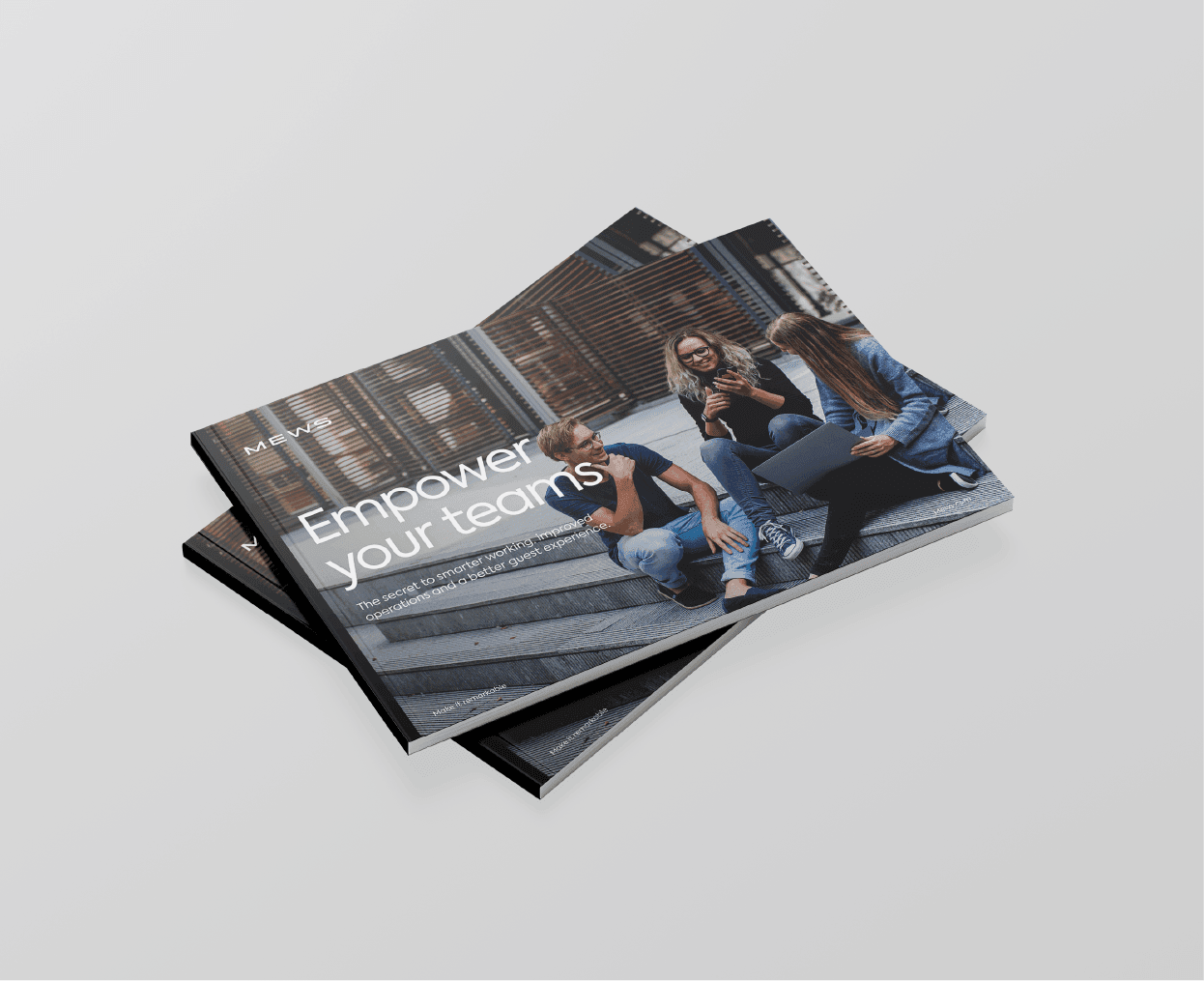
Download our guide "Empower Your Teams"
When you empower your teams with the ability to work effectively, the benefits can be felt across your entire business. Find out how with our guide below.
What is hotel productivity?
What is hotel productivity?
Hotel productivity measures how efficiently a property uses its resources - like staff, time and technology - to deliver strong operational performance and guest experiences.
Why is productivity important in the hotel industry?
Why is productivity important in the hotel industry?
High productivity helps reduce costs, improve service quality and increase profitability, all while ensuring guests have a seamless and enjoyable stay.
What are the most important hotel productivity metrics?
What are the most important hotel productivity metrics?
Key metrics include RevPAR, ADR, occupancy rate, revenue per employee and operational indicators like room turnaround time and labor hours per room.
How can hotels improve productivity?
How can hotels improve productivity?
Hotels can improve productivity by automating tasks, training staff consistently, improving communication and using data to optimize operations and decision-making.
What role does technology play in hotel productivity?
What role does technology play in hotel productivity?
Technology streamlines operations, reduces manual work and centralizes data, allowing teams to work more efficiently and focus more on the guest experience.
Written by

Jessica Freedman
Jessica is a trained journalist with over a decade of international experience in content and digital marketing in the tourism sector. Outside of work she enjoys pursuing her passions: food, travel, nature and yoga.