
Key takeaways
- Self-check-in kiosks streamline operations by automating routine tasks and reducing front desk bottlenecks.
- Guests get a faster, more flexible experience with 24/7 check-in, room selection and contactless options.
- Hotels can increase revenue at check-in by offering upgrades, late check-outs and add-on services.
Hotel self-check-in kiosks are a hot topic. Why? Because it puts the hotel experience into the hands of guests, making it possible for them to choose how and when they check in. The more flexibility you offer your guests, the greater their satisfaction and the more likely they are to become return visitors.
So, what exactly is a self-check-in kiosk, why is it important and how does it work? What are the advantages and benefits and how can you leverage technology to make the process as seamless as possible? We’ll answer all these questions in this complete guide to self-check-in kiosks for hotels.
What is a hotel self-check-in kiosk?
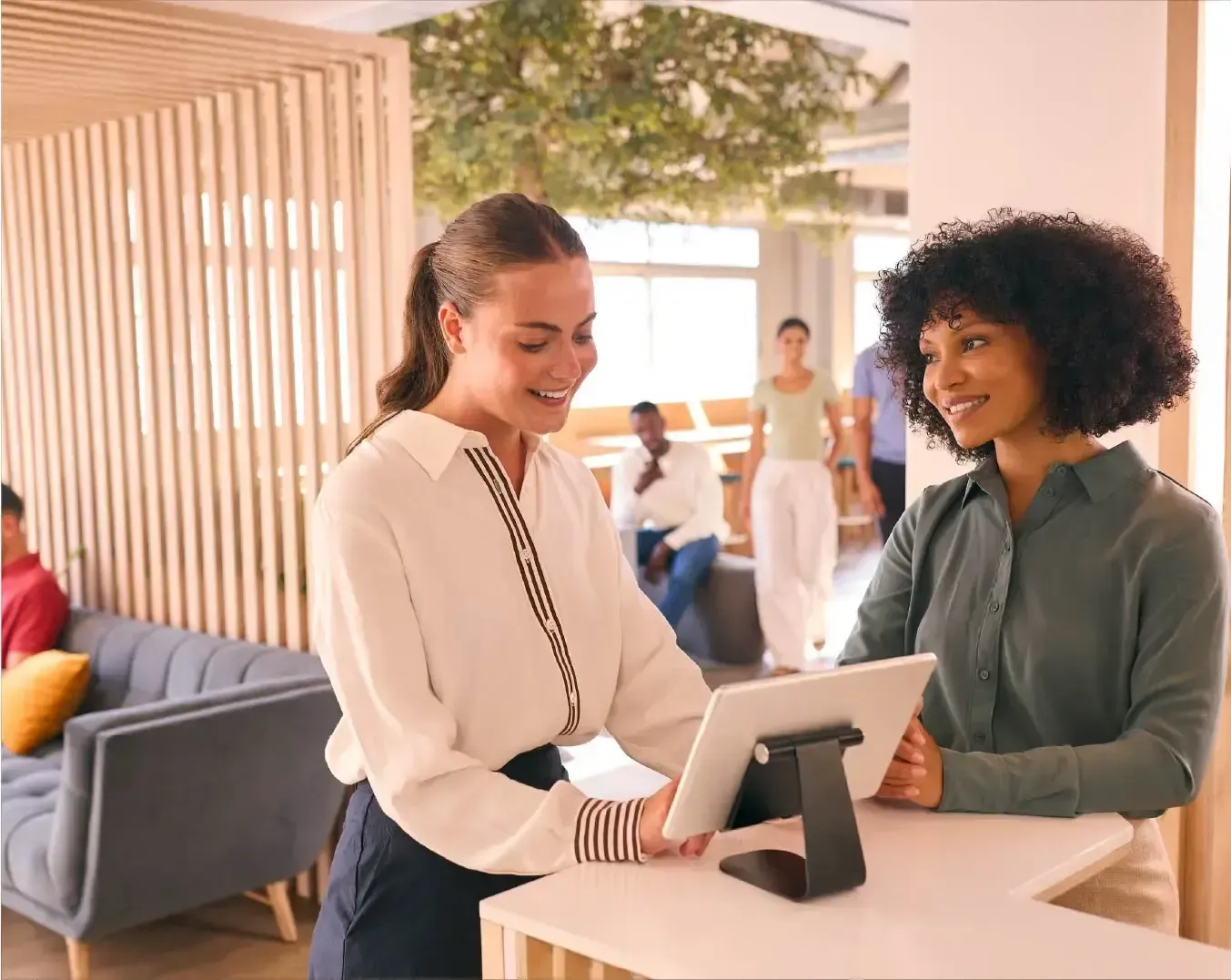
A hotel self-check-in kiosk is a piece of technology, often in the form of a tablet, that puts the check-in and check-out process directly into the hands of guests. These kiosks can handle everything from check-ins and check-outs to payments, key card creation and upsells that drive ancillary revenue. With animated, step-by-step guidance, guests can easily navigate through all the necessary steps.
Key features of hotel self-check-in kiosks
Hotel self-check-in kiosks are designed to streamline the arrival experience while giving guests more control over their stay. Common features include:
- Touchscreen interface for fast, intuitive navigation.
- Identity verification to securely confirm guest details.
- Payment processing for deposits, balances, and incidentals.
- Automatic room reassignment if the originally booked room is unavailable.
- Room selection options based on availability and guest preferences.
- Key cutting or key encoding for instant room access.
Many kiosks also support upsell and add-on purchases, allowing guests to easily select:
- Room upgrades
- Late check-outs
- Additional amenities or services
By leveraging automation, self-check-in kiosks reduce wait times, improve operational efficiency and deliver a more flexible, modern check-in and check-out experience for guests.
Benefits of hotel self-check-in kiosks
Self-check-in technology brings a range of benefits to your lobby and beyond, including:
Efficiency
Self-check-in is highly efficient, reducing the need for a large front desk staff, especially during peak times. This allows operational staff to focus on other tasks, such as enhancing the guest experience.
Fewer booking errors
When guests enter their own details, misspelled names and wrong room types drop sharply. The kiosk records data accurately at source and stores it in the PMS, so the next stay starts from a clean, complete profile.
Convenience
Available 24/7, self-check-in eliminates concerns about long lines or late arrivals. After a long journey, guests can quickly check in without waiting, significantly improving first impressions.
Smoother check-in for international guests
Multiple language settings let guests check in in their own language, removing friction for international travelers and lifting satisfaction from the first interaction.
Personalized guest experience
Self-check-in allows guests to select their preferences, such as room types and upgrades and log special requests or occasions. This enables staff to further personalize each stay.
Cost savings and boosted revenue
With guests managing their own check-in, labor costs are reduced. Additionally, guests can upsell themselves on options like room upgrades, parking or special packages, driving ancillary revenue.
Streamlined data collection
Manual data entry by the front desk is time-consuming and prone to errors. Self-check-in streamlines data collection, providing quicker and more accurate insights.
Environmental benefits
Contactless check-in reduces paper consumption by using digital registration cards, making it a more environmentally friendly option.
Scalable operations year-round
Demand shifts with the seasons, but kiosks hold service levels through peaks, group arrivals and late-night check-ins without driving up staffing costs. That keeps standards high while labor stays under control.
Freed-up staff for meaningful interactions
By taking routine check-in off your team, the kiosk gives staff time for the conversations that matter – local recommendations, special requests or simply making guests feel welcome. Those moments drive repeat bookings far more than a transaction at the desk.

Why guests like hotel self-check-in kiosks
Guests gravitate to self-check-in kiosks because they remove the single biggest source of arrival friction: the queue. Properties that deploy kiosks routinely cut average check-in time from several minutes at the desk to under a minute, turning a bottleneck into a walk-through.
Beyond speed, kiosks win guests over for a few clear reasons:
- Control over arrival – a business traveler landing at 1am can check in, get a key and head to the room without waiting for a night clerk. A family arriving early can store their details and collect keys once the room is ready.
- No transactional awkwardness – upselling a room upgrade or breakfast package on a screen converts better than the same offer pitched verbally. Guests browse without feeling pressured, and Mews data shows automated upsell flows can lift ancillary revenue per booking significantly.
- No language barrier – a screen that switches to a guest's native language and walks them through ID scanning and payment is faster and less stressful than negotiating the same steps with a receptionist in a second language.
The common thread: the interaction happens on the guest's terms rather than the front desk schedule.
How can the Mews hotel self-check-in kiosk help your property?
A Mews self-serve check-in kiosk delivers most of its value because it connects to the wider operating system, not because it sits in the lobby. A standalone kiosk speeds up arrival. A connected one feeds every transaction, preference and key issuance straight into Mews, so the rest of your operation acts on it in real time.
That connection is what turns a single touchpoint into operational gains:
- Data flows where it's needed. Every purchase, room preference and special request the kiosk captures lands in the PMS, so teams can anticipate needs without re-collecting information guests already gave.
- Upselling continues across the stay. An upgrade or spa add-on selected at the kiosk updates rates, housekeeping and billing automatically – upsell opportunities can also appear at other points in the Mews guest journey.
- Check-out settles itself. Because charges accumulate on one connected folio, departure is a key drop and a tap, with no reconciliation at the desk.
- Staff redeploy in real time. Freed from manual check-in, teams see live arrival and occupancy data and move to where guests actually need them.
If you’re thinking ahead, the shift to self-check-in kiosks isn't just about convenience – it's about a smoother guest journey and meaningful operational gains. Because the kiosk connects to everything else in Mews, the result is shorter lines, happier guests, empowered staff and an operation that scales with your property.
Get a demo today to see how Mews helps you deliver frictionless, contactless check-in from arrival to departure.
Still need more reasons to make the switch?
Download our guide "Mews Kiosk: 6 creative uses for properties of all types"
What is a hotel self-check-in kiosk?
What is a hotel self-check-in kiosk?
A hotel self-check-in kiosk is a touchscreen device that allows guests to check in and check out independently, without waiting at the front desk.
How do self-check-in kiosks work?
How do self-check-in kiosks work?
Guests confirm their reservation, verify their identity, complete payment and receive a room key or mobile access - all through an automated, guided flow.
Are self-check-in kiosks secure?
Are self-check-in kiosks secure?
Yes. Modern kiosks support secure payment processing and identity verification, meeting the same standards as traditional check-in.
Why are hotels adopting self-check-in kiosks?
Why are hotels adopting self-check-in kiosks?
They reduce wait times, improve operational efficiency, increase upsell opportunities and deliver the fast, flexible experience today’s guests expect.
Why do guests like hotel self-check-in kiosks?
Why do guests like hotel self-check-in kiosks?
Guests like self-check-in kiosks because they remove the biggest source of arrival friction: the queue. Properties that deploy kiosks routinely cut average check-in time from several minutes at the desk to under a minute, turning a bottleneck into a walk-through. Beyond speed, the appeal comes down to control, comfort and accessibility.
Do kiosks really save guests time?
Do kiosks really save guests time?
Yes. A traditional desk check-in involves waiting in line, then several minutes of manual data entry and payment. A kiosk compresses that to under a minute, and multiple guests can check in at once rather than queuing for a single available receptionist.
Why would a guest choose a kiosk over a friendly receptionist?
Why would a guest choose a kiosk over a friendly receptionist?
Control over their own arrival. A business traveler landing at 1am can check in, get a key and head to the room without waiting for a night clerk. A family arriving early can store their details and collect keys once the room is ready. The interaction happens on the guest's terms rather than the front desk schedule.
Written by

Eva Lacalle
Eva has over a decade of international experience in marketing, communication, events and digital marketing. When she's not at work, she's probably surfing, dancing, or exploring the world.