
Key takeaways
- Hotel partnerships allow properties to expand offerings, reach niche audiences and enhance guest experiences by collaborating with local businesses that share similar values and customer profiles.
- Successful collaborations rely on careful partner selection, clear agreements and structured revenue or commission models to ensure mutual benefit and measurable return on investment (ROI).
- Leveraging technology and tracking performance enables hotels to optimize partnerships, personalize guest experiences and scale collaborations efficiently for sustained growth.
Hotel partnerships can do wonders for your hotel's bottom line. When you tap into your local community, you open the door to one-of-a-kind experiences that go well beyond what guests expect from their stay.
From identifying the right partners and negotiating agreements to measuring ROI, this guide covers everything you need to build hotel partnerships that deliver real results.
What are hotel partnerships and how do they work?
Hotel partnerships are collaborative arrangements between hotels and local businesses that combine resources and expertise to enhance guest experiences, increase revenue and expand brand reach.
These partnerships often involve working with local businesses to target specific guest profiles and boost your hotel's bottom line. By leveraging existing customer bases of other brands, you can engage new audiences and build brand awareness.
Not only can your hotel take advantage of the services or products offered by the other brand, but you can also use shared resources.
Some effective partnership ideas include hosting joint events, showcasing and selling local artwork, featuring food and beverages from local producers and chefs and promoting nearby tour companies.

Why hotel partnerships are crucial for modern hotel businesses
Partnership marketing for hotels is a win-win for everyone involved. It creates an invaluable network that helps increase brand exposure, visibility and allows you to share resources to target your ideal client profile.
Reach niche audiences
When you carefully choose brands and companies to partner with, your hotel can benefit from new opportunities. Partnerships help you connect with potential clients that might otherwise be hard to attract.
If your hotel has a solid marketing strategy, you know that niche audiences are the hardest to reach. Collaborating with brands that have already found ways to capture this niche gives you a strategic advantage.
Share resources for greater impact
You don't always have the budget for marketing and promotional efforts. Partnering with other providers lets you capitalize on shared resources and gain exposure that would otherwise require significant investment.
Inspire emotional connection with guests
Emotions are one of the strongest drivers in making purchasing decisions. Many times, it's more about selling an experience than the actual product. And in a competitive industry like the hotel industry, you need to stand out from the crowd.
Offering one-of-a-kind experiences that recreate that uniqueness and sense of authenticity that guests are looking for is a great way to influence their purchasing decisions.
Deliver personalized guest experiences
Surpassing guest expectations is at the core of remarkable hospitality. Sometimes, your hotel lacks the resources or the expertise to offer everything guests want. In those cases, partnering with brands can ensure you consistently meet guest needs.
As guests increasingly search for unique experiences, focus on finding partners who can help you grab any opportunity to stand out.
Types of hotel partnerships that drive success
Building the right partnerships starts with knowing which types work best for your property and your guests.
Here are some proven options worth exploring:
Collaborate with tour operators
Relying on experts helps you deliver one-of-a-kind experiences, and tour companies can make all the difference. Whether you create a package that includes a local experience or daily walking tours (free or paid), it's a great way to boost guest satisfaction.
Here are some ideas: offer a nighttime tour every other day to create a sense of FOMO (the fear of missing out)and encourage guests to stay an extra night. You might also consider themed tours for food lovers, sports enthusiasts, nature lovers and cyclists. These can all be incorporated into a package deal to appeal to these unique audiences.
Showcase local artists
Tap into your local community by showcasing art from local artists. It can be there for decorative purposes, or you can set up a pop-up shop that sells these pieces.
Reach out to art galleries interested in curating the artwork in your spaces. You'll get free art, and the gallery's clients will visit your hotel to see the pieces.
You can also partner up with a local jazz quartet or a singer to host happy hour sessions in your bar. These events, combined with selling art, can help boost ancillary revenue while making your hotel "the place to be."
Align with wellness centers
Partnering with wellness centers is a great way to offer extra activities to guests. You could invite a Pilates or yoga instructor to give classes on your rooftop, or have the wellness center send a massage therapist to offer in-room massages.
You might also offer an exclusive discount to guests who want to work out at the gym or visit the spa. This is a wonderful way to promote health and wellness at your hotel, even if you don't have the on-site facilities
Partner with restaurants and cafes
If you have an on-site restaurant, consider inviting a local chef to create a special tasting menu or host cooking classes. Another idea is to feature a signature small plate on your menu.
Food is a powerful way to connect with diverse audiences, as it generates an emotional appeal that often influences guest behavior. Partnering with local restaurants, cafes, chefs and bakers can significantly enhance your offerings.
Partner with technology providers
If your hotel uses multiple systems, consider partnering with technology providers that offer the best hotel booking engine, automation tools or revenue management systems. You could integrate your hotel property management software with payment processing and guest communication tools to reduce manual work and minimize errors.
Technology partnerships can also make upselling smarter, enable dynamic pricing and create more personalized guest interactions – helping you deliver a smoother, more consistent guest experience from booking to check-out.

How to identify and approach potential hotel partners
Finding the right hotel partners means looking for businesses that share your brand values and appeal to the same type of guests.
Here's where to start:
- Review guest feedback, social media mentions and local tourism data to identify businesses your guests already visit or search for during their stay.
- Look for businesses that serve a similar customer profile but do not compete directly with your hotel.
- Assess whether a potential partner's service quality, values and reliability match your brand standards before reaching out.
- When making initial contact, lead with mutual benefits and frame the conversation around how the partnership creates value for both businesses.
- Schedule a face-to-face meeting and bring guest demographic data along with collaboration ideas to support the discussion.
- Keep early conversations exploratory, focusing on building rapport and understanding their goals before proposing any specific arrangements.
Negotiating and formalizing hotel partnership agreements
A good partnership agreement protects both parties and sets clear expectations from the start. Getting the negotiation and documentation right early saves time, prevents misunderstandings and builds a stronger foundation for collaboration.
Pre-partnership key considerations
- Define each partner's roles, responsibilities and contributions before drafting anything formal.
- Agree on how revenue, costs or referrals will be shared between both businesses.
- Set clear timelines, deliverables and performance benchmarks to keep both parties accountable.
What the agreement should cover
- Include terms for exclusivity, branding usage and how each business will be represented.
- Outline a clear process for resolving disputes and handling underperformance.
- Add an exit clause that allows either party to end the agreement professionally and without conflict.
Keeping the partnership on track
- Schedule regular check-ins to review performance and address any issues before they escalate.
- Revisit the agreement periodically to reflect any changes in the partnership's scope or direction
Measuring and optimizing hotel partnership ROI
Tracking the performance of your hospitality partners is just as important as choosing the right ones.
Here are some key metrics and actions to help you measure impact and get the most out of every partnership:
Case studies: hospitality industry partners in action
The following examples from Mews show how the right hospitality partners can reshape operations, improve the guest experience and drive measurable revenue growth.
How Frame Hospitality Group automated guest communication with Akia
Frame Hospitality Group offers adult-only retreats in Austin, Texas, operating without a traditional front desk and relying on a keyless entry system.
To keep things running smoothly across two properties with a small team, they needed hospitality partners that could handle guest communication without adding to staff workload.
Through the Mews Marketplace, Frame partnered with Akia to automate guest communications, streamline check-in and handle ID verification. They also used the Mews Booking Engine to drive direct bookings and upsells.
The results were significant:
- 70% of guest communication is now fully automated.
- Guests can access a comprehensive portal with FAQs, recommendations and concierge services.
- Fraud cases dropped by 99.5% after integrating Mews Payments with Akia's ID verification.
- The Mews Booking Engine drove an $82 increase in revenue per booking through upsells such as champagne, flowers and early check-ins.
How Terrace Bay Hotel grew revenue through strategic tech partnerships
Perched on the northern shores of Lake Michigan, Terrace Bay Hotel turned to Mews and its hospitality partners to build a smarter, more connected tech stack. Their collaboration with Atomize, a Mews company and AI-powered hotel revenue management system, proved particularly valuable.
By switching to Autopilot mode within Atomize, the hotel's pricing adjusts automatically in real time, keeping rates competitive while maximizing profitability.
Key outcomes include:
- A 38% revenue increase after one year with Atomize.
- A 20-25% higher average rate through smarter channel management with Expedia, Booking.com and the global distribution system (GDS).
- Increased direct bookings and reduced reliance on online travel agencies (OTAs) through targeted Google and Meta ad campaigns.
Power your hotel partnerships with Mews
The right technology can make hotel partnerships easy to manage, scale and measure. Mews Marketplace brings everything together – guest experience tools, revenue management systems and local service providers – on one platform, making partnership management simple and efficient.
Key benefits include:
- Over 1,000 hospitality integrations across guest technology, upselling, revenue management, spa management and more
- No connection fees, reducing the cost and risk of adding new hospitality partners
- Full flexibility to customize your tech platform to fit specific brand needs
- A low-risk setup that makes it easy to find, connect and scale the right integrations
Book a demo today to see how Mews Marketplace can streamline partnerships, increase guest value and grow revenue.
Want to take partnerships a step further?
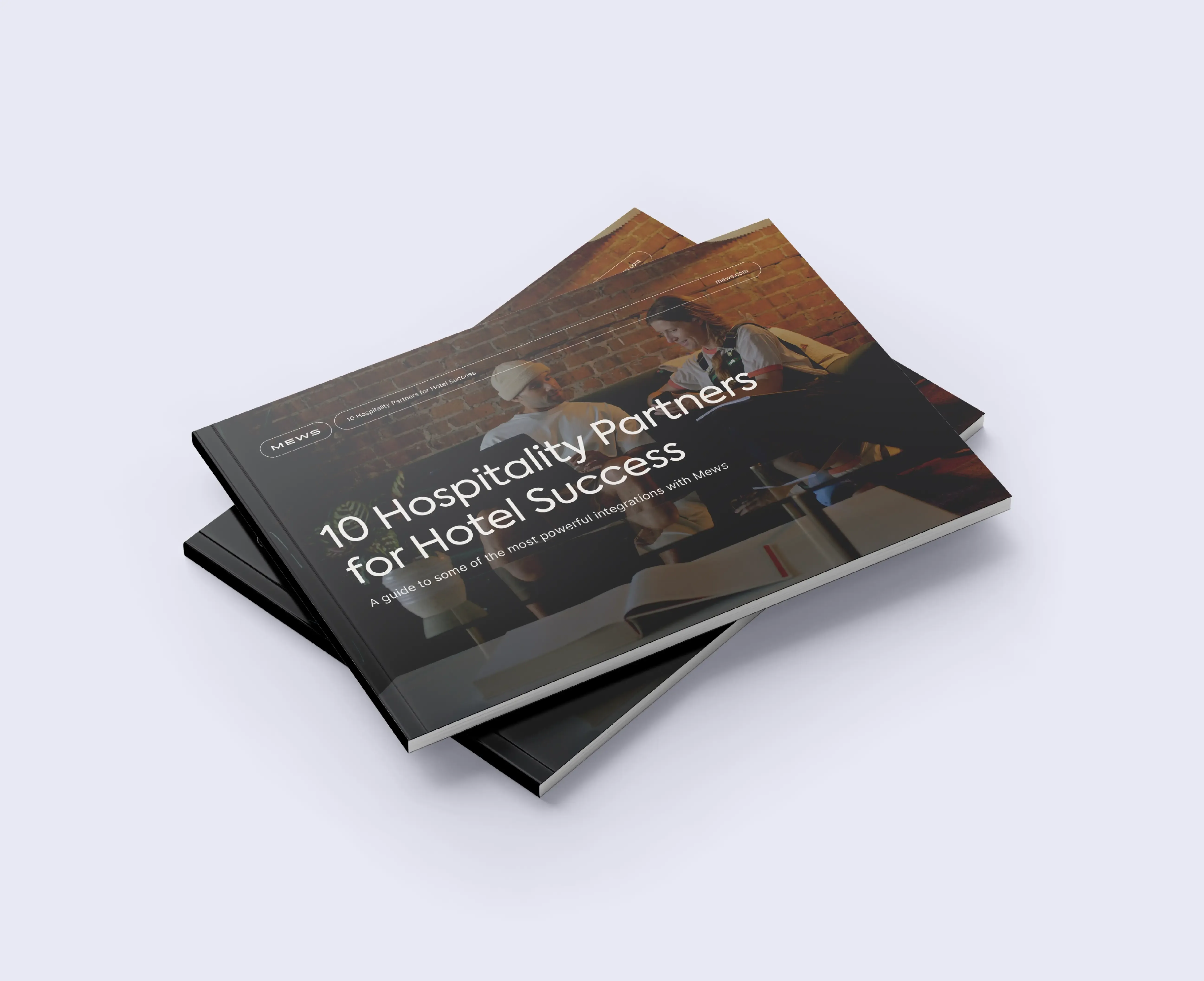
Download our guide "10 Hospitality Partners for Hotel Success"
What are hotel partnerships and how do they benefit hotels?
What are hotel partnerships and how do they benefit hotels?
Hotel partnerships are collaborations between hotels and local businesses that combine services, products or experiences to create unique offerings for guests. They benefit hotels by expanding service options, attracting new audiences, boosting revenue and enhancing brand visibility without the need for large internal investments.
How can small hotels build successful hospitality industry partnerships?
How can small hotels build successful hospitality industry partnerships?
Small hotels can build successful partnerships by focusing on local authenticity and forming relationships with nearby businesses that serve similar customer profiles. They should propose specific collaboration ideas that show mutual benefits, such as shared events, co-branded experiences or bundled services, rather than simply seeking discounts or favors.
What types of businesses are best for hotel partnerships?
What types of businesses are best for hotel partnerships?
The best businesses for hotel partnerships are those that match the hotel’s guests, such as tour operators, local restaurants, wellness centers, transportation services and local retailers or artists. They enhance experiences, boost revenue and help reach new audiences.
How do you measure the ROI of hotel partnerships?
How do you measure the ROI of hotel partnerships?
The ROI of hotel partnerships is measured by tracking bookings, revenue from joint packages and guest satisfaction linked to the partnership. Unique booking codes, commission tracking and feedback help compare costs against the value generated.
What should be included in a hotel partnership agreement?
What should be included in a hotel partnership agreement?
A hotel partnership agreement should include the partnership scope, duration, financial terms, marketing responsibilities, performance expectations, termination conditions, liability provisions and data or intellectual property usage rights. It should be reviewed regularly to ensure terms remain fair and relevant.
How long does it take for hotel partnerships to show results?
How long does it take for hotel partnerships to show results?
Hotel partnerships typically take three to six months to show measurable results, as the initial period focuses on building awareness, establishing processes and fostering collaboration. Strong partnerships usually deliver increasing value over time once fully operational.
Written by

Eva Lacalle
Eva has over a decade of international experience in marketing, communication, events and digital marketing. When she's not at work, she's probably surfing, dancing, or exploring the world.